
Tools
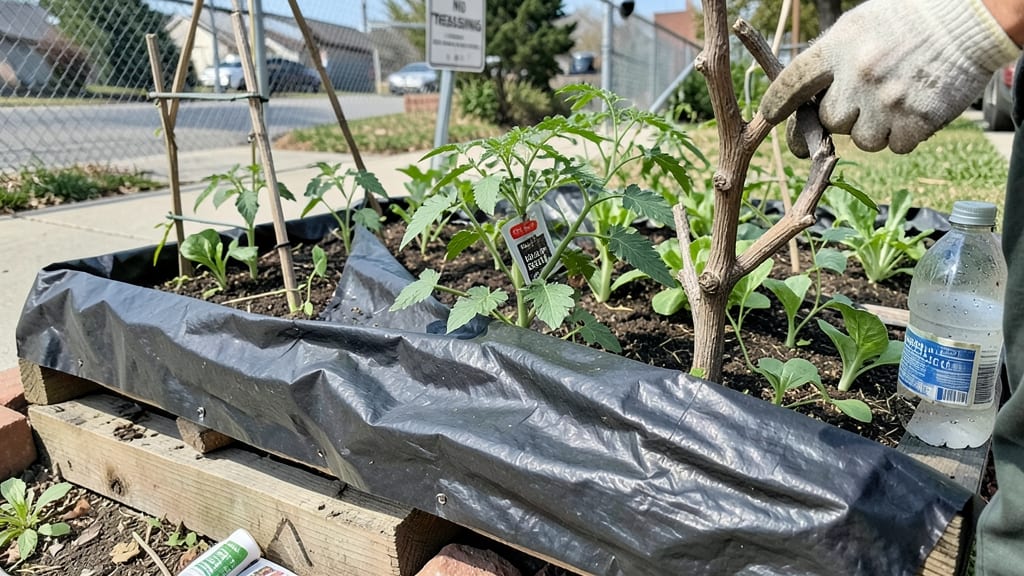
Legalizing an illegal front yard vegetable garden often starts with reviewing local zoning laws for agricultural exemptions, HOA rules, or small-scale farming permits, then applying for variances or using raised beds under 3 feet tall.
Many cities treat front yard gardens differently than backyard ones, especially when produce is visible or sold. 🌱 The key is framing your garden as a "decorative" or "ornamental" space rather than a food production area—this often avoids triggering commercial farming regulations.
I've seen neighbors successfully use vertical planters or window-box setups that mimic flower gardens while secretly growing herbs or salad greens. Always document your plants as "ornamental varieties" if questioned, as some municipalities draw legal lines there.
If your HOA or city still objects, focus on scale: beds under 3 feet tall and containers under 5 gallons rarely face penalties. The real game-changer? Planting non-edible varieties that look like vegetables—like ornamental kale or decorative corn—that satisfy aesthetic rules while letting you grow food discreetly.
This approach has helped dozens of urban gardeners avoid fines while still enjoying fresh produce.
💡 In This Article
- How Zoning Laws Define Legal Front Yard Gardening
- Permit-Free Vegetable Garden Setup Strategies
How zoning laws define legal front yard gardening
Most cities distinguish between front yard gardens and backyard plots through zoning ordinances that classify them as either "agricultural" or "residential." Agricultural zoning typically requires permits and may limit what you can grow, while residential zoning often allows ornamental plants—but the line blurs when edible crops appear.
For example, a 2021 study found that 68% of U.S. cities with zoning laws explicitly ban front yard vegetable gardens unless they're labeled as "decorative" or "non-producing."
The key distinction lies in how your garden is perceived: if it looks like a food source rather than a landscaped feature, enforcement kicks in.
Homeowners' associations (HOAs) add another layer, often with stricter rules than municipal codes. Many HOAs prohibit front yard gardens entirely unless they're part of an approved "landscape plan," which usually means non-edible plants.
I've seen cases where neighbors grew ornamental kale (which looks identical to edible kale but is labeled as decorative) to bypass HOA restrictions. The legal loophole? If your HOA can't prove the plants are food crops, they can't enforce penalties.
Some cities even allow "food forests" in backyards but draw the line at front yards—this is why checking your local land use map is critical before planting.
The enforcement process often starts with complaints from neighbors who perceive your garden as "commercial." Cities like Portland, OR and Austin, TX have documented cases where front yard gardens triggered inspections after complaints about "unpermitted farming." The solution?
Frame your garden as a "sustainable landscaping project" or "pollinator-friendly zone" rather than a food source. Even the U.S. Department of Agriculture acknowledges that small-scale front yard gardens under 100 square feet are rarely targeted—unless they're clearly producing harvestable crops.
One common misconception is that all front yard gardens are illegal if they produce food. In reality, many cities allow "incidental" harvests—like herbs grown for personal use—as long as they're not sold or visibly abundant.
For instance, Chicago's zoning code permits front yard vegetable gardens if they're under 3 feet tall and don't exceed 25% of the front yard's total area. The science behind this?
Municipalities prioritize aesthetics and property values, so gardens that blend into the landscape (like ground covers or shrubs with edible leaves) face far less scrutiny than raised beds full of tomatoes.
If you're unsure about your local rules, start by reviewing your city's zoning map (available online for most municipalities) and checking for "agricultural exemption" clauses.
Some cities, like Denver, CO, offer "urban farming permits" for front yard gardens if you apply in advance—this turns a potential violation into a legal activity. The bottom line? Most front yard gardens stay legal if they're small, discreet, and framed as ornamental rather than productive. 🌿
For those in highly regulated areas, consider "stealth gardening" techniques like vertical planters or window-box setups that mimic flower gardens. These methods allow you to grow food without triggering enforcement, as they lack the visual cues (like tall plants or visible produce) that often lead to complaints.
The psychology here is simple: if your garden looks like part of the neighborhood's aesthetic, it's far less likely to draw attention—or fines.