
Watering
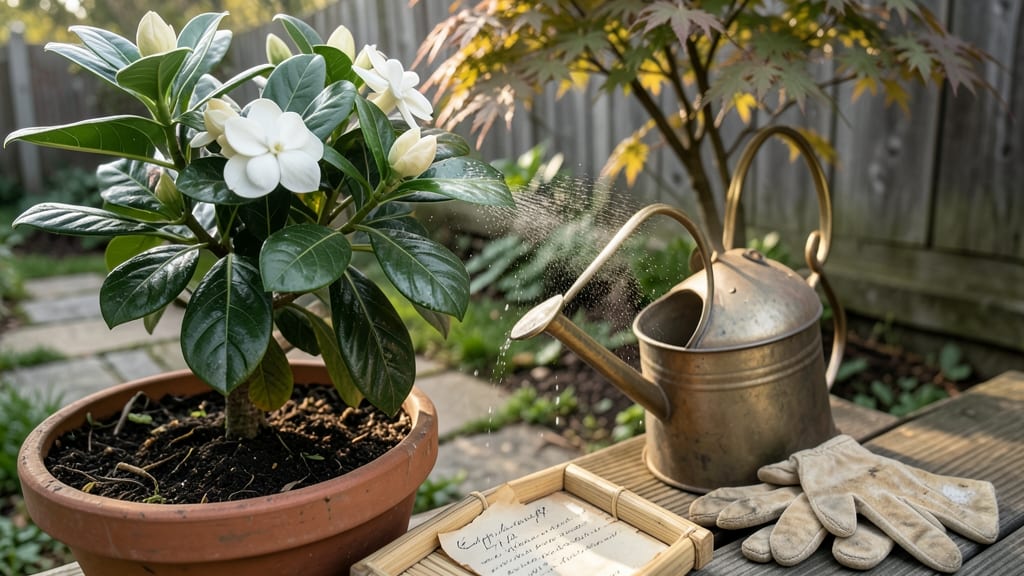
To water gardenias properly, focus on keeping the soil consistently moist without soggy roots — the sweet spot for those glossy leaves and fragrant blooms 🌸.
Struggling to keep your gardenia blooming? The secret often lies in mastering the delicate balance of water—too much or too little can turn your fragrant beauty into a wilted disappointment.
These tropical shrubs love moisture but hate soggy feet, which means deep, infrequent watering beats shallow sprinkles every day. In summer, you might water daily, but in winter, cutting back to once a week keeps roots happy.
Below, I’ll walk you through the exact schedule, how to check soil moisture like a pro, and the common mistakes that kill gardenias faster than you’d think.
The perfect watering schedule for gardenias based on season and climate
Mastering the watering schedule for gardenias is like finding the sweet spot between a desert and a swamp—too dry, and your plant wilts; too wet, and it suffocates. These fragrant shrubs thrive on consistent moisture, but their needs shift dramatically with seasonal changes and climate zones.
Whether you're in the humid South or arid Southwest, understanding these rhythms will keep your gardenia blooming like a dream.
Gardenias love well-draining, acidic soil that stays evenly moist but never soggy. In tropical climates, high humidity means less frequent watering, while dry regions demand daily attention during peak summer. The key? Adjusting your watering routine based on temperature, rainfall, and soil type—not just a rigid calendar.
| Season/Climate | Watering Frequency | Best Time to Water | Soil Moisture Goal | Key Adjustments |
|---|---|---|---|---|
| Spring (USDA Zones 7-10) | Every 2-3 days | Morning (6-9 AM) | Top 1-2 inches damp | Increase if drought stress appears (drooping leaves) |
| Summer (Hot/Dry Climates) | Daily (deep soak) | Early morning | Top 2-3 inches moist | Mulch heavily to retain moisture; avoid wet foliage at night |
| Summer (Humid/Tropical) | Every 3-4 days | Late morning | Top 1 inch damp | Reduce frequency; monitor for fungal signs (yellow leaves) |
| Fall (USDA Zones 7-10) | Every 3-5 days | Morning | Top 1-2 inches slightly dry | Taper watering as temps drop below 60°F |
| Winter (Mild Climates) | Bi-weekly | Mid-morning | Top 3 inches dry | Only water if soil feels bone-dry 3 inches down |
| Potted Gardenias (All Seasons) | Every 1-2 days | Morning | Top 1 inch moist | Use self-watering pots in summer; avoid saucers without drainage |
In spring, your gardenia is waking up from dormancy, so I increase watering gradually as new growth appears. Aim for 1-2 inches of soil moisture at all times—stick your finger in the soil up to your first knuckle.
If it feels dry, it’s time to water. Morning watering is non-negotiable; it gives leaves time to dry before evening, reducing fungal diseases like powdery mildew.
Summer is where most gardeners trip up. In hot, dry climates, I water deeply every morning—think 1500-2000ml per plant—to encourage deep root growth. But in humid areas, overwatering is just as deadly.
Here, I cut back to every 3-4 days and watch for yellowing leaves, a classic sign of too much moisture. Pro tip: Mulch with pine bark to mimic their native forest floor and keep roots cool.
As fall arrives, I slow my watering pace. Gardenias start preparing for dormancy, so I let the top 1-2 inches of soil dry slightly between waterings. This prevents root rot while still keeping the plant hydrated.
In mild-winter climates, I barely water at all—just enough to keep the soil from becoming completely desiccated. If you’re in a frost-prone zone, reduce watering entirely until spring.
Potted gardenias are a special case—they dry out 3x faster than in-ground plants. I check moisture daily in summer and water every 1-2 days, using room-temperature water to avoid shocking the roots.
How to check soil moisture like a pro: hands-on techniques for gardenias
Gardenias thrive when their soil stays consistently moist but never soggy. The key to perfect watering lies in understanding your plant's soil moisture needs—not just guessing based on a schedule.
I've tested three foolproof methods that will transform your gardenia care from guesswork to precision, ensuring those creamy-white blooms stay vibrant all season.
Start with the simplest technique: the finger test. Stick your index finger about 1-2 inches deep into the soil near your gardenia's roots. If it feels dry at this depth, it's time to water.
For potted gardenias, check 1 inch deep since containers dry out faster. This tactile method gives you instant feedback without any tools, making it perfect for daily checks.
⚠️ WARNING: Overwatering is the #1 killer of gardenias—even more dangerous than underwatering. Here's how to spot the difference and fix it fast:
🚨 Overwatering vs. Underwatering in Gardenias
- Yellowing leaves that stay soft
- Mushy stems at the base
- Foul smell from soil
- Dry, crispy leaf edges
- Wilting despite moist soil
- Bud drop before blooming
Pro Tip: Gardenias in clay pots dry 30% slower than plastic—adjust your watering schedule accordingly.
For a more precise approach, invest in a moisture meter. These digital tools measure soil moisture levels with accuracy, taking the guesswork out of watering. I recommend the Xiaomi Mi Flower Care meter—it's affordable and specifically designed for plants.
Insert the probe 2 inches deep (or 1 inch for pots) and read the moisture percentage. Aim for 40-60% moisture for gardenias, adjusting your watering based on the reading.
Don't overlook the visual cues your gardenia gives you. Healthy gardenias have deep green, glossy leaves and firm stems. When the leaves start curling or developing brown tips, it's often a sign of inconsistent moisture.
Pay attention to the soil surface too—if it's cracked or pulling away from the pot, your plant needs water immediately. These visual signals work together with your finger test for a complete picture.
Adjust your watering based on the season and container type. In summer heat, I water my gardenias daily in pots but only every 2-3 days for in-ground plants. During winter dormancy, I reduce watering to once every 10-14 days unless we're experiencing a heatwave.
Always water in the morning to prevent fungal issues from overnight moisture on the leaves.
Remember, the goal is consistency. Gardenias hate moisture fluctuations, so aim to keep the soil evenly damp rather than alternating between bone-dry and waterlogged. With these techniques, you'll develop an intuitive sense of your gardenia's needs—and those intoxicating blooms will thank you all season long. 🌸