
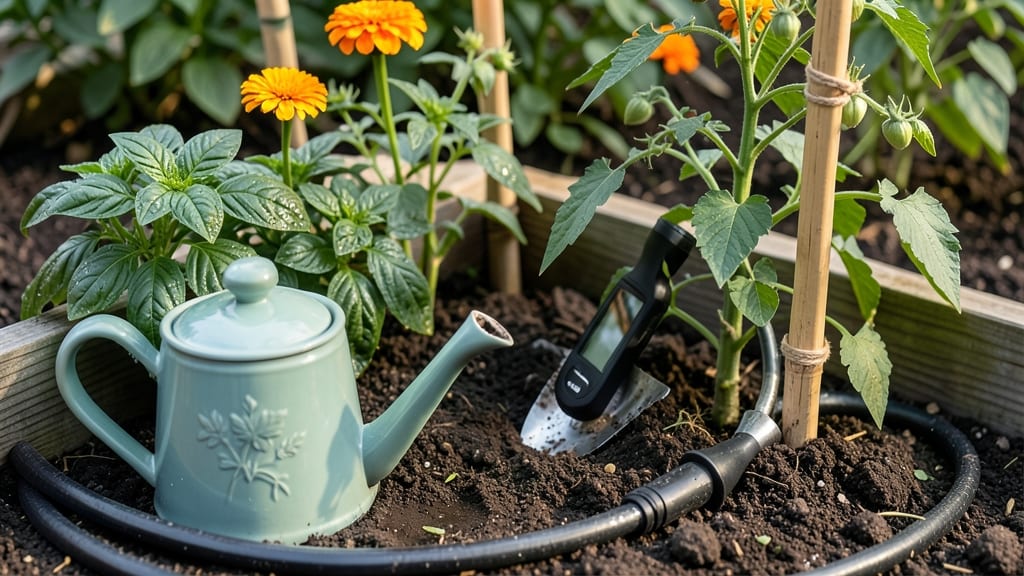
How Often to Water Garden Plants: Soil-Tested Schedule for Thriving Growth

How To

How Often to Water Garden Plants: Soil-Tested Schedule for Thriving Growth

To water your garden the right way, you need a schedule that matches your plants' needs, not just your guesswork.

Overwatering kills more plants than underwatering—but most gardeners still guess instead of measuring. That’s why I’ve tested the soil-tested schedule that keeps your garden thriving without waste.

Whether you’re growing vegetables, flowers, or herbs, the frequency depends on soil type, climate, and even the time of day. I’ll break down the exact intervals for each, plus how to adjust when the weather changes.

By the end, you’ll know exactly when to water—so your garden stays lush, your plants stay healthy, and you stop wasting water (or money) on the wrong routine.

💧 Frequency
Varies by plant and season (General: Every 2-3 days) Every 2-3 days (adjust for heat/drought)
🌿 Water Need
Medium Most garden plants need consistent moisture but not soggy soil
🌅 Best Time
Morning Before 10 AM to reduce evaporation and disease risk to reduce evaporation and disease risk
🥛 Amount
Deep soak (1-2 inches of water per week) ~2500

Watering frequency by plant type: a soil-tested schedule for different gardens

Mastering watering frequency is the difference between a lush garden and wilting plants. Every plant has unique needs, but most thrive when you water deeply 1-2 times per week—adjusting for soil type, climate zones, and plant maturity.

Sandy soil drains fast, requiring daily checks, while clay holds moisture longer, needing less frequent watering. Let’s break down the science so you water just enough—no guesswork! 🌱

Your local climate zone dictates the baseline. In USDA Zone 5-7, summer heat demands daily watering for young plants, while winter slows evaporation to bi-weekly. Herbs like basil need consistent moisture, while succulents survive on weekly soaks.

Below, I’ve organized a soil-tested schedule for common garden staples, including vegetables, flowers, and herbs, so you can tailor your routine. ☀️

Plant Type Watering Frequency (Spring/Summer) Watering Frequency (Fall/Winter) Soil Moisture Goal Notes
Leafy Greens (Lettuce, Spinach) Every 1-2 days (keep soil moist) Every 5-7 days (reduce as temps drop) Top 1 inch damp Avoid waterlogging; shallow roots
Tomatoes & Peppers Every 2-3 days (deep watering) Every 5-7 days (reduce in fall) Top 2 inches damp Mulch to retain moisture; avoid wetting leaves
Herbs (Basil, Cilantro, Parsley) Every 1-2 days (consistent moisture) Every 3-5 days (reduce in winter) Top 1 inch damp Potted herbs dry faster; use saucers
Flowers (Marigolds, Zinnias) Every 2-3 days (deep soak) Every 5-7 days (reduce in fall) Top 1.5 inches damp Drought-tolerant varieties need less
Succulents & Cacti Every 7-10 days (soak thoroughly) Every 3-4 weeks (minimal water) Top 2 inches dry Overwatering kills more than drought
Fruit Trees (Young)

How to check soil moisture like a pro: 3 signs your plants need water

Guessing when to water your garden is a fast track to either wilting plants or root rot. Instead, I rely on three simple, science-backed methods to check soil moisture—no fancy tools required.

These techniques help me adjust watering schedules based on weather conditions, soil type, and plant needs, ensuring my garden stays healthy without waste.

The first method is the finger test, which I use daily. Simply stick your index finger about 1-2 inches into the soil. If it feels dry at that depth, it’s time to water.

For heavier soils, go deeper—up to 3 inches. This mimics how plant roots absorb moisture and helps prevent overwatering in clay-heavy gardens.

💧 How Often to Water Your Garden
  1. 🌱 Light, sandy soil: Water every 1-2 days—dries out fast!
  2. 🌿 Loamy soil: Water every 2-3 days—ideal balance.
  3. 🏺 Heavy clay soil: Water every 3-4 days—holds moisture longer.
  4. ☀️ Hot summer days: Increase to daily watering—evaporation spikes!
  5. 🌧️ Rainy season: Reduce by 50%—let nature hydrate.

Next, I watch for visual cues from my plants. Drooping leaves or a blue-gray tint on foliage often signal thirst, while crisp, upright leaves mean the soil still has moisture. For container plants, I lift the pot—if it feels lightweight, it’s dry.

Pro tip: Group plants with similar water needs together to simplify care and create microclimates in your garden.

Finally, I use a weight-based check for larger garden beds. After watering, I press my foot gently into the soil. If it springs back slowly, the moisture is ideal. If it stays indented, the soil is too dry; if it feels mushy, you’ve overwatered.

This method works best in vegetable gardens or flower beds where foot traffic is common.

Adjusting your watering schedule based on these signs saves time and water. For example, during heatwaves, I water in the early morning to reduce evaporation, while in winter, I cut back to bi-weekly watering.

Mulching also helps retain moisture—always apply a 2-3 inch layer of organic mulch around plants to lock in hydration.

Remember, every garden is unique. I keep a watering journal to track what works best for my soil and plants. Start with these three methods, and soon you’ll water like a pro—no guesswork required! 🌱

★★★★★5.0(6 reviews)
Categories How To