
Light Requirements
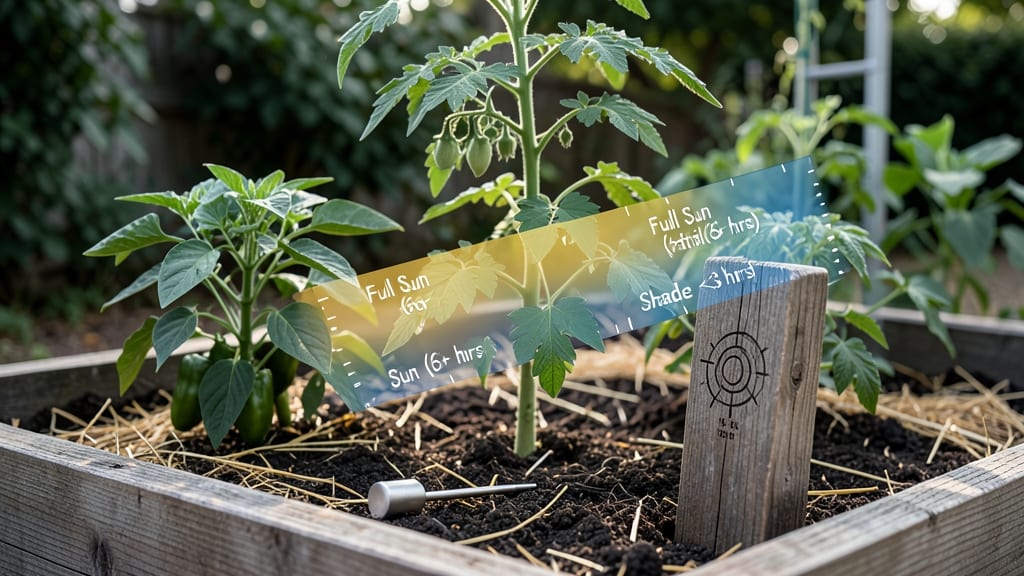
A veggie garden needs how much sun does a veggie garden need—specifically 6 to 8 hours daily—to thrive, but not all plants demand the same amount—and getting this wrong can mean the difference between a lush harvest and wilted disappointment.
Struggling to decide where to plant your tomatoes or lettuce? Sunlight is the single most critical factor for a thriving 🥕 vegetable garden, and even a few hours less than required can stunt growth or ruin flavor.
For example, leafy greens like spinach tolerate partial shade, while tomatoes and peppers beg for full sun or they’ll produce sparse, bitter fruit.
Here’s the game-changer: most gardeners overestimate their sunlight exposure. Morning sun and afternoon shade aren’t the same—one side of your yard could be 3 hours brighter than the other. I’ll show you how to measure it accurately, adjust for your climate, and even salvage shady spots with the right plants.
By the end, you’ll know exactly how much sun each crop craves, how to maximize every square foot, and how to troubleshoot when your veggies still look lackluster—even with plenty of light.

Sunlight requirements by vegetable type: full sun vs partial shade guide
Sunlight is the lifeblood of your vegetable garden, but not all plants crave the same amount. Some vegetables thrive under the blazing full sun (6+ hours daily), while others wilt in too much heat and prefer partial shade (3-6 hours).
Getting this balance right ensures robust growth, higher yields, and fewer pests. Let’s break down the sunlight needs for 20+ common vegetables so you can plan your garden like a pro.
First, understand that full sun lovers like tomatoes and peppers need unobstructed sunlight to produce fruit, while shade-tolerant greens like spinach or kale can bolt or turn bitter in too much heat. Even a small garden can accommodate both groups with smart placement.
For example, place heat-sensitive crops near fences or taller plants that cast afternoon shade, while sun-hungry varieties should bask in the brightest spots.
Pro Tip: Use a sunlight journal for a week to track how much light different areas of your garden receive. Mark spots with morning sun (cooler, gentler rays) and afternoon shade (hotter, harsher light). This helps you match plants to their ideal microclimate.
| Vegetable | Sunlight Needs | Best Placement | Notes |
|---|---|---|---|
| Tomatoes | 6-8+ hours | South-facing beds, trellises | Needs staking for support; prune lower leaves to improve airflow. |
| Peppers | 6-8+ hours | Full sun, protected from wind | Heat-loving; avoid overwatering to prevent blossom end rot. |
| Cucumbers | 6-8 hours | Trellis or fence for vertical growth | Vines need space; mulch to retain moisture. |
| Lettuce | 3-6 hours | Partial shade in hot climates | Bolt-resistant varieties like Romaine tolerate more sun. |
| Spinach | 3-5 hours | Dappled shade or morning sun | Cool-season crop; harvest young for tender leaves. |
| Basil | 5-6+ hours | Containers in full sun | Pinch back flower buds to encourage leaf growth. |
| Carrots | 4-6 hours | Loose soil, partial shade in summer | Thin seedlings to 3 inches apart for straight growth. |
| Green Beans | 6-8 hours | Trellis or raised beds | Bush varieties need less support than pole beans. |
| Swiss Chard | 3-6 hours | Morning sun, afternoon shade | Cut-and-come-again harvest; rich soil prevents bolting. |
| Onions | 5-6 hours | Well-drained beds | Thin to 2-3 inches apart to prevent disease. |
For full sun lovers like tomatoes and peppers, prioritize the southern or western sides of your garden where sunlight is most intense. These plants need 6+ hours of direct light to set fruit and avoid blossom drop.
If your garden lacks space, consider vertical gardening with trellises for vining crops like cucumbers or pole beans, which stretch toward the sun.
On the other hand, shade-tolerant greens like spinach and lettuce thrive with 3-6 hours of light and can even handle dappled shade from trees or structures.
How to measure sunlight in your garden and adjust plant placement
Sunlight isn’t just light—it’s the lifeblood of your veggie garden. But not all plants crave the same amount. Some, like tomatoes and peppers, thrive under full sun (6+ hours), while others, like leafy greens, prefer partial shade (3-6 hours).
Without measuring sunlight accurately, you risk underperforming crops or wasted space. Let’s fix that with a simple, science-backed approach.
Start by observing your garden’s microclimates—areas that receive different sunlight patterns. A spot near a fence might get morning sun but stay shaded in the afternoon, while an open bed could bake all day.
Use a sunlight journal for a week to track these patterns before making decisions. This small step prevents costly mistakes like planting basil where it’ll struggle to reach its 6-hour minimum.
- 1 Mark your garden zones: Divide your space into 3-ft squares using stakes or spray paint. Label each zone (e.g., "Zone A: Morning Sun").
- 2 Track sunlight hours: Use a sunlight calculator app (like Gardenate) or a shadow mapping tool. Place a white board in each zone and record shadows every 2 hours from 8 AM–6 PM for 3 days.
- 3 Categorize zones: Label each zone as full sun (>6 hrs), partial shade (3-6 hrs), or low light (<3 hrs). Example: Zone A might get 4 hours (partial shade), while Zone B gets 7 hours (full sun).
- 4 Match plants to zones: Place sun-lovers (tomatoes, peppers) in full-sun zones and shade-tolerant (lettuce, spinach) in partial shade. Use companion planting to maximize space—e.g., tall corn in back, bush beans in front.
- 5 Optimize with vertical gardening: Use trellises for pole beans or cucumbers to grow upward into sunlight. Add reflective mulch (like white gravel) to bounce light onto shaded areas.
Once you’ve mapped your zones, adjust plant placement like a pro.
For example, move carrots (which need 5-6 hours) to a zone that gets afternoon sun, while radishes (tolerant of 3-4 hours) can thrive in morning light. Companion planting also helps—pair sunny tomatoes with shade-tolerant basil to utilize space efficiently.
Don’t forget to account for seasonal changes. A zone might be full sun in summer but only partial shade in winter. Use seasonal adjustments, like moving tender crops to sunnier spots in early spring or adding shade cloth in peak summer.
This flexibility ensures your garden thrives year-round, even as sunlight patterns shift.
If your garden has limited sunlight, focus on low-light crops like kale, swiss chard, or green onions. These plants can produce well with just 3-4 hours of light.
For container gardening, place pots on balconies or decks that get the most sun, rotating them daily to ensure even exposure.
With these steps, you’ll transform guesswork into a data-driven garden. Soon, you’ll be the neighbor everyone asks for tomato seeds—not because you’re lucky, but because you’ve mastered the sunlight science behind a thriving veggie patch. Happy planting! 🌿