
Watering
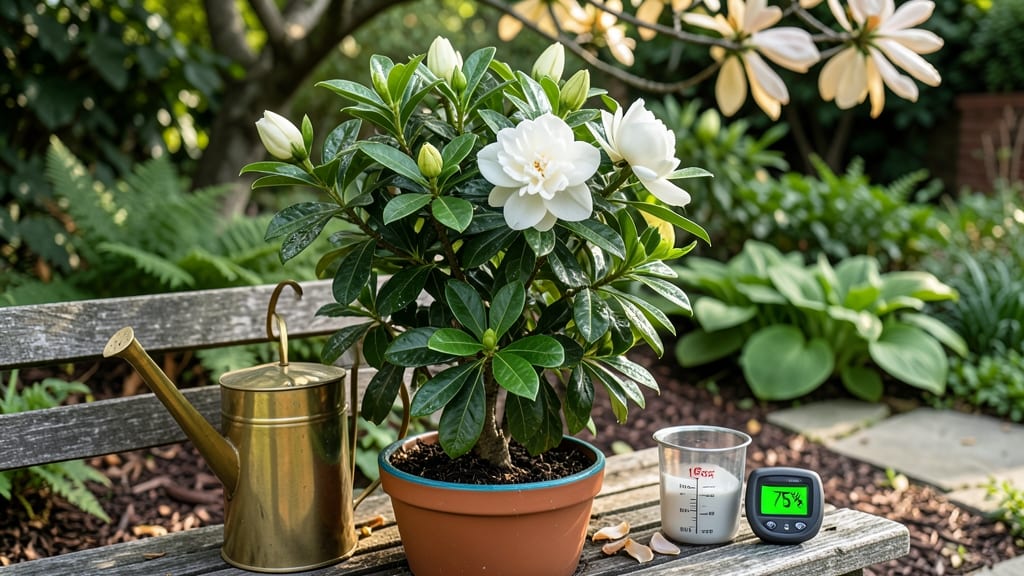
To keep gardenias blooming with their signature fragrance, how much water do gardenias need? The answer is consistent moisture—about 1-2 gallons every 2-3 days in summer, with adjustments for seasonal shifts.
Picture this: you’ve just planted your 🌸 gardenia, and it’s thriving—until the blooms start dropping like autumn leaves. That’s often a sign of watering gone wrong, either too much or too little.
The key? Balancing soil dampness without drowning the roots, especially in USDA Zone 6a where humidity and heat play tricks on moisture levels.
Overwatering leads to yellow leaves and root rot, while underwatering causes buds to drop before they open. The solution? A smart routine that accounts for container vs. in-ground plants, mulching for retention, and seasonal tweaks—like cutting back in winter when growth slows.
Below, I’ll break down the exact watering schedule by season, how to spot trouble early, and pro tips to keep your gardenia’s soil just right—so you’re left with fragrant blooms, not wilting disappointment.
Gardenia watering schedule by season: how often to water for maximum blooms
Gardenias thrive on consistent moisture, but their watering needs shift dramatically with the seasons. In summer's heat, they demand frequent hydration, while winter dormancy requires minimal intervention. The key is balancing soil moisture without drowning their sensitive roots—a challenge even experienced gardeners face.
Let’s break down the ideal watering routine for each season, tailored to your climate zone and plant type.
Container gardenias dry out 3x faster than in-ground plants, so potted varieties need daily checks during peak summer. Meanwhile, established shrubs in humid climates (like USDA Zones 8-10) may only need water every 5-7 days in cooler months.
The goal? Keep the top 2-3 inches of soil consistently moist but never soggy. Overwatering is the #1 killer of gardenias—it causes root rot and yellowing leaves faster than you can say "bud drop."
In spring, your gardenia’s watering needs ramp up as new growth emerges. Start with 1 gallon every 3-5 days, then increase to 1.5 gallons when buds appear. This is when gardenias are most thirsty—they’re preparing for their summer bloom bonanza.
Pro tip: Water at the base of the plant, not the leaves, to prevent fungal diseases like powdery mildew.
Summer is peak hydration season for gardenias, especially in hot, dry climates. Aim for 1.5-2 gallons daily, delivered in the early morning to reduce evaporation. If your gardenia’s leaves start drooping by midday, it’s a sign you’re not watering deeply enough.
For container plants, check soil moisture twice daily—pots dry out in half the time of in-ground beds. Mulching with 3-4 inches of pine bark helps retain moisture and keeps roots cool.
As fall arrives, cut back watering to every 5-7 days to mimic nature’s drying trend. This gradual reduction signals your gardenia to prepare for dormancy. Overwatering in fall can lead to root suffocation and bud drop, so always check soil moisture with your finger before watering.
In Zone 10+ climates, where winters are mild, you may only reduce frequency slightly—but never skip winter watering entirely.
Winter care is often overlooked, but gardenias in colder zones (6-7) need minimal moisture to survive. Water every 10-14 days only if the top 1 inch of soil feels dry. In frost-prone areas, reduce watering further to prevent root freeze damage.
For container gardenias, move pots to a protected location and water every 2 weeks—just enough to keep soil slightly moist. Never let pots sit in standing water during winter
Signs your gardenia is overwatered or underwatered (and how to fix it)
Your gardenia might look stunning with its glossy leaves and fragrant blooms, but subtle shifts in soil moisture can turn those lush plants into a sad, droopy mess.
The key is spotting the early warning signs of overwatering or underwatering before they cause permanent damage. Let’s decode what your gardenia is really trying to tell you.
Yellowing leaves, for example, could mean either too much water suffocating the roots or not enough water stressing the plant. The difference? Overwatered gardenias develop yellow leaves with brown edges, while underwatered ones show crispy, dry leaf tips. Both signal it’s time to adjust your watering routine—fast.
⚠️ callout-warning
Ideal soil moisture: Keep the top 1-2 inches of soil consistently moist (not soggy). Gardenias thrive with 1-2 gallons of water every 2-3 days in summer, but reduce to weekly in cooler months. Morning watering prevents fungal risks.
🚨 Overwatering danger: Soggy soil for >48 hours causes root rot. 🚨 Underwatering danger: Wilting by noon means roots are desperate for hydration.
If your gardenia’s leaves are soft and mushy while the soil smells rotten or sour, you’ve likely overwatered. This creates the perfect environment for fungal infections and root rot, which can kill your plant in weeks.
The fix? Stop watering immediately and let the soil dry out for 2-3 days before resuming a strict schedule.
On the flip side, underwatered gardenias show wilted leaves that stay droopy even after watering—a sign of permanent cell damage. To revive it, soak the soil deeply until water drains from the bottom.
Then, mulch around the base to lock in moisture and water every other day until new growth appears.
For container gardenias, check soil moisture daily—containers dry out 3x faster than in-ground plants. If the topsoil feels bone-dry within 24 hours, move your pot to a shadier spot and water twice daily until the plant recovers.
In-ground gardenias, however, can handle slightly longer dry spells if mulched properly.
Prevent future stress by testing your soil’s drainage. Amend heavy clay soil with perlite or sand to improve airflow, and always water at the base of the plant (not the leaves) to avoid fungal spores.
With the right balance, your gardenia will reward you with months of fragrant blooms—no guesswork required!