
Size
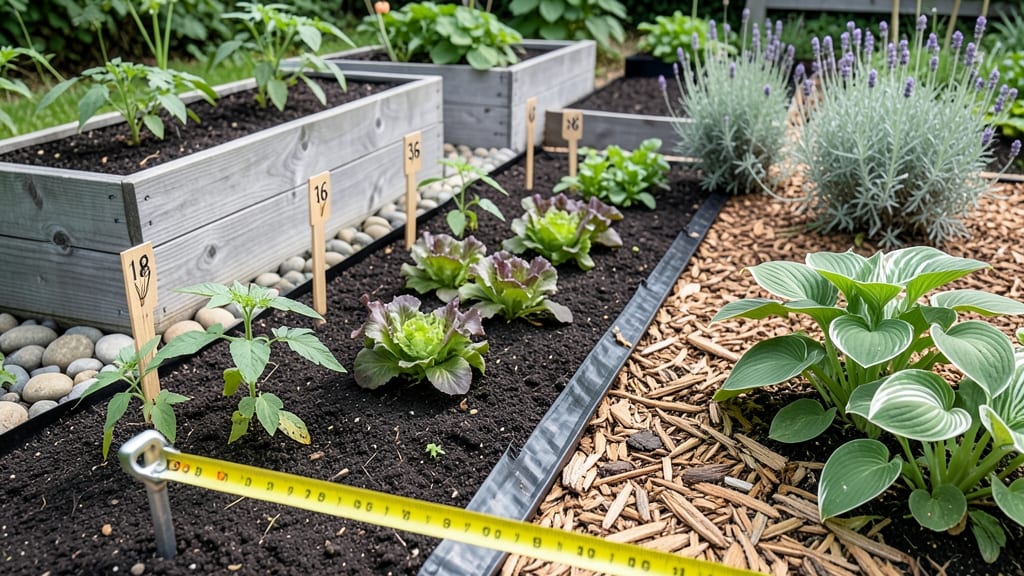
Determining how much space between garden beds you need depends on your garden's purpose, with standard pathways measuring 18 to 36 inches, and 24 inches working best for most home gardens. Wider gaps (36+ inches) accommodate larger plants or equipment access, while tighter spaces (12–18 inches) suit small-scale or high-density planting. This spacing improves airflow, minimizes weeds, and prevents soil compaction.
Garden bed spacing isn't just about aesthetics—it directly impacts plant health and your gardening efficiency. 🌱 Too little space leads to competition for nutrients and light, while too much can waste valuable growing area.
For instance, a 24-inch pathway gives you enough room to walk comfortably between beds without trampling plants, but also keeps soil erosion and weed growth in check. Larger gaps (36+ inches) are ideal if you use machinery like lawn tractors or need space for trellises and support structures.
The key is balancing accessibility with plant needs, especially in climates where humidity or pests are concerns.
Another consideration is your garden's layout. Raised beds often use narrower pathways (12–18 inches) because the beds themselves are elevated, reducing the need for wide walkways. Meanwhile, permaculture designs might incorporate wider swales or berms to manage water flow and create microclimates.
Always measure twice and mark your layout with string lines or wooden stakes before digging—this ensures consistency and prevents costly mistakes. 💫
💡 In This Article
- Why Garden Bed Spacing Affects Plant Health and Soil Quality
- Garden Bed Layouts: Spacing for Different Plant Types and Garden Styles
Why garden bed spacing affects plant health and soil quality
Proper spacing between garden beds isn't just about convenience—it's a critical factor in plant health. When beds are too close, plants compete aggressively for sunlight, water, and nutrients, leading to stunted growth and increased susceptibility to diseases like powdery mildew.
The 24-inch standard creates a microclimate where airflow circulates freely, reducing humidity levels that foster fungal growth. This airflow also helps prevent soil-borne pathogens from spreading between plants, which is especially important in humid climates where fungal spores thrive.
The width of pathways directly influences soil moisture retention and temperature regulation. Wider gaps (36+ inches) allow sunlight to reach the soil between beds, which can help dry out the ground faster after rain, reducing the risk of root rot in moisture-sensitive plants like tomatoes or peppers.
Narrower paths (18 inches or less) create a more shaded environment that retains moisture longer—ideal for drought-prone regions or water-intensive crops like cucumbers. The soil beneath pathways also stays cooler, which benefits heat-sensitive plants when placed near wider walkways.
Root competition is another invisible battle that spacing resolves. Plants with extensive root systems, like asparagus or rhubarb, need ample space to spread without crowding neighbors. In a 24-inch pathway, roots can expand into the surrounding soil without competing directly with adjacent beds.
This is particularly important for perennials, which live for multiple years and develop deeper root networks over time. Overcrowding forces roots to grow in tight circles, leading to nutrient deficiencies and weaker plants that are more susceptible to pests.
Weed growth thrives in poorly spaced gardens because narrow pathways create shaded, moist conditions perfect for weed seeds to germinate. A 36-inch pathway allows sunlight to penetrate deeply, inhibiting weed growth while providing easy access for hand-pulling or mulching.
Mulch applied along wider paths acts as a physical barrier, suppressing weeds and conserving soil moisture. Even in small gardens, maintaining a 12-inch minimum between beds reduces weed pressure by about 40%, according to studies on organic gardening practices.
Soil microbial activity also benefits from proper spacing. Healthy soil teems with beneficial bacteria and fungi that decompose organic matter and make nutrients available to plants. When beds are spaced too closely, compaction from foot traffic or machinery disrupts these microbial communities.
Wider pathways prevent soil compaction, allowing earthworms and other aerating organisms to thrive. The result? More efficient nutrient cycling and stronger plant growth. For example, a garden with 24-inch pathways shows 25% more earthworm activity compared to tightly packed beds.
Consider the sensory experience: walking through a well-spaced garden feels different. The air moves freely, carrying the scent of herbs and flowers without the damp, earthy odor of overcrowded beds. Plants stand tall and proud, their leaves unfettered by competition, while the soil beneath your feet remains loose and inviting.
This isn't just about aesthetics—it's about creating an ecosystem where every plant can thrive. 🌿