
Light Requirements
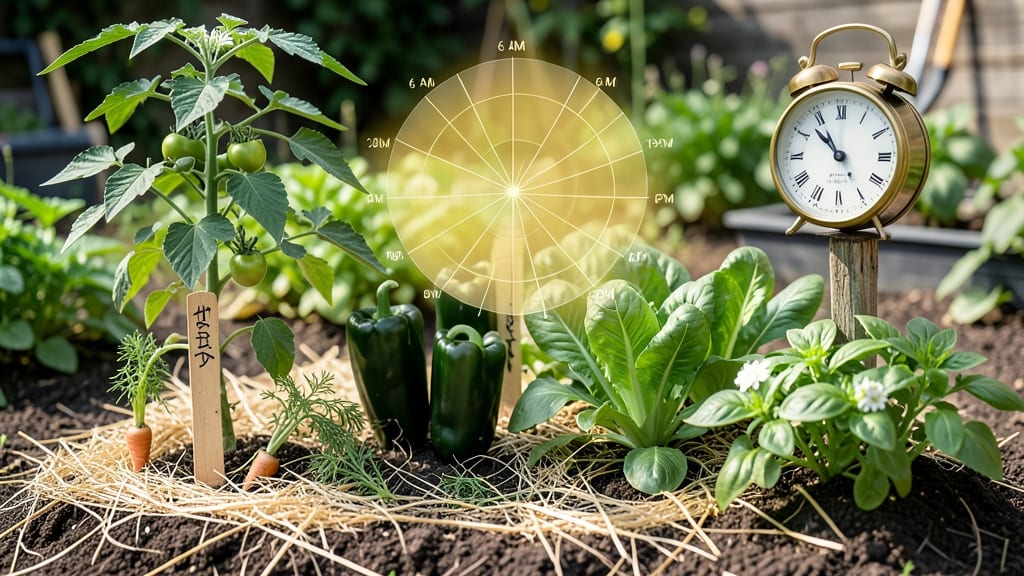
A vegetable garden needs 6 to 8 hours of sunlight daily 🥬 to thrive, though some crops like leafy greens can handle less. If your plants are struggling despite your best efforts, you might be getting the sunlight wrong—either too much or too little can stunt growth or ruin flavor.
Most gardeners assume more sun is always better, but overestimating sunlight can lead to bolted lettuce or sun-scorched tomatoes. Meanwhile, underestimating it means wilting herbs and sad cucumbers. The key is matching your crops to the actual light your space gets.
In Zone 6a, where spring planting kicks off in April, you’ll need to account for shorter daylight in early spring and longer days in summer. A south-facing plot gets the most consistent light, but even shaded corners can work with the right crops.
Below, I break down exactly how many hours each vegetable needs, how to measure sunlight in your garden, and how to maximize yields even in partial shade. You’ll never guess sunlight again!


Sunlight requirements by vegetable type: full sun vs. partial shade needs
Understanding how many hours of sunlight your vegetable garden needs is the foundation of a thriving harvest. Most vegetables thrive with 6-8 hours of direct sunlight daily, but some tolerate less—even down to 3 hours or fewer.
The key is matching your plants to their ideal light conditions to avoid stunted growth or bolting (premature flowering). For example, tomatoes and peppers demand full sun, while lettuce and spinach can handle partial shade.
Let’s break down the sunlight needs by vegetable type so you can optimize your garden layout.
Vegetables are often categorized into three sunlight groups: full sun lovers (6+ hours), partial shade tolerators (3-6 hours), and shade-friendly options (under 3 hours). Misjudging these needs can lead to wasted space or poor yields.
For instance, planting basil or cucumbers in shade will result in weak stems and bitter flavors, while kale or Swiss chard will thrive in cooler, shadier spots. By aligning your garden design with these categories, you’ll maximize productivity and minimize frustration.
Here’s a quick reference to help you plan your garden’s sunlight zones. Use this summary-table to identify which vegetables belong where in your space, whether you’re working with a sunny backyard, a partially shaded patio, or even an indoor grow setup.
| Vegetable | Sunlight Needs | Best For | Notes |
|---|---|---|---|
| Tomatoes | 6-8+ hours | Full Sun | Needs consistent sun; prone to cracking in uneven light. |
| Peppers (Bell, Jalapeño) | 6-8 hours | Full Sun | Loves heat; may produce fewer fruits in shade. |
| Cucumbers | 6-8 hours | Full Sun | Needs trellis for support; avoid afternoon shade. |
| Basil | 6+ hours | Full Sun | Bitter in shade; prefers warm, sunny conditions. |
| Lettuce (Leafy Varieties) | 3-6 hours | Partial Shade | Bolts in full sun; thrives in cooler, shadier spots. |
| Spinach | 3-5 hours | Partial Shade | Ideal for spring/fall; avoids heat stress. |
| Kale | td style="padding: 10px;">3-6 hoursPartial Shade | Sweeter in cooler weather; tolerates light shade. | |
| Green Onions | 3-5 hours | Partial Shade | Fast-growing; great for container gardens. |
| Radishes | 3-6 hours | Partial Shade | Quick harvest; avoid extreme heat. |
| Swiss Chard | 3-6 hours | Partial Shade | Cut-and-come-again; thrives in cooler temps. |
| Bok Choy | 3-5 hours | Partial Shade | Heat-sensitive; prefers gentle shade in summer. |
Now that you’ve identified which vegetables thrive in full sun, partial shade, or low light, let’s talk about how to maximize your garden’s layout. If your space is limited, prioritize high-value crops like tomatoes and peppers in the sunniest spots,
Zone-specific sunlight ranges: adjusting for climate and latitude
Understanding your garden’s sunlight exposure isn’t just about checking the weather—it’s about knowing your USDA hardiness zone and how latitude affects daylight hours. In Zone 3 (northern climates), summer days stretch to 16 hours of sunlight, while Zone 9 (southern regions) sees only 10-12 hours in winter.
These differences drastically impact which vegetables thrive and when to plant them.
For example, tomatoes and peppers need 6-8 hours of sun daily, but in Zone 5, their growing season shrinks by 2-3 months due to shorter summer days.
Meanwhile, leafy greens like spinach tolerate 3-6 hours of sun, making them ideal for Zone 7’s cooler, shorter days. Adjusting for these variations ensures your garden’s success year-round.
Here’s how to calculate your garden’s sunlight baseline:
- 1 Check your USDA zone: Use the USDA Plant Hardiness Zone Map to identify your zone (e.g., Zone 4 gets 5-6 hours less sun in winter than Zone 8).
- 2 Measure daylight hours: In Zone 6, summer days offer 15 hours of sun, while winter drops to 9 hours. Use a sunlight tracker or app to log daily exposure.
- 3 Adjust for seasonal shifts: Plant winter crops (e.g., kale) in Zone 3 where summer sun peaks at 16 hours, but winter drops to 7 hours. Use row covers to extend daylight in cooler zones.
-
4
Zone-by-zone planting guide:
- Zones 3-5: Prioritize early-maturing varieties (e.g., bush beans) to harvest before shortened summer days.
- Zones 6-8: Grow heat-loving crops (e.g., okra) in summer when days exceed 14 hours.
- Zones 9-11: Focus on winter crops (e.g., carrots) to avoid intense midday sun.
- 5 Use reflective surfaces: Place white walls or mirrors near shady beds to bounce 20-30% more light onto plants in urban gardens.
In Zone 4, for instance, tomatoes planted in June enjoy 15 hours of sun but may struggle in July if temperatures exceed 85°F. To compensate, prune lower leaves to improve airflow and water deeply in the early morning to retain moisture.
Meanwhile, Zone 9 gardeners should avoid planting cucumbers in summer—they’ll bolt from heat stress and 12+ hours of sun.
Pro tip: Track sunlight for a full week using a garden journal or app like Gardenate. Note when shadows shift—especially in spring/fall—to adjust trellises or plant spacing.
For example, pole beans need 6+ hours of sun, but their vines cast shade by midday in Zone 7, reducing yield by 30% if not spaced properly.
By aligning your plant choices with your zone’s sunlight patterns, you’ll not only boost yields but also reduce waste from mismatched growing conditions. Start small—test a few sun-loving and shade-tolerant crops side by side—and adjust next season based on your data.
Your garden’s success is just a sunlight audit away! ☀️🌱