
Watering
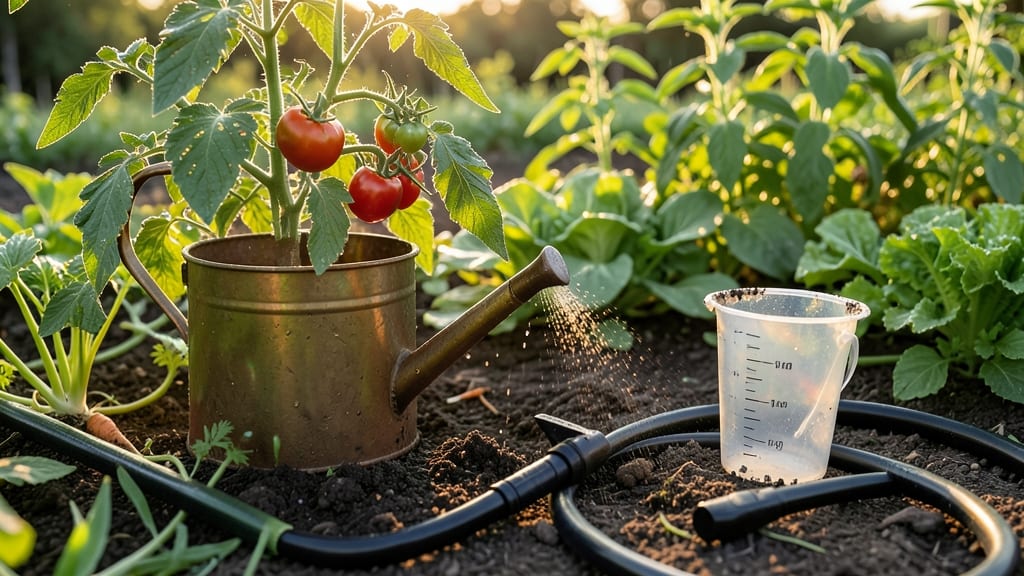
Watering your vegetable garden the right amount keeps your 🥬 thriving without wasting a drop—most plants need 1 to 2 inches of water per week, but timing and soil type change everything.
Picture this: you’ve just planted your spring seeds, and after a week of careful watering, the soil is still bone-dry. Or worse, your tomatoes split from too much water. The key isn’t just how much you water—it’s when and how you do it.
In this guide, we’ll break down the exact watering schedule for your garden’s needs, from leafy greens to fruiting plants, and how to adjust for rain, heat, or drought. You’ll learn the signs of over- and under-watering so you can fix mistakes before they cost you your harvest.
By the end, you’ll water with confidence—no guesswork, just a peak-yield schedule that saves time and keeps your garden flourishing all season long.
Daily watering requirements for vegetable gardens by plant type
Watering your vegetable garden isn’t one-size-fits-all—each plant type demands a unique approach to hydration. Root vegetables like carrots and potatoes need deep, infrequent watering to encourage downward growth, while leafy greens such as lettuce and spinach prefer consistent moisture to stay crisp.
Understanding these differences prevents stress and maximizes yield, saving you time and effort in the long run.
For fruiting plants like tomatoes and peppers, watering consistency is critical during flowering and fruiting stages. Herbs, including basil and parsley, often thrive with less water but still require regular checks to avoid wilting.
The key lies in soil moisture—testing it with your finger or a moisture meter ensures you’re neither drowning nor dehydrating your plants.
Here’s a quick reference for daily watering needs by plant category, including signs of over- or under-watering to watch for:
To avoid guesswork, use the finger test: Stick your index finger 1-2 inches into the soil. If it feels dry, it’s time to water. For deep-watering techniques, focus on the base of the plant—aim for 6-8 inches down—to encourage strong root development.
This method reduces surface evaporation and keeps roots healthy, especially in sandy soils that drain quickly.
Morning watering is ideal because it allows foliage to dry before evening, reducing fungal diseases like powdery mildew. If you must water in the evening, avoid overhead sprinklers to prevent damp leaves. Drip irrigation or soaker hoses are game-changers for efficiency, delivering water directly to the roots without waste.
Watch for wilting leaves as a red flag—it’s often a sign of underwatering, but check the soil first. If the top inch is dry, water immediately. Conversely, yellowing leaves or mushrooms sprouting in the soil signal overwatering.
Adjust your schedule based on weather patterns: increase frequency during heatwaves and reduce during rainy spells.
Mulching with straw or wood chips retains moisture and regulates soil temperature, cutting down on watering needs by up to 30%.
For container gardens, smaller pots dry out faster, so check soil moisture daily and water thoroughly until it drains from the bottom. Self-watering planters can automate this process for busy gardeners.
Seasonal adjustments are key: in summer heat, water early in the morning to minimize evaporation, while in spring and fall, you can space out watering as temperatures drop. Always tailor your approach to your specific microclimate—shady spots stay moist longer than sunny areas.
By mastering these plant-specific watering guidelines, you’ll create an environment where roots grow deep, leaves stay lush, and fruits burst with flavor. Start with the summary-table as your cheat sheet, and soon you’ll water like a pro—no more wasted effort or wilted plants! 💧🌱
Seasonal watering schedule: adjusting for rain, heat, and dormancy
Adjusting your vegetable garden's watering schedule by season is like giving your plants a tailored wardrobe—they thrive when dressed for the weather. In spring, focus on establishing deep roots with 1-1.5 inches of water weekly, while summer demands daily checks during heatwaves.
Fall slows growth, so reduce watering to every 7-10 days, and winter dormancy means minimal watering unless you're growing hardy greens like kale.
Your garden's water needs shift dramatically with the seasons. For example, tomatoes and peppers need 1.5-2 inches per week in summer but can tolerate half that in fall. Leafy greens like lettuce prefer consistent moisture but hate soggy soil—always adjust based on rainfall and temperature.
A simple soil moisture test (stick your finger 1 inch deep) tells you when to water.
| Season | Watering Goal | Frequency | Adjustments |
|---|---|---|---|
| Spring (Mar-May) | 1-1.5" weekly | 2-3x/week | Increase after 60°F soil |
| Summer (Jun-Aug) | 1.5-2" weekly | Daily in heatwaves | Mulch to retain moisture |
| Fall (Sep-Nov) | 0.75-1" weekly | Every 7-10 days | Reduce as temps drop |
| Winter (Dec-Feb) | 0.5" monthly | Bi-weekly | Only for hardy crops |
Rainy seasons complicate things—skip watering if you've had 1 inch of rain in 3 days. Use a rain gauge to track accumulation and adjust your schedule. For example, if your area gets 2 inches of rain in May, cut your watering in half that week.
Always water in the early morning to prevent fungal diseases like powdery mildew, which thrives in damp evening conditions.
Heatwaves demand extra care. When temperatures hit 90°F+, increase watering to every other day and focus on the root zone (not leaves). Use drip irrigation or soaker hoses to deliver water directly to roots, reducing evaporation.
Container gardens dry out faster—check soil moisture daily and water until it runs out the drainage holes.
Fall is your chance to prep for winter. As daylight shortens, reduce watering to encourage root hardening. Harvest cool-season crops like carrots and beets before the first frost, but leave kale and spinach in the ground—they sweeten with frost!
Mulch with straw or leaves to protect roots from freezing temperatures while retaining minimal moisture.
Winter dormancy means minimal watering, but don't skip it entirely. Even dormant plants need occasional moisture to survive. For perennial herbs like rosemary or thyme, water lightly every 2-3 weeks if there's no snow cover.
Use a watering wand to gently mist soil without disturbing mulch, and avoid watering if the ground is frozen.
Pro tip: Keep a gardening journal to track seasonal adjustments. Note rainfall totals, temperature spikes, and plant responses. Over time, you'll create a customized watering calendar that outperforms generic schedules. Your future self (and your veggies) will thank you! 🌱☀️💧