
Size
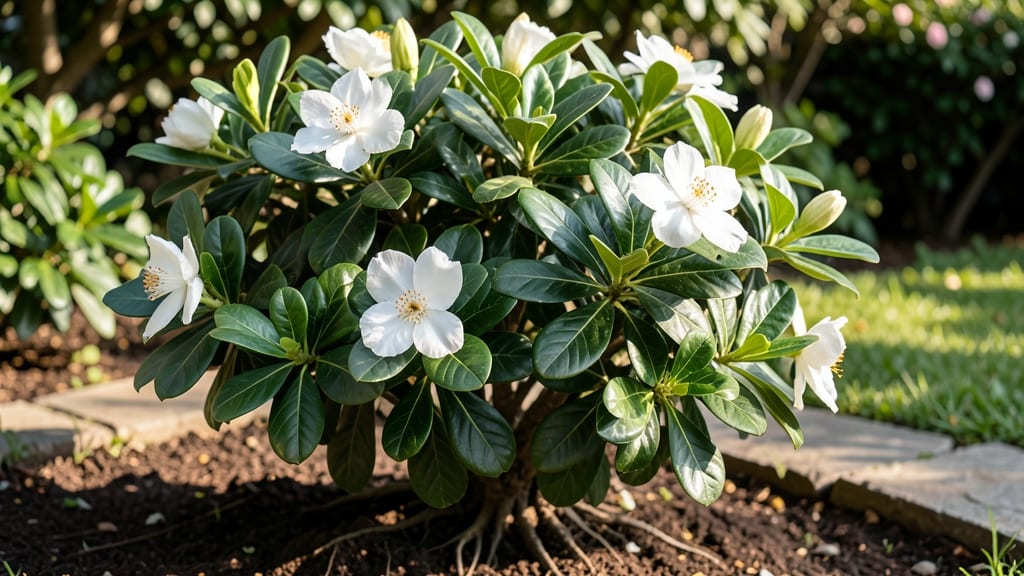
Gardenias grow anywhere from 2 to 6 feet tall, depending on the variety and how you care for them—so knowing their mature size is the key to choosing the right spot in your garden.
If you’re dreaming of fragrant, creamy-white blooms but wondering whether gardenias will fit your garden—or just your patio—you’re not alone. These tropical favorites vary wildly in size, from compact shrubs to towering small trees, and their growth depends on more than just genetics.
For example, the classic Gardenia jasminoides 🌸 typically reaches 4 to 6 feet at maturity, while dwarf varieties stay under 3 feet. That means a single plant can easily outgrow a small balcony or fit snugly into a corner bed—with the right pruning and care, of course.
Below, I’ll break down the exact height ranges by variety, plus tips to control their size so you can enjoy their intoxicating scent without sacrificing your garden layout.

Gardenia size by variety: exact height and spread measurements
Choosing the right gardenia variety starts with understanding their mature sizes. Some stay small enough for containers, while others grow into small trees. The most popular types—like Gardenia jasminoides and Gardenia augusta—vary dramatically in height and spread, so let’s break down what to expect from each.
Knowing these measurements helps you plan spacing, pruning, and even whether to grow them in pots or plant them directly in the ground.
For example, the dwarf varieties like 'Radicans' stay under 3 feet tall and are perfect for patios or small gardens. Meanwhile, standard types like 'Kleim's Hardy' can reach 6 feet or taller, making them better suited for larger landscapes or as focal points.
Spread is just as critical—some varieties grow wide and bushy, while others stay narrow and upright.
Here’s a quick comparison of the most common gardenia varieties, including their mature height, spread, and typical growth habits. This will help you visualize how each variety fits into your space before you plant.
If you’re growing gardenias in containers, opt for dwarf or semi-dwarf varieties like 'Radicans' or 'Mystery'. These stay under 3 feet tall and thrive in 15–20 gallon pots, making them ideal for patios or balconies.
Just remember to repot every 2–3 years to accommodate root growth and prevent becoming root-bound, which can stunt their size and flowering.
For larger garden spaces, varieties like 'Kleim's Hardy' or 'Fortuniana' add dramatic height and fragrance. Plant them 6–8 feet apart to allow for their mature spread, especially if you want to create a fragrant hedge or privacy screen.
These varieties also benefit from regular pruning to maintain shape and encourage bushier growth, which can help control their height over time.
One common mistake is assuming all gardenias grow the same size. For instance, Gardenia augusta varieties like 'Fortuniana' can grow into small trees, reaching 10 feet tall if left unpruned. If you’re limited on space, prune aggressively in early spring to keep them under 6 feet.
Conversely, dwarf varieties like 'Mystery' may struggle if given too much space—they’ll become leggy and sparse if not pruned lightly to encourage branching.
When planning your garden, consider the growth rate of each variety. Most gardenias grow 6–12 inches per year, but this can slow down in cooler climates or if they’re not getting enough sunlight.
For faster growth, ensure they’re planted in well-draining, acidic soil (pH 5.0–6.0) and receive partial shade to protect their leaves from scorching. Mulching around the base with pine bark or compost also helps retain moisture and encourages steady growth.
Finally, don’t overlook the fragrance factor when choosing a variety. Larger gardenias like 'Fortuniana' produce big, highly fragrant blooms, but they require more space. Smaller varieties like 'Radicans' still pack a punch with their scent, making them perfect for close-up enjoyment on patios or near windows.
Whether you prioritize size, fragrance, or ease of care, there’s a gardenia variety that fits your needs—and your space.
How pruning and care affect gardenia growth size
Your gardenia’s final size isn’t set in stone—it’s shaped by how you prune and care for it. With the right techniques, you can keep a standard variety from becoming a towering shrub or encourage a dwarf gardenia to stay compact.
The key lies in understanding how light exposure, soil conditions, and seasonal pruning influence growth habits.
For example, Gardenias jasminoides can reach 6 feet tall if left unchecked, but with strategic pruning, you can easily maintain it at 3-4 feet. The same plant can also grow wider than tall if you focus on shaping its lateral branches.
Let’s break down the practical steps to control your gardenia’s size naturally.
- Dwarf varieties: Prune lightly in spring to encourage bushiness.
- Standard varieties: Cut back 1/3 of growth after flowering.
- Overgrown gardenias: Trim old wood to reduce height.
- Full sun (6+ hours): Promotes taller, leggier growth.
- Partial shade (4-6 hours): Keeps plants compact and bushy.
- Too much shade: Leads to stunted growth and fewer blooms.
- Acidic soil (pH 5.0-6.0): Essential for healthy growth.
- Balanced fertilizer (10-10-10): Apply every 4-6 weeks in growing season.
- Avoid high nitrogen: Causes leafy growth but fewer flowers.
- Spring: Prune dead or weak branches before new growth.
- Summer: Water deeply but less frequently to avoid leggy growth.
- Fall/Winter: Reduce fertilizer and prune lightly for shape.
If you’re growing dwarf gardenias, focus on light pruning to maintain their 2-3 foot height. For larger varieties, prune after flowering to control height and encourage bushier growth. Remember, gardenias respond well to regular shaping, so don’t hesitate to trim back overgrowth.
One common mistake is pruning too late in the season, which can stunt new growth. Always prune after flowering or in early spring to give your plant time to recover.
With these techniques, you’ll have a gardenia that fits perfectly in your space—whether it’s a patio pot or a garden border.
For extra bushiness, pinch back new growth tips in early summer. This encourages the plant to branch out instead of growing taller. Pair this with well-draining soil and consistent moisture, and you’ll have a thriving, well-proportioned gardenia that blooms beautifully year after year.