
Planting
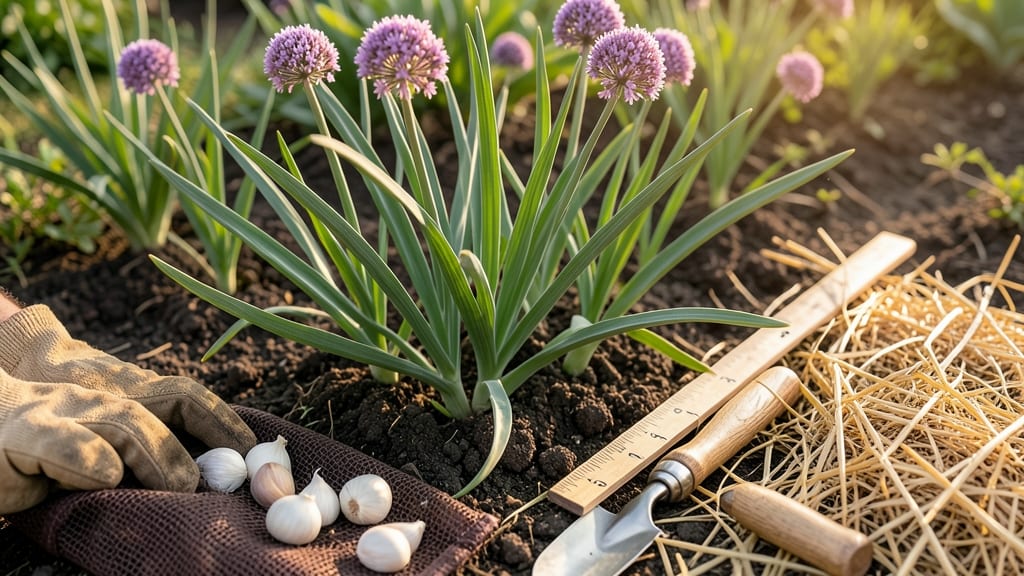
Proper garlic spacing in garden determines whether you’ll pull up dinner-table bulbs or puny cloves that barely cover your thumb.
Picture this: You’ve prepped the soil, planted your cloves, and watered faithfully—only to harvest garlic that’s half the size it should be. The culprit? Too little space between plants. Garlic needs room to breathe (literally) to develop those plump, flavorful bulbs we all love.
In this guide, I’ll break down the science behind spacing—how far apart to plant cloves, why row distances matter, and how to avoid the three biggest mistakes that shrink your harvest.
Whether you’re working with a small urban plot or a sprawling vegetable bed, these spacing rules will help you grow garlic that’s twice as impressive.
You’ll also discover how to adjust spacing for different varieties, troubleshoot overcrowding mid-season, and even maximize yield in tight spaces. Let’s get those cloves planted the right way!
Optimal garlic spacing by variety: cloves, bulbs, and row distances
Perfect garlic spacing isn’t one-size-fits-all—it depends on whether you’re growing hardneck or softneck varieties. These two types have different growth habits, so their spacing needs vary to maximize bulb size and yield.
I’ve planted both for years, and the difference in harvest quality when spacing is correct is night and day.
Hardneck garlic, known for its scape production and bold flavor, needs slightly more room than softneck varieties, which store better but have milder taste. The key is balancing clove spacing, row distance, and bed dimensions to prevent competition while ensuring good airflow.
Let’s break it down by variety so you can plan your garlic patch like a pro.
Why spacing matters: Too close, and your bulbs will be small and weak from competing for nutrients. Too far, and you’ll waste garden space. The sweet spot gives each plant enough room to develop a plump bulb while still packing your garden efficiently. Think of it like giving each garlic plant its own personal space to stretch its roots.
For hardneck garlic, aim for 4-6 inches between cloves in the row. This gives the plant enough room to develop its signature scape and a robust bulb. Space rows 12-18 inches apart to allow for easy weeding and airflow, which is critical for preventing fungal diseases like white rot.
I’ve found that wider row spacing also makes it easier to harvest without disturbing neighboring plants.
When planting softneck garlic, you can tighten things up slightly with 4-5 inches between cloves and 10-12 inches between rows. Softneck varieties are more compact and don’t produce scapes, so they don’t need as much room.
However, don’t go below these measurements—crowding will lead to smaller bulbs and increased competition for water and nutrients.
If you’re growing elephant garlic, which produces massive cloves, give it the most space: 6-8 inches between cloves and 18-24 inches between rows. These giants need room to develop their enormous bulbs, and they’ll reward you with harvests that are nearly twice the size of standard garlic.
Plant them 2-3 inches deep to accommodate their larger cloves.
Don’t forget about bed dimensions. For hardneck and softneck varieties, keep your beds 3-5 feet wide to allow easy access from both sides for weeding and harvesting. Wider beds can lead to missed spots in the middle.
If you’re using raised beds, you can go slightly narrower (2-3 feet) since you’ll have access from all sides.
Before planting, prepare your soil by mixing in compost or well-rotted manure to improve drainage and fertility. Garlic hates soggy soil
Common garlic spacing mistakes that shrink your harvest
Even with rich soil and perfect sunlight, garlic spacing mistakes can turn your dream harvest into a disappointment. Too close, and your cloves compete for nutrients, leaving you with small, weak bulbs.
Too far apart, and you waste precious garden space that could grow more garlic. The balance is everything—and most gardeners get it wrong without realizing it.
I’ve seen gardeners plant garlic just 2 inches apart thinking it’ll grow faster, only to end up with root-bound cloves that never mature. Others space them 12 inches apart, leaving empty rows that could’ve grown double the yield.
The key is understanding how spacing affects air circulation, root development, and disease prevention.
Warning: These Spacing Mistakes Kill Your Garlic Yield
Overcrowding causes fungal diseases like white rot, while poor spacing leads to uneven bulb sizes. Even a 1-inch difference in spacing can reduce your harvest by 30-50%.
One of the biggest mistakes is ignoring variety differences. Hardneck garlic needs 4-6 inches between cloves to develop those prized scapes, while softneck varieties can handle 5-7 inches for larger bulbs.
I once planted elephant garlic (a softneck) at hardneck spacing—result? Tiny bulbs that looked more like overgrown shallots than garlic.
Another hidden issue is row spacing. Many gardeners focus only on clove spacing but forget rows need 12-18 inches apart for proper airflow. Cramped rows create a humid microclimate, inviting botrytis blight and other fungal problems.
I learned this the hard way when my entire garlic bed collapsed mid-season from overcrowded rows.
You can adjust spacing mid-season if you catch problems early. If your garlic looks stunted by spring, gently thin the plants, leaving the strongest shoots with 6 inches between them.
Mulch heavily to protect roots during this adjustment. I’ve salvaged half my yield this way—it’s not perfect, but it’s better than losing everything.
Don’t forget about soil compaction. Tightly packed soil after planting can strangle roots and reduce bulb size. Loosen soil to 8 inches deep before planting, and avoid walking on beds. I use a broadfork to aerate between rows—it’s the difference between penny-sized bulbs and golf-ball giants.
Pro tip: Use a grid layout for large beds. Mark rows with stakes or string to maintain consistent spacing. I’ve even used a straw bale grid in small gardens—it’s a game-changer for precision. With the right spacing, your garlic won’t just survive; it’ll thrive.