
Planting
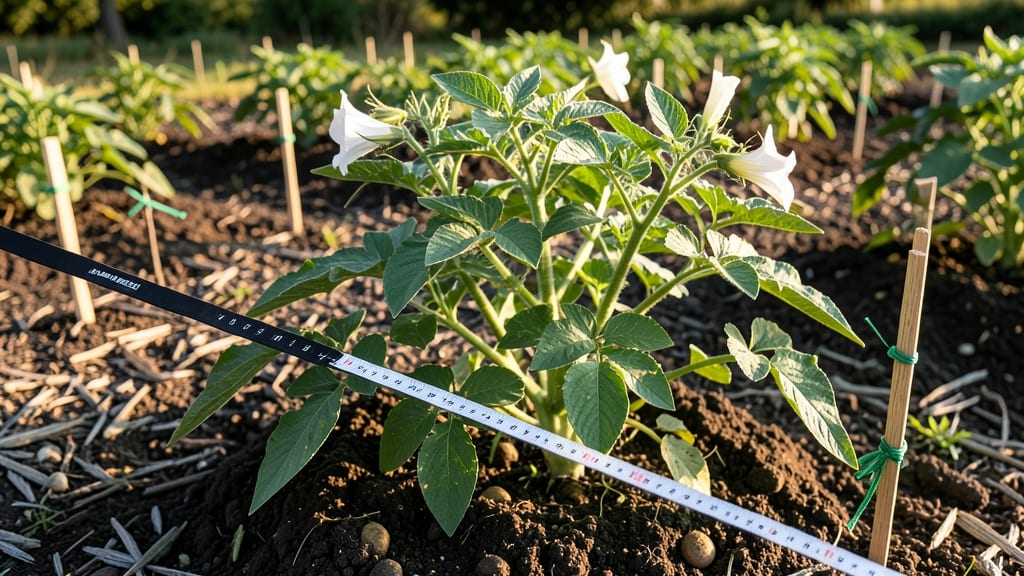
Proper potato spacing in your garden is the first step to avoiding blight, stunted growth, and wasted effort—because cramming those 🥔 too close turns a dream harvest into a disease magnet.
Picture this: you’re knee-deep in a lush potato patch, only to find your tubers small, misshapen, or worse—rotting before harvest. That’s what happens when plants compete for nutrients instead of thriving. The right spacing isn’t just about inches; it’s about airflow, sunlight, and giving each plant room to grow.
In this guide, I’ll break down the exact distances for in-ground planting, containers, and raised beds—plus how to adjust for your garden’s size. Whether you’re a small-space gardener or working a large plot, these tips will help you maximize yield and keep your potatoes healthy from sprout to harvest.
You’ll also learn how to spot (and fix) common spacing mistakes that lead to blight, poor tuber formation, and even failed crops. No more guesswork—just science-backed spacing for a bountiful harvest.
Optimal potato spacing by variety: exact inches for maximum yield
Getting the potato spacing right isn't just about fitting more plants in—it's about giving each tuber room to grow disease-free and produce maximum yield. I've learned the hard way that cramming potatoes too close leads to blight, stunted growth, and wasted effort.
The key? Understanding how each variety type (early, mid-season, late) needs different spacing for airflow and tuber development.
Potatoes fall into three main categories based on their harvest timing: early, mid-season, and late. Each type has unique spacing needs because their plant size and tuber production habits differ.
Early varieties like Yukon Gold or Red Pontiac grow faster but need slightly less space, while late varieties like Russet Burbank or Kennebec spread wider and require more room to avoid competition.
Here's the golden rule I follow: plant spacing should balance row distance and plant distance. For most varieties, I aim for 12-18 inches between plants and 24-36 inches between rows.
But the exact numbers depend on the variety—let's break it down so you can customize your spacing for peak harvests.
| Variety Type | Plant Spacing (inches) | Row Spacing (inches) | Notes |
|---|---|---|---|
| Early Varieties | 10-12 | 24-30 | Fast-growing; harvest in 60-90 days |
| Mid-Season Varieties | 12-15 | 30-36 | Balanced growth; harvest in 90-110 days |
| Late Varieties | 15-18 | 36-42 | Large tubers; harvest in 110-130 days |
| Container Varieties | 6-8 (per 5-gallon pot) | N/A | Use dwarf varieties like 'Red Norland' |
For early varieties, I stick to 10-12 inches between plants because they mature quickly and don't need as much space to develop. Think of Red Pontiac or Early Girl—these are my go-tos for quick harvests.
The row spacing of 24-30 inches gives me enough room to mound soil as they grow, which is crucial for preventing green tubers (a sign of light exposure).
When I plant mid-season varieties like Yukon Gold or Kennebec, I increase the spacing to 12-15 inches between plants and 30-36 inches between rows. These varieties take longer to mature and produce larger tubers, so they need more room to avoid competition for nutrients.
I also make sure to hilling soil every 2-3 weeks to encourage more tuber formation.
Late varieties like Russet Burbank or Fingerling potatoes are the most demanding. I space them 15-18 inches apart with 36-42 inches between rows. This extra space helps prevent disease spread (like late blight) and allows the plants to develop their signature large tubers. I've found that wider rows also make it easier to harvest without disturbing neighboring plants.
If you're growing potatoes in containers, the rules change completely
How to adjust spacing for small gardens vs. large plots
Your garden's size dramatically impacts how you space potatoes. In a small urban garden with 5-gallon containers, you'll crowd plants differently than in a large backyard plot with deep soil. The key is balancing airflow (to prevent blight) with tuber growth space—both underground and above.
For containers or raised beds, I recommend planting 1 seed potato per 5-gallon pot with 12-inch spacing between pots. This mimics in-ground conditions while preventing root competition.
In larger plots, you can stretch spacing to 18-24 inches apart for better tuber development, but only if your soil is loose and well-draining.
Small Gardens (Containers/Raised Beds)
Pros
- Space-efficient - Maximizes yield in tight areas
- Better control - Easier to monitor for pests/disease
- Soil customization - Use lightweight mixes for containers
Cons
- Limited tuber size - Smaller containers = smaller potatoes
- Frequent watering - Containers dry out faster
- Harvest challenges - Tubers may grow in circles
Large Plots (In-Ground)
Pros
- Larger tubers - More room for growth
- Natural airflow - Reduces blight risk
- Easier harvesting - Less soil disturbance
Cons
- More space needed - Not ideal for urban areas
- Weed competition - Requires more maintenance
- Soil variability - May need amending
In raised beds, I use a 12-inch grid pattern—plant potatoes in rows 12 inches apart with 12 inches between plants. This creates a checkerboard effect that improves airflow while still allowing tubers to expand.
For traditional in-ground rows, space plants 18-24 inches apart with 30-inch row spacing to accommodate larger varieties like Russet Burbank.
Pro tip: If you're growing early-maturing varieties in small spaces, you can interplant with greens like lettuce or radishes. Once the potatoes start flowering, remove the greens to give the tubers more room. This double-crops your space without sacrificing potato yield.
For large plots, consider hill planting—mound soil around the base of plants as they grow to create natural barriers that prevent tubers from touching. This also helps with disease prevention by keeping foliage off the soil.
In containers, I recommend deeper pots (18+ inches) to accommodate tuber growth, even if the plant itself stays small.
Remember: Soil depth matters more than surface area. In containers, fill the bottom 6 inches with compost to give tubers room to grow downward. In-ground, aim for 12+ inches of loose soil to prevent tuber deformation.
The right spacing isn't just about inches—it's about creating an environment where potatoes can thrive without competing for resources.