
Light Requirements
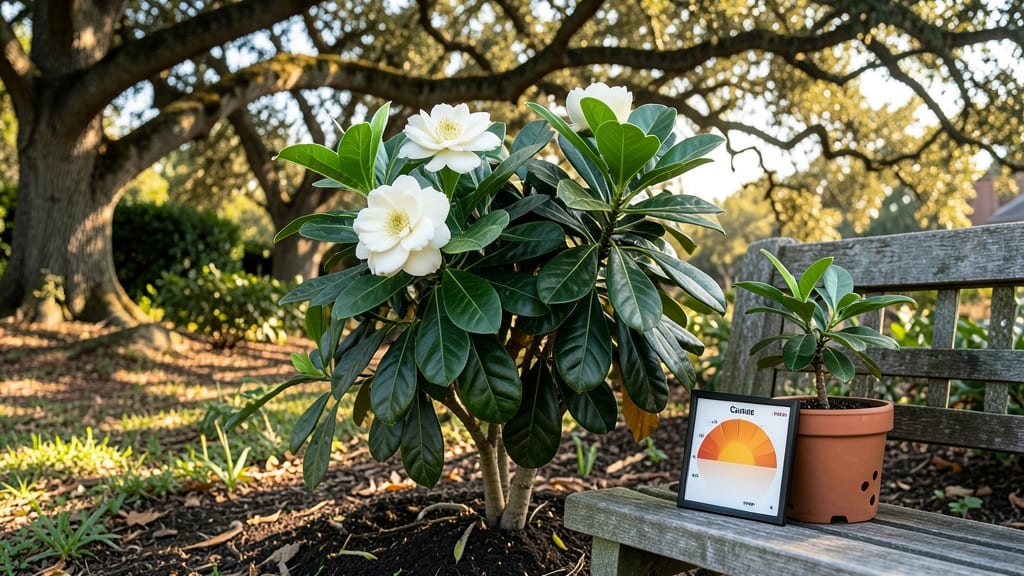
Gardenias thrive best when you meet their sunlight requirements—bright, indirect light for 4-6 hours daily—too much direct sun scorches their delicate leaves, while too little dims their iconic fragrance.
Picture this: your 🌸 gardenia sits proudly in a sun-drenched spot, but instead of blooming, it throws out sparse, scentless stems. That’s the classic sign of light imbalance—most gardeners overestimate how much sun these tropical beauties can handle.
The key? Morning sun and afternoon shade, especially in hotter climates like Zone 6a.
This isn’t just about survival—it’s about maximizing those intoxicating blooms. Too little light? Buds fail to open. Too much? Leaves crisp like autumn leaves.
I’ll show you how to strike the perfect balance, whether your gardenia lives in a container on a balcony or sprawls in a shaded garden bed.
You’ll learn to read your plant’s signals, adjust for seasonal shifts, and even use simple tricks like reflective surfaces to boost light without burning. By the end, your gardenia will be thriving—with vibrant flowers and that signature sweet scent you’ve been missing.


Ideal sunlight exposure for gardenia blooms: morning sun vs full sun
Gardenia plants thrive when given the perfect balance of sunlight, but too much direct sun can scorch delicate leaves, while insufficient light weakens fragrance production. Most gardenia varieties—like the common gardenia (Gardenia jasminoides)—prefer morning sun with afternoon shade, mimicking their natural tropical understory habitats.
This balance ensures vibrant blooms while protecting leaves from leaf burn and wilting.
Understanding the photosynthesis efficiency of gardenias is key. Their leaves have a leaf temperature threshold of around 85°F (29°C)—exceeding this can stress the plant, reducing bloom quality.
Meanwhile, fragrance production peaks when gardenias receive 4-6 hours of morning sunlight, as this triggers optimal volatile organic compound (VOC) synthesis, the compounds responsible for their iconic scent.
Regional climates play a huge role in sunlight needs. In tropical zones (USDA 10-12), gardenias can handle more direct sun year-round, while temperate climates (USDA 7-9) require afternoon shade during summer months to prevent heat stress.
Even in cooler regions, winter sun exposure helps maintain dormancy health and primes spring blooms.
Now, let’s break down the sunlight needs by gardenia variety—because not all gardenias are created equal. Some, like the Cape Jasmine (Gardenia augusta), tolerate slightly more sun, while others, like dwarf varieties, need extra protection from intense light. Here’s how to tailor sunlight for your specific plant:
| Variety | Ideal Sunlight | Max Tolerable Sun | Fragrance Impact | Regional Adjustments |
|---|---|---|---|---|
| Common Gardenia (Gardenia jasminoides) | 4-6 hrs morning sun | 8 hrs with afternoon shade | Peak scent with balanced light | Temperate: Filtered sun in summer |
| Cape Jasmine (Gardenia augusta) | 6-8 hrs filtered sun | 10 hrs with dappled shade | Strong scent, heat-tolerant | Tropical: Full sun year-round |
| Dwarf Gardenia (e.g., 'Radicans') | 3-4 hrs morning sun | 6 hrs with afternoon shade | Moderate scent, compact growth | All climates: Needs shade cloth |
| Augusta Supreme (Gardenia augusta) | 5-7 hrs bright indirect | 9 hrs with afternoon filter | Intense fragrance, glossy leaves | Temperate: East-facing windows |
For gardeners in temperate climates, positioning your gardenia near an east-facing window or under a light dappled tree canopy is ideal. In hotter regions, use 30-50% shade cloth during peak afternoon hours (12 PM–4 PM) to prevent leaf scorch.
Even a simple white sheer curtain can diffuse harsh sunlight while maintaining UV exposure for photosynthesis.
Science shows that light intensity directly impacts volatile organic compounds (VOCs), the chemicals responsible for gardenia’s signature fragrance. Studies from the American Society for Horticultural Science reveal that plants receiving morning sunlight with afternoon shade produce 30% more VOCs than those in full sun or deep shade.
This means your gardenia’s scent will be richer and longer-lasting with the right light balance.
If you’re growing gardenias in containers, choose pots with lightweight, breathable fabric to avoid overheating roots. Place them on a porous saucer to prevent root rot from excess moisture, especially when exposed to direct afternoon sun.
Rotate containers every 2-3 weeks to ensure even sunlight distribution, preventing one-sided growth and weak stems.
Pro tip: Mulch around the base with 2-3 inches of organic mulch (like pine bark) to regulate soil temperature. This helps maintain consistent root-zone temps, which is critical for gardenias—fluctuations above 80°F (27°C) can cause bud drop and stunted growth.
In winter months, move potted gardenias to a bright, cool location (like a garage with natural light) to simulate their natural dormancy period.
Remember, gardenias are not desert plants—they crave humidity and gentle light. Think of them as tropical tea plants that need a gentle touch with sunlight.
By matching your gardenia’s variety to its ideal light conditions and adjusting for your climate, you’ll unlock vibrant blooms and intoxicating fragrance year after year.
🌿
Signs your gardenia has too much or too little sun (and how to fix it)
Your gardenia thrives on balance—too much sun causes stress, while too little stunts blooms. Leaf scorch along edges or yellowing between veins are classic warning signs your plant is fighting for survival.
Even bud drop before flowering often points to inconsistent light exposure. Understanding these symptoms helps you adjust placement before irreversible damage occurs.
Container-grown gardenias face extra challenges since pots overheat quickly in direct sun. If your plant’s leaves feel crispy or stems appear weak and leggy, it’s likely struggling with excessive sunlight.
Conversely, pale, sparse foliage with few buds signals insufficient light. Both extremes require immediate attention to restore your gardenia’s health and fragrance.
Gardenia leaves burn at 95°F+ temperatures—common in afternoon sun. Yellowing leaves with brown edges mean too much sun, while pale, sparse growth means too little light. Adjust shade gradually (move 1-2 feet at a time) to avoid shocking roots.
Seasonal tip: Summer afternoons need 50% shade cloth; winter sun is ideal for morning exposure.
For outdoor gardenias, observe your plant’s location between 10 AM and 2 PM.
If leaves show bronzing or crisp edges, relocate to a spot with dappled shade from nearby trees or a sheer curtain. East-facing windows or morning sun (3-4 hours) are ideal for container plants, while west-facing spots should include afternoon shade.
If your gardenia’s buds drop before opening, it’s often due to fluctuating light conditions. Move it to a consistent partial shade spot—avoid areas with hot afternoon sun or deep shade. Prune leggy stems to encourage bushier growth, which helps balance light absorption.
Mulch around the base to regulate soil temperature and reduce stress.
Container gardenias need extra care: Terracotta pots dry out faster in sun, while dark-colored containers absorb heat. Use light-colored pots with moisture-retentive soil and water deeply in the morning. If leaves curl or droop by midday, move the pot to a shadier spot immediately to prevent root damage.
Remember, gardenia fragrance peaks with balanced light. A well-placed plant in morning sun + afternoon shade rewards you with lush blooms and intoxicating scent. Monitor your plant weekly—small adjustments now prevent major setbacks later. 🌸