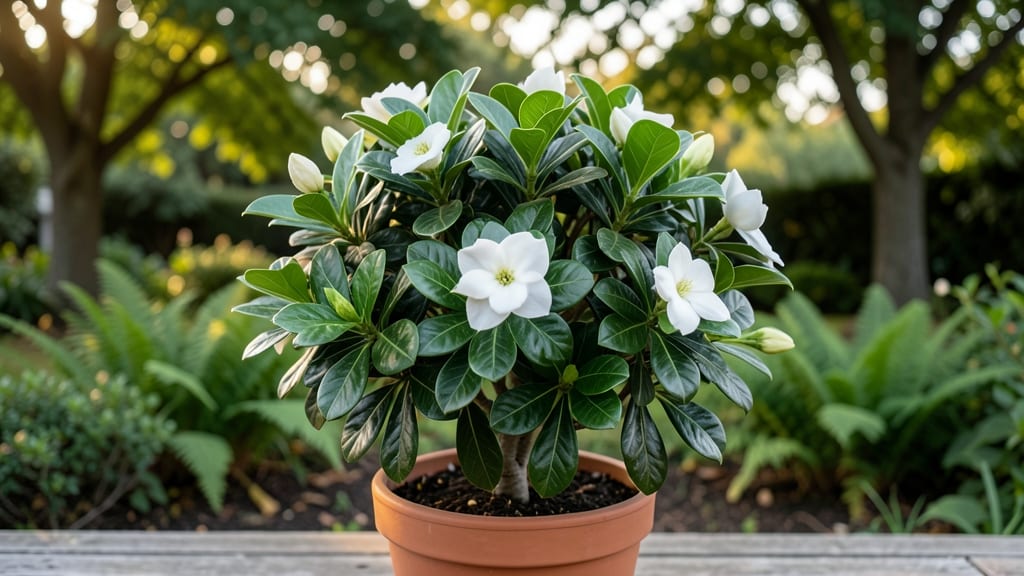
Gardenia plants get anywhere from 1 to 6 feet tall, depending on the variety, with spreads that match their height—so choosing the right type for your space makes all the difference.
Picture this: a compact gardenia 🌸 spilling over a patio planter, its creamy blooms within arm’s reach, or a towering shrub anchoring a shady garden corner, its fragrance wafting through the air.
The size you end up with isn’t just about the variety—it’s also about pruning, soil, and even your climate.
Most gardeners start with Gardenia jasminoides, the classic choice, which typically matures between 3 and 5 feet—tall enough to make a statement but manageable for most yards.
But dwarf varieties like ‘Radicans’ stay under 2 feet, perfect for containers, while larger types can reach 6 feet or more if left unpruned.
In this guide, I’ll break down the exact sizes for popular varieties, share tips to control growth, and help you decide whether your gardenia belongs in a pot, a border, or as a standalone star. Ready to plan your perfect spot?
Gardenia mature size by popular variety: height and spread guide
When planning your garden, understanding how big gardenia plants get is essential—especially since varieties range from dwarf shrubs to small trees. The most common species, Gardenia jasminoides, includes types that thrive in containers or sprawl across landscapes.
For example, ‘Radicans’ stays compact, while ‘Kleim’s Hardy’ reaches impressive heights. Below, I’ve compared 10 popular varieties to help you visualize their mature sizes and choose the perfect fit for your space.
Most gardenias mature between 3 to 6 feet tall, but their spread can differ just as much.
Some varieties grow wider than they do tall, making them ideal for hedges, while others grow upright, perfect for focal points. Pruning habits and growth rates also vary—some bloom faster but stay smaller, while others take longer to establish but reach towering heights.
Let’s break down the specifics so you can plan with confidence.
| Variety |
Mature Height |
Mature Spread |
Growth Rate |
Best For |
| ‘Radicans’ |
1–2 ft |
2–3 ft |
Slow |
Containers, borders |
| ‘Kleim’s Hardy’ |
4–6 ft |
3–5 ft |
Moderate |
Large gardens, hedges |
| ‘Fortuniana’ |
6–8 ft |
5–7 ft |
Fast |
Tropical landscapes |
| ‘Veitchii’ |
3–5 ft |
4–6 ft |
Moderate |
Bushy hedges |
| ‘Mystery’ |
2–3 ft |
3–4 ft |
Slow |
Patios, small yards |
| ‘August Beauty’ |
3–4 ft |
2–3 ft |
Moderate |
Foundation planting |
| ‘Clew’s Variety’ |
4–5 ft |
3–4 ft |
Moderate |
Privacy screens |
| ‘Kleim’s Hardy’ (Dwarf) |
2–3 ft |
2–3 ft |
Slow |
Containers, small spaces |
| ‘Radicans’ (Trailing) |
1–1.5 ft |
3–4 ft |
How gardenia size affects your garden: space planning tips
Choosing the right gardenia isn’t just about fragrance—it’s about space planning. A 6-foot-tall gardenia will dwarf your patio, while a dwarf variety might get lost in a large landscape.
Your garden’s size, sunlight exposure, and even your pruning habits all play a role in where (and how big) your gardenia thrives. Let’s break down how to match your space to the perfect plant.
The key to successful placement starts with understanding your gardenia’s root system. Gardenias have shallow, wide-spreading roots that need room to breathe—5-6 feet of diameter for mature plants. In containers, this means choosing pots with at least 18-inch depth and wide drainage holes to prevent root rot.
For in-ground planting, avoid areas with competing roots like trees or large shrubs.
Sunlight needs also influence size and health. Gardenias crave morning sun and afternoon shade, especially in hot climates. Too much direct afternoon sun can stress the plant, leading to smaller blooms and leggy growth. In shady spots, they’ll grow slower and may not flower as heavily. Test your garden’s light conditions before planting—4-6 hours of filtered sun is ideal.
🌱 For Small Spaces (Patios, Balconies, Containers):
- Dwarf varieties like ‘Kleim’s Hardy’ (2-3 ft tall) or ‘Radicans’ (3-4 ft tall).
- 15-20 gallon containers with well-draining soil and regular feeding.
- East-facing windows for gentle morning light and afternoon shade.
🌿 For Medium Yards (Backyard Borders, Foundation Plantings):
- Standard varieties like ‘Veitchii’ (4-5 ft tall) or ‘Fortuniana’ (5-6 ft tall).
- Plant 4-5 feet apart to allow airflow and prevent overcrowding.
- Companion plants like impatiens or ferns to fill gaps and provide shade.
🌳 For Large Landscapes (Privacy Screens, Woodland Gardens):
- Taller varieties like ‘Mystery’ (6-8 ft tall) or ‘August Beauty’ (5-6 ft tall).
- Plant in groups of 3-5 for a natural, fragrant hedge effect.
- Mulch heavily to retain moisture and suppress weeds in their wide root zones.
Pruning is your secret weapon for controlling gardenia size. Light pruning after flowering encourages bushier growth, while hard pruning in early spring can reset a leggy plant to a more compact shape.
Avoid heavy pruning in late summer—it removes next year’s flower buds. For container gardenias, pinch back tips in early summer to promote branching and a fuller form.
Don’t overlook companion planting to maximize space. Pair gardenias with low-growing perennials like heuchera or ajuga to create a layered look without competing for sunlight. In larger gardens, use grasses or bamboo as a backdrop to highlight their glossy leaves.
And if you’re worried about pests, plant marigolds nearby—their scent repels aphids and whiteflies.
Remember, gardenias are slow growers—expect 6-12 inches of growth per year. With the right variety and care, your gardenia will reward you with years of fragrant blooms while fitting perfectly into your space.
Start small, plan ahead, and let your gardenia’s natural beauty shine—without taking over your yard! 🌸
★★★★★4.5(13 reviews)
|