
Tools
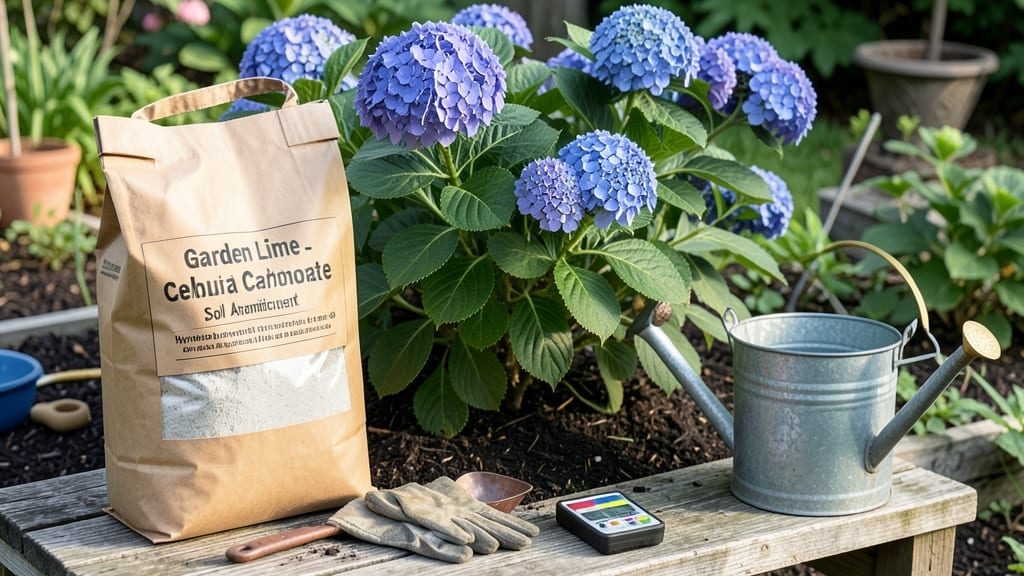
Garden lime for hydrangeas transforms soil chemistry to produce stunning blue blooms by adjusting pH levels between 6.0 and 6.2—perfect for varieties like 'Nikko Blue' or 'Endless Summer.' Apply it carefully in early spring or fall, always testing soil first to prevent overcorrecting.
Garden lime works its magic by neutralizing soil acidity, which unlocks the blue pigment in hydrangea flowers. 🌸 The key is precision—too much lime can actually harm your plants by locking out essential nutrients like iron or manganese.
I recommend starting with a soil test kit (they're affordable and available at garden centers) to determine your exact pH levels before applying.
For most blue hydrangeas, you'll typically need about 2-4 pounds of lime per 100 square feet, spread evenly and lightly worked into the top 2-3 inches of soil.
What's fascinating is how this simple adjustment triggers a chemical reaction in the plant. Hydrangeas produce blue flowers when the soil pH is neutral to slightly alkaline, while acidic conditions (below 5.5) encourage pink blooms.
The lime doesn't just change color—it also strengthens plant health by improving calcium availability, which supports cell wall development and disease resistance.
Pro tip: If you're dealing with established hydrangeas, split your lime application over two seasons rather than doing it all at once. This gradual approach gives your plants time to adjust without shocking their root systems.
And always water thoroughly after applying to help distribute the lime evenly through the soil profile.
💡 In This Article
- How Garden Lime Affects Hydrangea Bloom Color Chemistry
- Step-by-Step Guide to Applying Lime for Blue Hydrangeas
How garden lime affects hydrangea bloom color chemistry
The magic behind blue hydrangeas starts with a delicate chemical dance in the soil. Garden lime (calcium carbonate) raises pH levels, which directly impacts how hydrangeas produce their signature pigments.
At lower pH levels (below 5.5), aluminum becomes more available in the soil, triggering the production of delphinidin-based anthocyanins—the compounds responsible for blue hues. When lime increases pH to 6.0-6.2, aluminum becomes less soluble, shifting pigment production toward cyanidin-based anthocyanins, which yield pink flowers.
This isn't just about color—it's about plant nutrition too. Lime provides essential calcium that strengthens cell walls, making hydrangeas more resistant to fungal diseases like powdery mildew. The magnesium in lime also activates enzymes that help convert nitrogen into forms the plant can use.
However, too much lime can create a nutrient lockout, making iron and manganese unavailable—this is why precise application matters. Think of it like adjusting the seasoning in a recipe: too little won't change the flavor, but too much ruins the dish.
What's often overlooked is how soil texture affects lime distribution. Sandy soils need more frequent applications because lime washes out quickly, while clay soils hold onto lime longer.
For example, in a loamy garden soil (the ideal middle ground), you might need 1.5-2 pounds of lime per 100 square feet to maintain the perfect 6.0-6.2 pH range. The goal is to create an environment where hydrangeas can thrive without stress—neither too acidic nor too alkaline.
Here's where it gets interesting: some hydrangea varieties are more sensitive to pH changes than others. 'Nikko Blue' responds dramatically to lime, while 'Annabelle' (which naturally produces white flowers) shows little color change. This is because different varieties have varying genetic thresholds for aluminum tolerance.
The blue varieties evolved in areas with naturally alkaline soils, making them more dependent on precise pH management for optimal color expression.
For visual learners, imagine your hydrangea's blooms as a litmus paper test strip for soil health. The vibrant blue you're chasing isn't just about aesthetics—it's a visible indicator that your plant's nutritional needs are being met at a cellular level.
When the pH is just right, you'll also notice stronger stems and larger flower clusters, as the plant allocates more energy to reproduction rather than stress responses.
One common misconception is that lime will instantly transform pink hydrangeas to blue. In reality, it takes about 6-8 weeks for new growth to emerge with the color changes.
This is because hydrangeas produce flowers on new wood (current year's growth), so you won't see dramatic changes until next season's blooms appear. Patience is key—think of it like waiting for a fine wine to reach its peak flavor profile.