
Tools
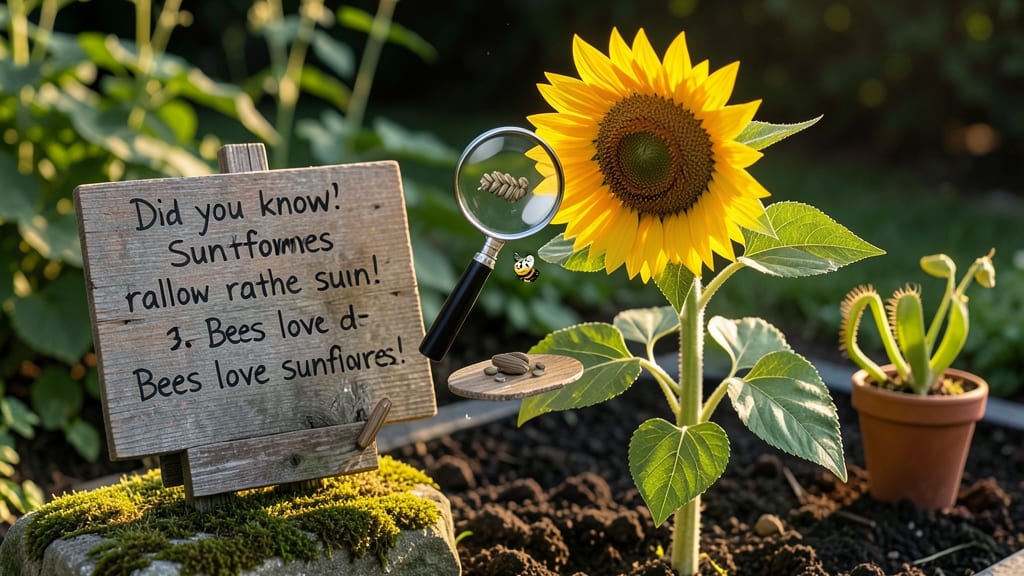
Fun facts about gardening reveal plants with hidden intelligence, like chemical communication between species, mimosa pudica leaves that fold instantly at touch through thigmonasty, and sunflowers that rotate daily to follow the sun—this heliotropism boosts their energy production. Even "weeds" like dandelions have deep roots that break down soil toxins.
Did you know plants can "talk" to each other? 🌱 They release volatile organic compounds when stressed, warning nearby plants to prepare defenses against pests. The famous "touch-me-not" plant's rapid leaf response isn't just a party trick—it's thigmonasty in action, a survival mechanism that conserves energy.
Sunflowers aren't just pretty faces; their sun-tracking habit can shift up to 180 degrees per day, maximizing their solar energy harvest. Even those pesky dandelions are ecosystem heroes, with roots that reach 15 feet deep to filter heavy metals from contaminated soil.
These behaviors prove plants are far more sophisticated than many realize. 💫 The next time you're weeding, remember—you might be removing a natural soil detoxifier!
Understanding these plant superpowers can transform your gardening approach, from choosing companion plants that communicate well together to creating habitats that support these incredible survival strategies.
💡 In This Article
- How Plants Communicate and Survive Using Hidden Science
- Unexpected Benefits of Common Garden Plants Beyond Aesthetics
How plants communicate and survive using hidden science
Plants have developed sophisticated communication systems using volatile organic compounds (VOCs) like methyl jasmonate. When a plant gets munched by insects, it releases these airborne chemicals, triggering neighboring plants to produce defensive compounds. For example, tobacco plants exposed to caterpillar-damaged leaves can boost their nicotine production within hours.
This chemical "language" isn't limited to one species—studies show corn plants warn soybean plants about spider mite attacks through these same VOC signals. 🌿
The rapid leaf-folding in mimosa pudica (the "sensitive plant") demonstrates thigmonasty, where mechanical touch triggers a cascade of electrical signals. When touched, potassium ions rush out of cells at the leaf base, causing them to lose turgor pressure and droop.
This response happens in under a second and can last up to 20 minutes. Interestingly, the plant's roots also respond to touch by growing away from obstacles—a behavior called thigmotropism.
Sunflowers take this concept further with heliotropism, where their stems grow thicker on the east side each morning to track the sun's movement, achieving up to 180-degree rotation daily.
Root systems reveal another layer of plant intelligence. Dandelions develop taproots that can reach 15 feet deep, accessing water and nutrients while filtering heavy metals like lead and cadmium from contaminated soil. Their deep roots also create a physical barrier that suppresses weed growth.
Even houseplants like spider plants release chemicals that inhibit fungal growth in the soil, creating a protective zone. These behaviors prove plants aren't passive—they actively sense and respond to their environment with precision. 🌱
Temperature plays a crucial role in these survival mechanisms. For instance, thigmonastic responses in mimosa pudica work best at 20-25°C (68-77°F), while heliotropism in sunflowers slows significantly below 15°C (59°F).
Plants also adjust their chemical signaling based on temperature—warmer conditions accelerate VOC release, while cooler temperatures may prolong the warning signals. This temperature sensitivity helps explain why some plants thrive in specific climates while struggling in others.
What makes these adaptations even more remarkable is their energy efficiency. Instead of growing new structures, plants repurpose existing ones—like folding leaves or redirecting growth patterns—to conserve resources.
For example, sunflowers' daily realignment requires only 1-2% more energy than staying stationary, yet it can increase photosynthesis by up to 30% during peak sunlight hours. This efficiency is a testament to millions of years of evolutionary fine-tuning. 💡
Understanding these mechanisms can transform gardening practices. For instance, planting VOC-sensitive species like basil near tomatoes can help deter pests naturally. Similarly, incorporating deep-rooted plants like comfrey in your garden improves soil structure while suppressing weeds.
The next time you observe a plant's behavior, remember—it's not just growing, it's strategizing for survival. 🌟