
Pests
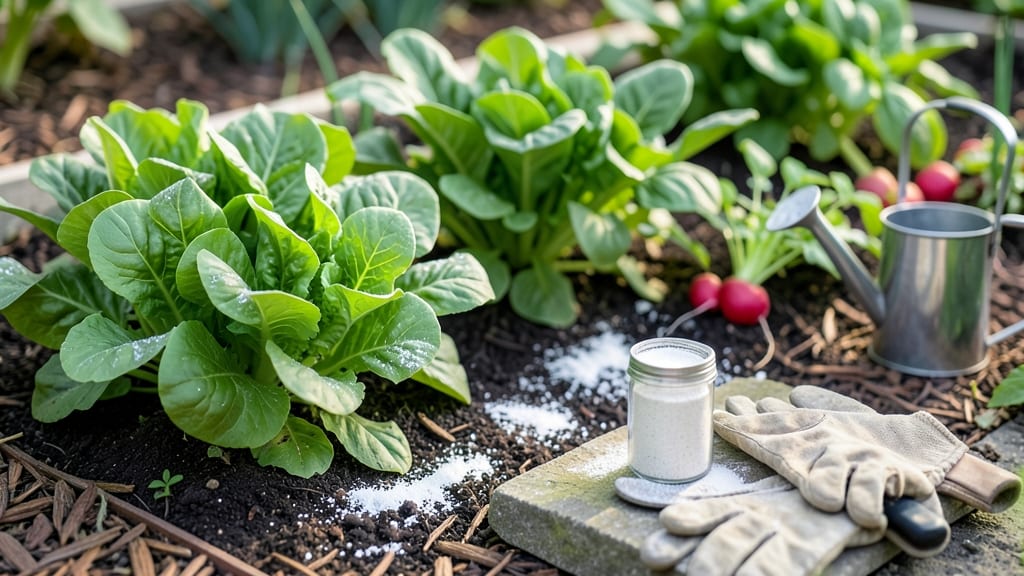
Diatomaceous earth in garden beds acts as a natural pest control by dehydrating insects like slugs and beetles through microscopic abrasion, while being completely safe for plants and soil organisms when applied properly. Apply a light dusting over soil or foliage during dry conditions.
This fine powder works by physically damaging the waxy outer layer of pests, causing them to lose moisture and perish within 24-48 hours. 🔥 Unlike chemical pesticides, it doesn't leave harmful residues, making it ideal for organic gardening.
I've found it especially effective against crawling insects that hide in garden beds, though it's important to reapply after rain or watering since it loses potency when wet.
The key to success lies in timing and placement. For best results, apply DE in the early morning or late evening when pests are most active. A light layer—about 1-2 pounds per 100 square feet—is all you need, as overapplication can clump and become less effective.
Remember to avoid areas where bees and other beneficial insects forage, as DE can harm them too.
💡 In This Article
- How Diatomaceous Earth Works Against Garden Pests
- Best Application Techniques for Garden Beds
How diatomaceous earth works against garden pests
Diatomaceous earth (DE) functions as a mechanical pest control by leveraging its microscopic, razor-sharp edges. These particles, which range from 3 to 30 microns in size, physically disrupt the waxy cuticle layer of insects.
When pests like aphids or beetles crawl through the powder, these tiny edges create microscopic tears in their exoskeletons, leading to rapid dehydration.
Unlike chemical pesticides, DE doesn't poison insects—it simply causes them to lose moisture through their damaged outer layer, a process that typically kills them within 24 to 48 hours. 🔥
The effectiveness of DE varies depending on the pest's exoskeleton type. Soft-bodied insects like slugs and snails are particularly vulnerable because their delicate cuticles can't withstand the abrasive action of the particles. Even hard-shelled insects, however, succumb over time as the DE continues to wear down their protective layers.
What's fascinating is that DE targets pests without harming plants because it's pH-neutral and non-toxic to organic matter. The particles remain inert until they come into contact with the waxy surfaces of insects, making it a highly targeted solution.
One of the most impressive aspects of DE is its dual mechanism of action. First, it physically damages the insect's outer layer, and second, it absorbs the oils and fats from their exoskeletons, further accelerating dehydration.
This two-pronged approach is why DE is effective against a wide range of garden pests, including crawling insects like earwigs and cutworms, as well as flying insects that land on foliage.
The powder doesn't dissolve in water, which means it remains effective as long as it stays dry—making it ideal for garden beds where pests are a persistent problem. ✨
However, it's important to note that DE doesn't work against pests that don't come into direct contact with it, such as burrowing grubs or underground larvae. For these, you'd need to apply DE to the soil surface where the pests emerge.
Additionally, while DE is safe for plants, it can be harmful to beneficial insects like bees and ladybugs if they ingest it. This is why it's crucial to apply DE only in targeted areas and avoid spraying it directly on flowers where pollinators might forage.
To maximize its effectiveness, DE should be applied in a thin, even layer—about 1/8 to 1/4 inch thick—over the soil or foliage. The powder loses its potency when wet, so it's best to reapply after rain or irrigation.
For organic gardeners, this makes DE a versatile and eco-friendly option, as it doesn't introduce harmful chemicals into the soil or food chain. The key is consistency: regular, light applications will keep pest populations in check without disrupting the balance of your garden ecosystem. 💫
What most gardeners don't realize is that DE also helps improve soil structure over time. As the particles break down, they add silica to the soil, which can enhance plant health by strengthening cell walls and improving resistance to diseases.
This added benefit makes DE not just a pest control tool, but also a subtle soil amendment that supports long-term garden vitality.
For those new to using DE, start with a small test area to monitor its effects on both pests and beneficial insects. If applied correctly, you'll see a noticeable reduction in crawling pests within a few days, all while maintaining a healthy, chemical-free garden.
The beauty of DE lies in its simplicity and natural mechanism—no complex chemistry, just finely tuned physics working in your favor. 🌟