
Container Gardens
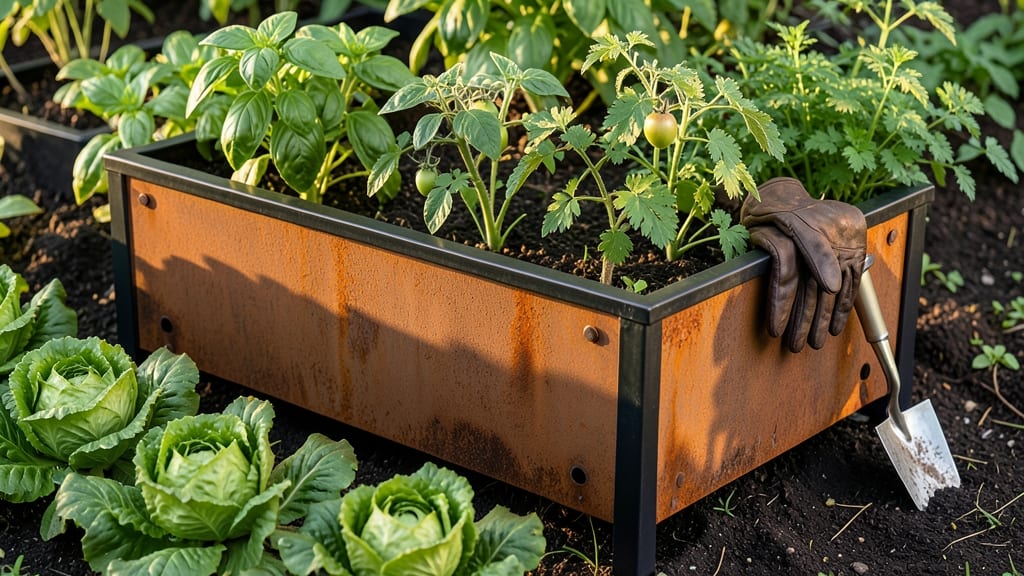
Corten steel raised garden beds provide a distinctive industrial charm through their weathered patina, but demand consistent upkeep to contain rust spread beyond the protective layer. Their exceptional strength and substantial weight make them perfect for long-term outdoor use in demanding environments.
Corten steel's signature look comes from its intentional weathering process, where controlled oxidation creates a stable rust layer that actually protects the metal underneath. 🔥 Unlike regular rust, this patina develops over months and actually prevents further corrosion, though it requires occasional maintenance to stay contained.
The material's substantial weight and thickness make these beds exceptionally durable, able to withstand heavy loads and harsh weather conditions better than many alternatives.
What sets Corten steel apart is how its appearance evolves with time, developing deeper colors as the patina matures. This makes them particularly popular for modern or rustic landscapes where you want a natural, aged look that develops character over years.
The trade-off comes in maintenance - while they're low-maintenance compared to painted metals, you'll need to occasionally clean off dirt buildup and check for any areas where the patina might be breaking down.
💡 In This Article
- How Corten Steel Develops Its Signature Patina
- Maintenance Tips to Preserve Corten Steel Garden Beds
How Corten steel develops its signature patina
The signature patina on Corten steel forms through a deliberate oxidation process where iron in the alloy reacts with oxygen and moisture in the air. This creates a stable layer of rust that actually protects the underlying metal, unlike regular rust which continues to degrade.
The chemical composition of Corten steel—typically containing 0.2-0.5% copper and 0.5-1.25% chromium—accelerates this protective layer formation, making it ideal for outdoor applications.
Environmental factors dramatically influence how quickly this patina develops. In humid climates with 70%+ relative humidity, the oxidation process can take just 3-6 months to form a deep reddish-brown layer, while drier regions may require 12-24 months.
Temperature also plays a role—warmer conditions (above 70°F) speed up the reaction, while freezing temperatures slow it down. The patina's final color varies from orange-brown in dry areas to deep purple-brown in wetter climates due to different mineral deposits forming on the surface.
What makes Corten steel unique is how this patina actually prevents further corrosion. The outer layer becomes dense and non-porous over time, shielding the metal beneath from moisture and oxygen.
This self-protecting mechanism is why Corten steel can last decades with minimal maintenance, unlike standard steel which would corrode completely in just 5-10 years under similar conditions. The trade-off is that this protective layer requires occasional cleaning to prevent dirt buildup from trapping moisture against the metal.
One common misconception is that Corten steel's patina is the same as regular rust. The key difference lies in the controlled chemical composition and thickness—Corten's patina reaches 0.1-0.3mm in depth, while regular rust can penetrate much deeper and continues to spread.
The copper and chromium in Corten steel create a more stable oxide layer that doesn't flake off like conventional rust. This stability is why architects and gardeners love Corten steel for its ability to maintain structural integrity while developing an attractive, evolving appearance.
For gardeners, this means your Corten steel raised bed will develop a more dramatic look over time, with the patina deepening in color and texture as it matures. In coastal areas, you might notice a slightly bluish tint due to salt deposits, while inland beds develop warmer reddish hues.
The process continues indefinitely, though the most significant changes occur in the first 2-3 years of exposure. This natural aging process is part of what makes Corten steel so appealing for landscape design—it's a material that literally grows more beautiful with time.