
Flowers
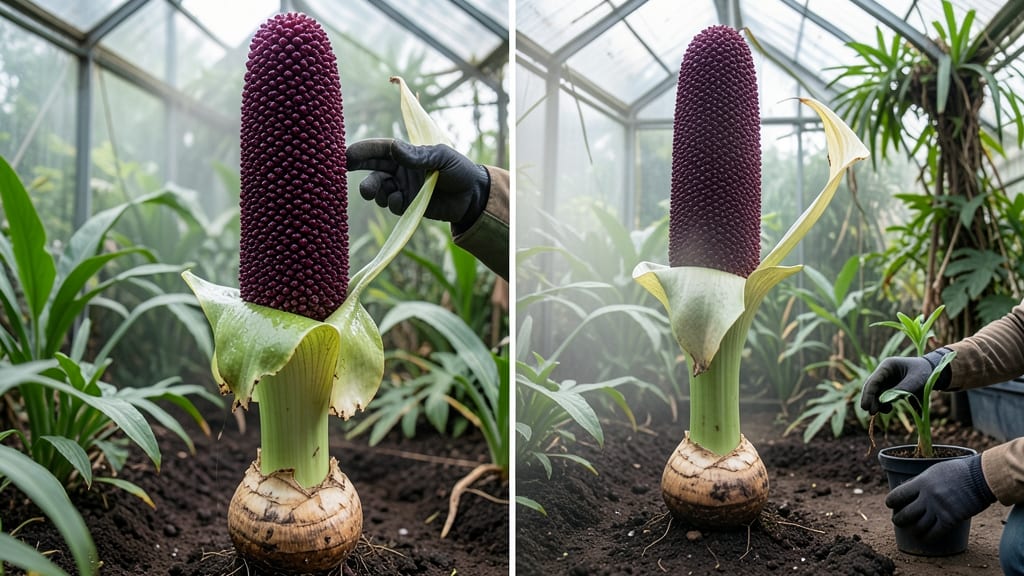
Visiting a botanic garden for a corpse flower bloom is a rare treat, as these plants flower only every 7 to 10 years, producing a pungent odor to mimic rotting meat and attract pollinators. Top destinations like the New York Botanical Garden and Singapore Botanic Gardens offer limited but unforgettable viewing opportunities during summer or early fall.
These rare blooms aren't just about the smell—they're a botanical spectacle. 🌺 The Amorphophallus titanum, or titan arum, stores energy in its corm for years before flowering, making each bloom a once-in-a-decade event. Many gardens now cultivate multiple corpse flowers to increase viewing chances, but tickets sell out fast.
I always recommend checking garden websites for bloom alerts, as some institutions even livestream the event if you can't make it in person.
What makes these blooms so special is their short-lived nature—the flower wilts within 24 to 48 hours, leaving behind a dramatic display of seed production. The odor, while shocking to humans, perfectly mimics decaying flesh to lure flies for pollination.
This unique adaptation has earned the corpse flower its infamous reputation, making it one of nature's most fascinating oddities.
💡 In This Article
- The Science Behind Corpse Flower Blooming Cycles
- Top Botanic Gardens for Corpse Flower Viewings
The science behind corpse flower blooming cycles
The corpse flower, or Amorphophallus titanum, relies on a massive underground corm—a bulb-like structure—that can weigh up to 100 pounds when fully mature. This corm acts like a biological battery, storing starches and nutrients for years before the plant devotes its energy to flowering.
The bloom itself is a one-time, high-stakes event because the plant can't afford to waste resources on multiple attempts. 🌱 Unlike annual flowers that bloom yearly, the corpse flower's strategy is all-or-nothing, with each bloom lasting just 24-48 hours.
Temperature and humidity are the critical triggers for blooming. The plant typically requires 70-80°F and 70-90% humidity to initiate flowering, which is why blooms often occur in summer or early fall.
The corm must also reach a specific size threshold—usually 3-5 years of growth—before it has enough energy to produce a flower. This explains why blooms are so infrequent: the plant needs to grow large enough to support the massive 6-8 foot tall inflorescence, which can weigh 15-30 pounds alone.
The stench is no accident—it's a sophisticated pollination strategy. The flower generates heat, reaching temperatures up to 98°F at its core, which accelerates the release of volatile organic compounds that mimic rotting meat. These compounds include dimethyl disulfide (found in rotting flesh) and dimethyl trisulfide (similar to skunk spray).
The heat also helps disperse the odor, attracting carrion flies and beetles that pollinate the flower. 🐝 This dual approach—heat and stench—makes the corpse flower one of nature's most effective (if revolting) pollination systems.
Not all corpse flowers bloom at the same intervals. While Amorphophallus titanum typically blooms every 7-10 years, some related species like Amorphophallus paeoniifolius (the "elephant foot yam") may bloom more frequently, every 3-5 years.
Climate plays a huge role: gardens in tropical regions (like Singapore) may see blooms more regularly than those in temperate zones (like New York), where cooler winters delay growth. This is why botanic gardens often cultivate multiple corpse flowers—it increases the odds of a bloom aligning with visitor seasons.
Here’s what most people don’t realize: the corpse flower’s corm doesn’t die after blooming. Instead, it continues to grow, storing energy for the next potential bloom cycle.
This means a single plant could theoretically live for decades, with each bloom representing a carefully calculated investment of its limited energy reserves. The trade-off is stark—either devote years to growing or risk everything on a single, dramatic flowering event. 💡
For gardeners or scientists studying these plants, the blooming cycle is a delicate balance of patience and precision. Factors like soil composition, water availability, and even light exposure can influence whether a corm will reach the critical mass needed for flowering.
Some botanic gardens use controlled environments to simulate ideal conditions, but even then, the bloom remains unpredictable—a reminder that nature often operates on its own mysterious timeline.