
Plants
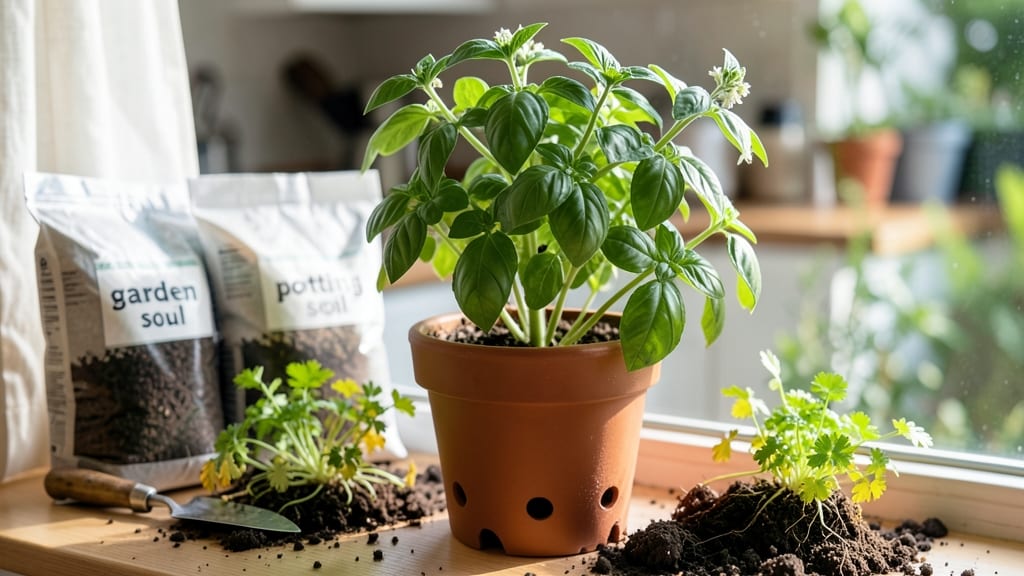
You shouldn't use garden soil for potting plants because it compacts easily, drains poorly, and may contain weeds, pests, or diseases. Instead, opt for lightweight potting mixes that improve aeration and moisture control for healthier root growth.
Garden soil is designed for outdoor plants with deep roots and natural drainage, but container plants need something completely different. 🌱 The dense structure of garden soil smothers roots by preventing proper airflow, while its heavy texture traps excess moisture, creating the perfect conditions for root rot.
Even if you sterilize it, garden soil often lacks the nutrient balance that potting mixes provide—especially for plants like herbs or succulents that thrive in fast-draining environments.
For most potted plants, a quality potting mix blends organic matter (like peat or coconut coir) with perlite or vermiculite to create that ideal air-to-water ratio. This combination prevents compaction while still holding enough moisture for roots.
If you're determined to use garden soil, mix it 50/50 with compost or sand—but even then, you'll miss out on the specialized benefits of commercial potting mixes.
💡 In This Article
- Why Garden Soil Fails as Potting Mix
- Best Potting Mix Alternatives for Healthy Plants
Why garden soil fails as potting mix
Garden soil is engineered for outdoor landscapes where plants have room to spread their roots deep into the earth. But in containers, this dense structure becomes a problem. When packed into pots, garden soil particles—clay, silt, and sand—pack tightly together, reducing pore space by up to 40-50%.
This compaction cuts off oxygen flow to roots, which need 10-20% air space in their growing medium to thrive. Without proper aeration, roots suffocate, leading to stunted growth or death. 🌱
The drainage issue is equally critical. Garden soil holds moisture like a sponge, often retaining 30-40% water even after "drying." This creates a soggy environment where roots can't breathe, and harmful bacteria thrive.
Compare that to quality potting mixes, which typically drain 60-70% faster thanks to ingredients like perlite or coconut coir that create air pockets. For example, a 5-gallon container filled with garden soil might stay waterlogged for days, while the same pot with potting mix drains in 1-2 hours.
Disease risks multiply in garden soil because it's a breeding ground for pathogens. Outdoor soil often contains fungal spores, nematodes, and weed seeds that lie dormant until disturbed. When you transplant these into pots, they gain a controlled environment to spread unchecked.
Even sterilizing garden soil doesn't eliminate all risks—some spores can survive temperatures up to 212°F. Potting mixes, on the other hand, are pasteurized and formulated to resist disease, with ingredients like pine bark that naturally repel fungi.
Nutrient imbalances are another hidden issue. Garden soil's fertility is inconsistent—what works for tomatoes in the ground may be too rich for delicate ferns in a pot. Potting mixes provide a balanced, slow-release nutrient profile tailored to container gardening.
For instance, a 1-gallon pot of garden soil might deliver 500-1,000 ppm nitrogen in one burst, while a quality potting mix releases nutrients gradually over 3-6 months, preventing burnout. 💫
Consider the texture difference: Garden soil feels heavy and gritty when wet, while potting mixes remain light and crumbly. This isn't just about feel—it's about root health.
The ideal potting mix has a 3:1 ratio of organic matter to inorganic amendments, creating a fluffy structure that mimics the forest floor's natural aeration. Without this, even your most hardy plants will struggle to establish strong roots in containers.
What most gardeners don't realize is how quickly these problems escalate. Within 2-4 weeks of using garden soil in pots, you'll likely see wilting leaves, yellowing stems, or mold growth—signs of compaction and poor drainage at work.
The solution isn't just "adding more drainage holes" (though that helps), but using a medium designed from the ground up for container growing. 🔥