
Advice
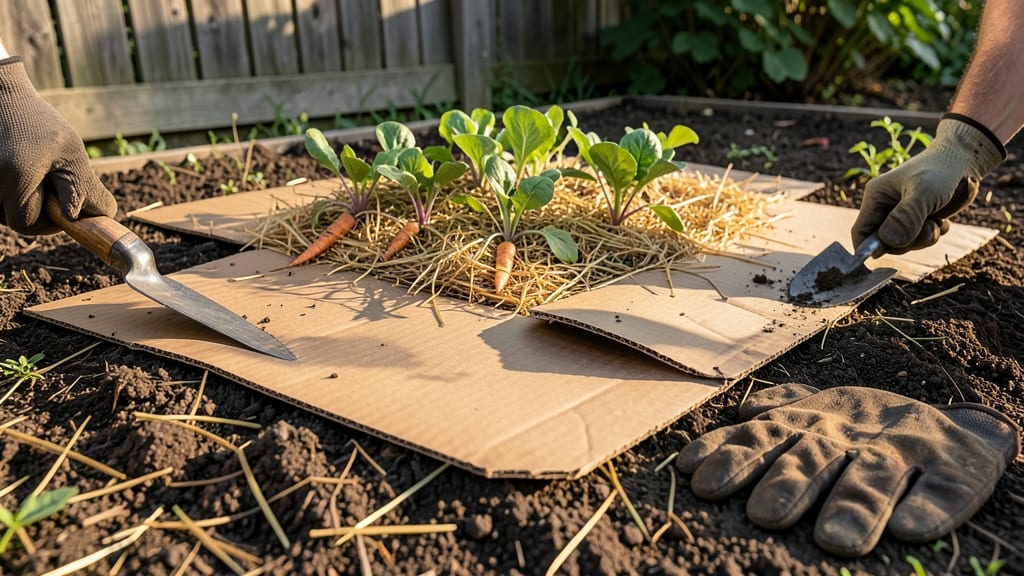
You can use cardboard in your garden to block weeds and retain soil moisture, but only if it's plain, ink-free, and completely buried to prevent toxins from leaching and to allow proper soil aeration. Always remove staples, tape, and any printed surfaces first.
Using plain cardboard as garden mulch works because it creates a barrier that smothers weeds while slowly breaking down into organic matter. 🌱 However, this process can temporarily deplete soil nitrogen as microbes decompose the cardboard, which is why I recommend pairing it with a nitrogen-rich amendment like compost.
The key is preparation—avoid glossy or printed cardboard, as inks and dyes may contain harmful chemicals that could harm plants or soil microbes. For sensitive plants or vegetable gardens, consider alternatives like shredded leaves or untreated wood chips instead.
Cardboard's effectiveness depends on proper installation. Lay sheets flat, overlapping edges, and bury the edges with soil to prevent wind from lifting it. If you're using it in a new garden bed, bury the cardboard at least 2-3 inches deep to encourage decomposition while maintaining weed suppression.
This method works best in warmer climates where decomposition happens faster, but even in cooler regions, the weed-blocking benefits make it worth trying.
💡 In This Article
- How Cardboard Affects Soil Health and Plant Growth
- Safe Cardboard Preparation for Garden Beds
How cardboard affects soil health and plant growth
The decomposition process of cardboard in your garden starts the moment it contacts soil moisture. Plain, untreated cardboard breaks down primarily through microbial activity, where fungi and bacteria consume the cellulose fibers.
This process releases nutrients like carbon but also temporarily consumes nitrogen as microbes multiply to digest the cardboard. 🌱 For every 100 square feet of cardboard used, expect a nitrogen demand of about 0.5-1 pound—similar to how adding fresh grass clippings can "steal" nitrogen from soil.
When properly buried, cardboard creates an ideal environment for beneficial soil microbes while blocking sunlight from weed seeds. The decomposition rate varies by climate: in warm, humid conditions, cardboard may break down in 3-6 months, while cooler climates could take 12-18 months.
This slow breakdown means the weed suppression lasts longer, but it also means plants growing directly on top may face temporary nitrogen competition. Tomatoes and peppers, which are heavy nitrogen feeders, might show early signs of yellowing if not paired with compost.
The trade-off between short-term benefits and long-term soil health is critical.
While cardboard suppresses weeds and retains 30-50% more moisture than bare soil, its initial breakdown can create a temporary "nitrogen sink" that may harm sensitive plants. 🌿 To mitigate this, gardeners often mix in 2-3 inches of compost over the cardboard before planting.
This strategy provides immediate nitrogen while the cardboard decomposes, creating a balanced nutrient environment over time.
Cardboard's physical structure also affects soil aeration. When left exposed, it can create air pockets that prevent proper root penetration, but when buried 2-3 inches deep, it decomposes into a soft, fibrous material that improves soil texture over time.
Unlike plastic mulch, which blocks all air and water movement, cardboard allows gradual integration while maintaining weed control. This makes it particularly effective for perennial beds where long-term weed suppression is needed without chemical intervention.
Consider the plant type when using cardboard.
Fast-growing annuals like lettuce or radishes may not be affected by temporary nitrogen depletion, but slower-growing perennials like asparagus could show stunted growth. 🌱 For these cases, pre-amending the soil with 1-2 inches of well-aged manure before laying cardboard ensures a more balanced nutrient profile during the decomposition phase.
The long-term benefits include improved soil structure as the cardboard fibers break down into humus-like material. Over 12-24 months, what was once a weed barrier becomes a nutrient-rich layer that enhances soil tilth—similar to how leaf mold improves garden beds over time.
This makes cardboard an excellent choice for gardeners practicing low-waste, sustainable practices, provided they follow proper preparation protocols.