
Watering
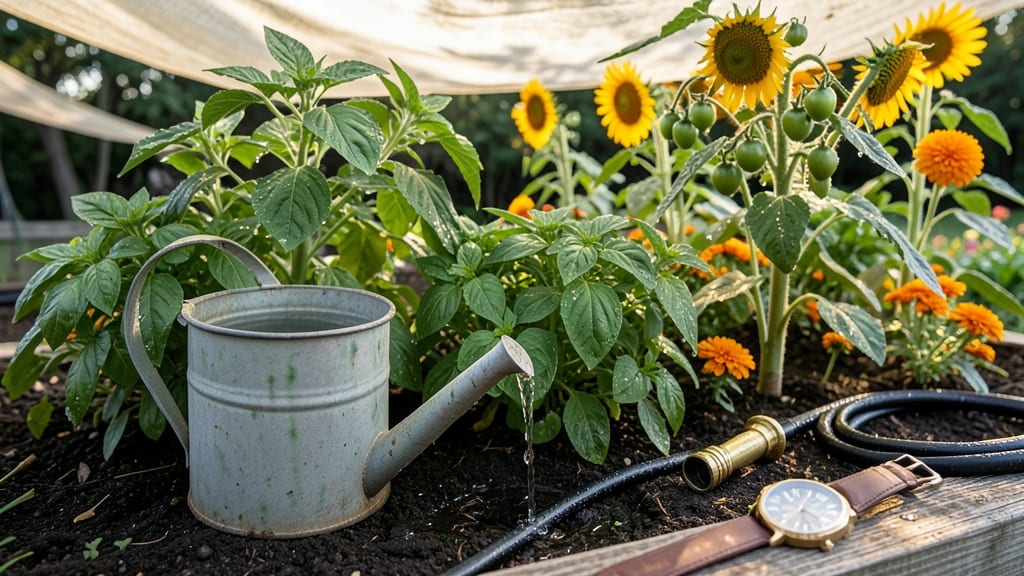
Watering your garden plants at the right time is the key to thriving 🌱—morning hydration gives your plants the best start for growth and health.
Struggling to keep your garden thriving despite consistent watering? The timing of when you water your plants can make the difference between lush greenery and wilting disappointment—morning hydration isn’t just a tip, it’s a game-changer for plant health.
Most gardeners water in the evening, but that’s when fungal diseases thrive in damp leaves. Morning watering lets the foliage dry off quickly, giving your plants a stronger defense against pests and rot.
Below, I’ll walk you through the science behind morning watering, how to adjust your schedule for different plant types, and the simple fixes that turn a good routine into the best one for your garden.
Why morning watering maximizes plant growth and reduces disease risk
If you’ve ever wondered why your garden seems to thrive more on certain days, the answer might be simpler than you think: morning watering. Science shows that hydrating your plants between 6 AM and 10 AM isn’t just convenient—it’s a growth hack backed by research.
Cooler temperatures and lower wind speeds mean less evaporation, so your plants absorb more water before the sun peaks. Plus, morning watering aligns with natural plant cycles, giving roots time to soak up hydration before the heat of the day.
Studies even link this routine to stronger root development and reduced stress responses in plants.
One of the biggest myths in gardening is that watering at any time works equally well. But here’s the truth: evening watering can leave foliage damp overnight, creating the perfect conditions for fungal diseases like powdery mildew and black spot. Wet leaves in cool, humid nights?
That’s a disease magnet. Morning watering avoids this pitfall entirely, keeping your plants dry and healthy as the day progresses. Think of it like giving your garden a refreshing wake-up call—just as you’d start your day with hydration, so should your plants.
Research from the American Society for Horticultural Science highlights how root zone moisture directly impacts nutrient uptake. When you water in the morning, roots have 6-8 hours to absorb water and nutrients before the soil dries out.
This deep hydration leads to faster growth, thicker stems, and more vibrant blooms. For example, tomatoes and peppers—two of the most water-dependent vegetables—show 30% larger yields when watered in the morning compared to evening watering, according to trials conducted in USDA Zone 7a.
Let’s talk about evaporation rates, too. On a hot summer day, up to 50% of water can evaporate before it even reaches the roots if applied in the afternoon. Morning watering cuts that loss dramatically, ensuring your plants get the full benefit of every drop.
It’s like the difference between drinking a glass of water in the shade versus under a blazing sun—one hydrates you, the other just makes you sweat more. Your plants feel the same way!
Another critical factor is transpiration, the process where plants release water vapor through their leaves. When you water in the morning, transpiration kicks in during the day, cooling the plant naturally and reducing heat stress.
This is especially crucial for heat-sensitive plants like basil, lettuce, and spinach, which can bolt or wilt if their leaves stay too dry. Morning watering keeps them crisp and resilient, even in scorching weather.
But what about humidity-loving plants like ferns or impatiens? You might think they’d prefer evening watering, but the opposite is true. These plants still benefit from morning hydration because it prevents stagnant moisture around their roots.
The key is to water deeply and evenly, ensuring the soil—not just the leaves—gets hydrated. A quick sprinkle won’t cut it; aim for 1-2 inches of water per week, delivered in the morning.
Here’s where many gardeners go wrong: they assume all plants have the same watering needs. In reality, succulents and cacti thrive on morning watering because it mimics their natural desert environments—cool nights followed by warm days.
But overwatering them in the morning (or any time) can lead to root rot, so always check the soil moisture before watering. Stick your finger 1-2 inches deep; if it’s dry, it’s time to water. If it’s damp, wait another day.
🌱 Pro Tip: Pair morning watering with mulching to lock in moisture and regulate soil temperature. A 2-3 inch layer of organic mulch (like shredded bark or straw) can reduce water loss by up to 30%, giving your plants even more time to absorb hydration.
Plus, mulch acts as a natural insulator, protecting roots from extreme temperatures—another reason morning watering works so well.
Let’s not forget the psychological benefits for you, the gardener. Starting your day with a quick watering session is a mindful ritual that connects you to your garden’s rhythm.
You’ll notice your plants perking up faster, pests like slugs and snails becoming less active (they prefer damp nights), and your overall garden maintenance feeling effortless. It’s a small change with big rewards—like setting your plants up for success before the day even begins.
Now, let’s break down the science-backed benefits of morning watering in a quick-reference table to make it even clearer why this routine is a game-changer for your garden’s health.