
Pests
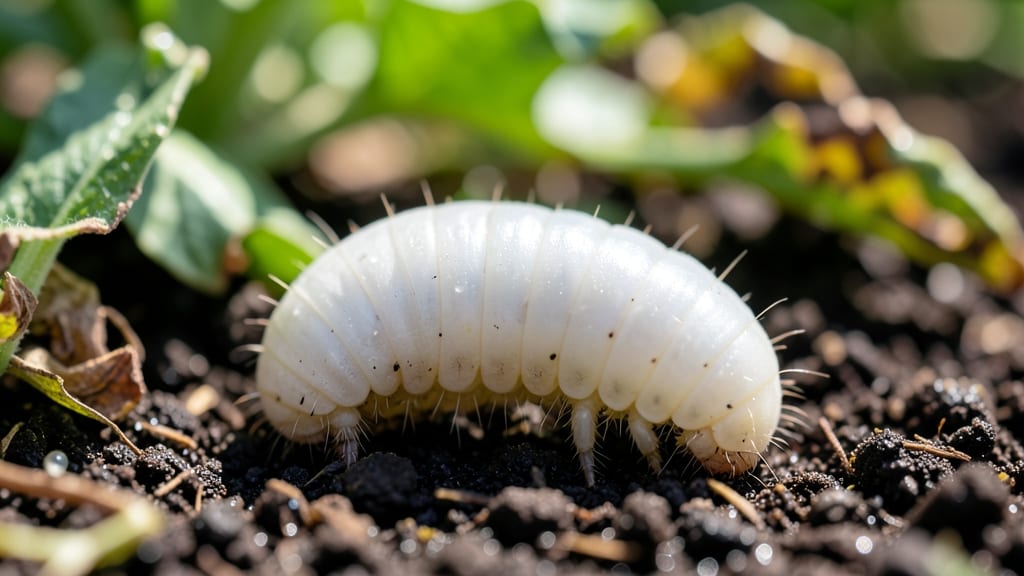
Grub worms are bad for your garden because they devour grass roots and plant stems, causing brown patches, wilting, and weakened plants. Left untreated, they can kill lawns and young seedlings entirely by disrupting nutrient uptake and structural integrity.
Grub worms, the larvae of Japanese beetles, are particularly destructive because they target the root systems that keep your plants healthy. 🌱 These pests chew through roots and stems, which weakens plants and makes them more susceptible to disease or drought stress.
In severe cases, they can completely destroy lawns by severing the grass roots, leaving behind unsightly brown patches that won't recover without intervention. Their feeding habits don't just affect grass—they also harm vegetables and flowers by preventing proper nutrient absorption.
What makes them even more problematic is how quickly they multiply. A single female beetle can lay up to 60 eggs in her lifetime, and those eggs hatch into grubs that spend the winter underground, feeding on roots until they pupate the following spring.
This means infestations can worsen year after year if not addressed early. The damage isn't just cosmetic; it's structural, compromising the very foundation that supports your garden's growth.
💡 In This Article
- How Grub Worms Damage Garden Roots and Soil
- Natural and Chemical Solutions to Control Grub Worms
How grub worms damage garden roots and soil
Grub worms, the larval stage of Japanese beetles, specialize in feasting on the roots and stems of plants, creating a cascading effect of damage. Their mouthparts are designed to chew through plant tissue with surgical precision, severing roots as thin as 1/16-inch in diameter.
This may seem small, but when you consider a single square foot of lawn can contain up to 20-30 grubs during peak activity, the collective damage becomes devastating. The roots they consume are responsible for water and nutrient absorption, so even partial damage disrupts the plant's ability to sustain itself.
One of the most visible signs of grub worm activity is the formation of irregular brown patches in lawns, often mistaken for drought stress. These patches appear because the grass blades remain green while the roots below are being consumed, cutting off the plant's lifeline.
In vegetable gardens, you'll notice stunted growth, wilting leaves, and plants that topple over easily when pulled—all classic symptoms of root damage. The grubs also compact the soil as they burrow, reducing aeration and making it harder for roots to expand, which further stresses plants already struggling to absorb nutrients.
The lifecycle of grub worms amplifies their destructive potential. Female beetles lay eggs in late summer, and those eggs hatch into grubs that spend the winter underground, feeding voraciously until spring. By the time they pupate, they've already caused significant damage to roots, and the cycle repeats the following year.
This means a single infestation can escalate into a full-blown crisis if left unchecked. For example, a 100-square-foot lawn can lose up to 50% of its root mass in a single season if grub populations aren't controlled, leaving the grass vulnerable to heat, drought, and disease.
Grub worms don't discriminate—they target both turfgrass and vegetable plants with equal enthusiasm. In lawns, their feeding creates a "thatched" layer of dead grass and roots that smothers living plants, while in vegetable gardens, they can uproot seedlings entirely.
The damage isn't just superficial; it's systemic, weakening the plant's structural integrity and making it more susceptible to environmental stressors.
For instance, a tomato plant with grub-damaged roots may produce fewer fruits, and those that do form will be smaller and less flavorful due to the plant's inability to allocate resources effectively.
What makes grub worms particularly insidious is their ability to go undetected for long periods. They spend most of their time 2-4 inches below the soil surface, where they're protected from predators and pesticides.
This subterranean lifestyle allows them to feed undisturbed until they reach their full size, often 1-inch long, before pupating. By the time homeowners notice the brown patches or wilting plants, the grubs have already caused irreversible damage, and the infestation may have spread to neighboring areas of the garden.
The long-term consequences of untreated grub worm infestations extend beyond cosmetic issues. Over time, the soil structure degrades due to root loss and compaction, leading to poor drainage and increased susceptibility to fungal diseases.
Young seedlings and shallow-rooted plants like lettuce and carrots are especially vulnerable, as their roots are easily severed by even a few grubs. Without intervention, these plants may fail to establish themselves, resulting in patchy, weak growth that's difficult to revive. 🌱