
Plants
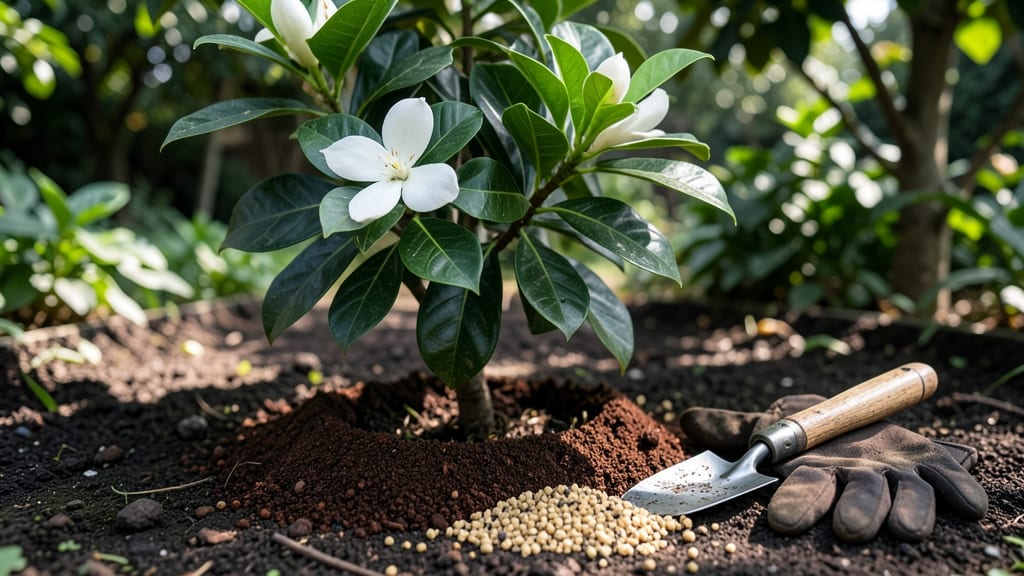
Coffee grounds are good for gardenia plants by improving soil acidity and adding organic matter, but use sparingly—too much raises nitrogen levels and may harm their delicate roots. Opt for composted grounds and balance with peat moss or pine needles for ideal pH (5.0–6.5).
Coffee grounds are good for gardenia plants because they contain organic acids like tannins that lower pH levels over time. 🌱 However, gardenias thrive in a narrow pH range (5.0–6.5), so using too many grounds can actually over-acidify the soil or flood the plant with nitrogen, causing leaf burn.
I've found that mixing just a thin layer of composted grounds into the top inch of soil—about 1 part grounds to 3 parts soil—gives gardenias a gentle acid boost without risking root damage.
For best results, I recommend composting the grounds first to prevent clumping and fungal growth. Spread them thinly around the base of the plant (not directly touching the stem) and water thoroughly. If you notice yellowing leaves or slow growth, flush the soil with water to dilute any excess nitrogen.
Gardenias are finicky, but with the right balance, coffee grounds can be a simple way to keep their soil just acidic enough!
💡 In This Article
- How Coffee Grounds Affect Gardenia Soil pH and Nutrient Balance
- Safe Ways to Use Coffee Grounds for Gardenias Without Overloading Soil
How coffee grounds affect gardenia soil pH and nutrient balance
Coffee grounds lower soil pH primarily through their natural acidity, thanks to organic compounds like tannins and chlorogenic acids. When these compounds decompose, they release hydrogen ions (H⁺), gradually acidifying the soil.
Fresh grounds have a pH of about 4.85–5.1, making them slightly more acidic than gardenias' ideal range of 5.0–6.5. Over time, this can push soil toward the lower end of that spectrum—but only if used correctly.
The nitrogen content in coffee grounds (about 1.4–2.5%) is another critical factor. While nitrogen promotes leafy growth, gardenias are sensitive to excess, which can cause leaf burn or stunted blooms. Unlike slow-release organic matter, fresh grounds release nitrogen quickly, risking a sudden spike in soil fertility.
For comparison, pine bark fines (a safer acidifier) release nutrients far more gradually while maintaining stable pH levels.
Here’s the science: Gardenias thrive in acidic soils because their roots absorb nutrients like iron and manganese more efficiently at lower pH. However, their delicate root systems are prone to rot if soil becomes too dense or nitrogen-rich.
Coffee grounds’ coarse texture can also create air pockets, improving drainage—but only if mixed properly. Too much can compact soil, suffocating roots and inviting fungal growth.
To avoid over-acidification, balance coffee grounds with peat moss or pine needles, which buffer pH changes. A mix of 1 part grounds to 3 parts soil (by volume) is a safe starting point.
For visual reference, imagine sprinkling a thin layer—about ¼ inch thick—around the plant’s base, then lightly raking it into the topsoil. This mimics natural decomposition while minimizing risk.
For a deeper acid boost, consider elemental sulfur (which lowers pH more predictably) or pine bark mulch, both of which gardenias respond to better than raw coffee grounds.
The key is patience: soil pH changes gradually, so monitor your gardenia’s leaves for color shifts (dark green indicates healthy acidity; yellowing signals imbalance).
Pro tip: Test your soil’s pH every 3–4 months using a simple kit. Gardenias show stress quickly—wilting or dropping buds are red flags for nutrient or pH issues. Coffee grounds can be a helpful supplement, but they’re not a cure-all for acidic soil needs.
Think of coffee grounds as a flavor enhancer in cooking—great in small doses, but overdoing it ruins the dish. The same principle applies to your gardenia’s soil!