
Tools
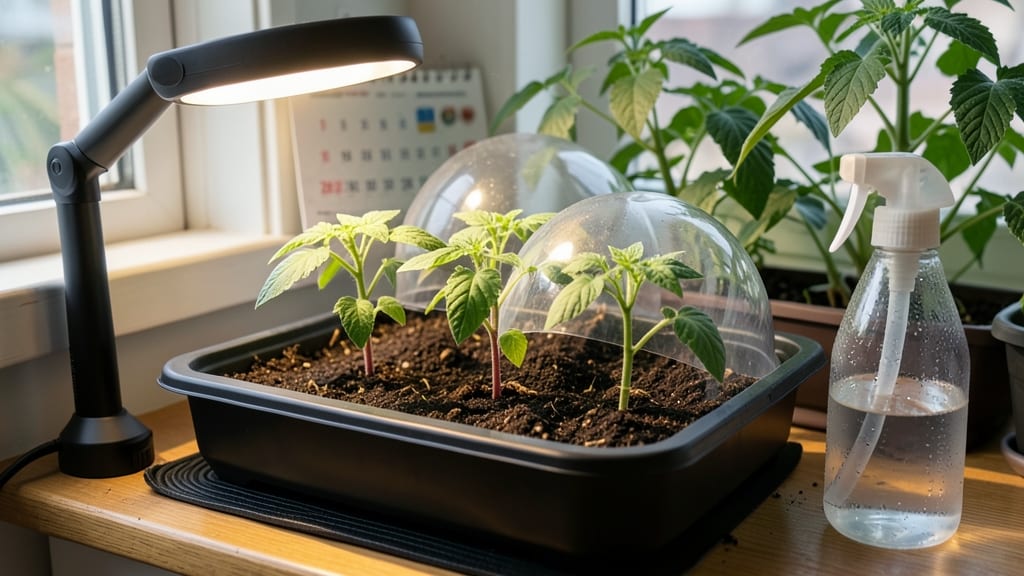
Starting garden seeds indoors at the right time means the difference between a bountiful harvest and a wasted effort.
Timing is everything in gardening—start your seeds too early, and they’ll outgrow their containers; too late, and you’ll miss the growing season. The key lies in understanding frost dates and plant-specific schedules to maximize your harvest potential.
For most Zone 6a gardeners, that means beginning 4-8 weeks before your last frost date—typically in February or early March for cool-season crops like lettuce and peas. But fast growers like radishes need a shorter indoor head start, while tomatoes and peppers demand a longer window.
Below, I’ll walk you through how to calculate your exact start dates, adjust for local conditions, and avoid the three biggest mistakes that sabotage indoor seed starting every year.
How to calculate indoor seed starting dates using frost dates
Getting your indoor seed starting timing right means the difference between a bountiful harvest and wasted effort. The secret? Working backward from your last frost date and your plants' days-to-maturity.
This method ensures your seedlings are ready to transplant just as the weather warms up—no more cramming or stunted growth. Let's break it down into simple steps so you can plan like a pro.
First, find your average last frost date for your USDA hardiness zone. Most zones have this info available through local agricultural extensions or trusted gardening apps.
For example, in Zone 6a, the last frost typically falls around April 15. This date becomes your anchor for calculating when to start seeds indoors.
Step 1: Determine Your Last Frost Date
Find your local last frost date using a USDA zone map or local gardening resources. For example, Zone 5 might have a last frost on May 1, while Zone 8 could be as early as March 15.
Step 2: Check Your Plant’s Days to Maturity
Look at the seed packet for the days-to-maturity label. This tells you how long it takes from seed to harvest. For instance, lettuce might mature in 30-45 days, while tomatoes can take 70-90 days.
Step 3: Subtract Weeks for Seedlings
Most seedlings need 4-8 weeks indoors before transplanting. Subtract this from your last frost date. For a 70-day tomato in Zone 6a, start seeds 8 weeks before April 15 (around February 15).
Step 4: Adjust for Slow vs. Fast Growers
Slow growers (like peppers or eggplants) need more time indoors. Start them 10-12 weeks before frost. Fast growers (like radishes or spinach) can wait until 3-4 weeks before transplanting.
Step 5: Account for Local Microclimates
If your garden is in a warmer microclimate (like near a south-facing wall), you can push start dates 1-2 weeks earlier. Conversely, cooler areas may need an extra week indoors.
Step 6: Verify with a Seed-Starting Chart
Cross-check your calculations with a seed-starting chart for your zone. These charts account for common plants and regional variations, ensuring you’re on track for success.
Once you’ve calculated your ideal start date, consider your indoor growing conditions. Seedlings need consistent 60-75°F soil temperatures and 12-16 hours of light daily. Without proper light, seedlings stretch and become leggy, which weakens them before they even hit the garden.
Use grow lights if your windows aren’t sunny enough—this is especially critical for long-day plants like tomatoes and peppers.
Don’t forget to account for transplant shock when planning. Even well-timed seedlings need 1-2 weeks to acclimate to outdoor conditions before planting. This means starting seeds indoors slightly earlier than your last frost date minus maturity time.
For example, if your frost date is April 15 and tomatoes need 80 days, start them 3 weeks earlier (around February 1) to give them time to harden off.
For cool-season crops like broccoli or kale, you can also start seeds indoors in late summer for a fall harvest. These plants tolerate cooler temperatures and can even handle light frosts. Just adjust your frost date to the first frost date and work backward from there.
Pro tip: Keep a seed-starting journal to track what works in your space. Note which plants thrive with your indoor setup and which struggle. Over time, you’ll refine your timing to match your unique growing conditions—whether that’s a bright sunroom, a dim basement, or a windowsill with limited light.
Finally, remember that regional climate variations matter. If you’re in a coastal area, your frost dates might be later than inland zones. Always double-check with local data to avoid miscalculations. With these steps, you’ll never miss a planting window again!
Best indoor seed starting times by plant type (with frost-date chart)
Not all seeds thrive on the same schedule. Fast-growing radishes need just 3-4 weeks indoors, while slow-maturing peppers require 8-10 weeks before transplanting. The secret? Match your plant's days-to-maturity with your last frost date—a simple formula that ensures healthy seedlings ready for the garden.
Below, I’ve organized popular crops by category, so you can plan your indoor seed-starting calendar with confidence.
For example, if your last frost date is April 15 (like in USDA Zone 6a), you’d start tomatoes in early March (8 weeks before frost) but lettuce in mid-February (4 weeks before frost).
The chart below breaks it down by plant type, so you can avoid the common mistake of starting everything at once.
Pro tip: Adjust your indoor seed-starting timeline based on your USDA zone. If you’re in a warmer zone (like 8a-10a), you can start seeds 2-4 weeks later than the chart suggests. Conversely, in colder zones (like 3a-5a), begin 6-8 weeks earlier to account for shorter growing seasons.
Always check your local frost dates—they can vary by 1-2 weeks even within the same zone.
For cool-season crops like kale or carrots, you can also start seeds indoors in late summer for a fall harvest. Just reverse the timeline: Calculate 8 weeks before your first frost date instead.
This gives you a second growing window without competing with summer heat. I’ve successfully grown bok choy this way in my Zone 6a garden, and the flavor was sweeter for the cooler weather!
Remember, light and temperature are just as critical as timing. Use a grow light if your seedlings stretch toward the window—this is called etiolation, and it weakens stems. Keep soil temps between 60-75°F for most seeds, and avoid drafts from AC vents or heaters.
With the right schedule, you’ll have vigorous seedlings ready to thrive in your garden.