
Tools
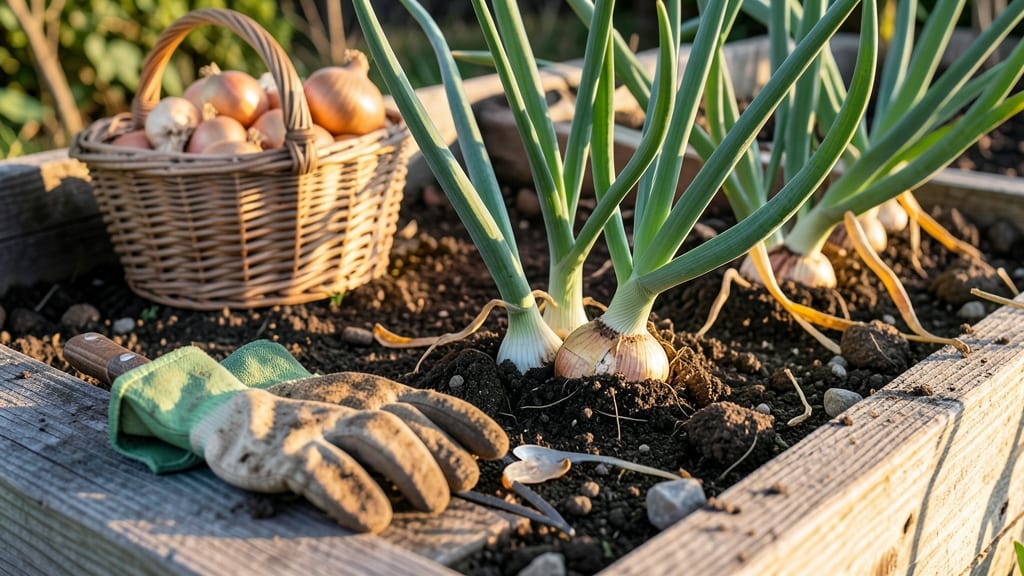
Pulling onions from your garden at the right time ensures you get the perfect balance of flavor, size, and storage potential—so you don’t end up with shriveled bulbs or wasted effort.
Picture this: you’ve spent months nurturing your 🧅 onions, and now the tops are yellowing and flopping over. That’s your cue—they’re ready to harvest. But wait too long, and the bulbs may sprout or rot in the ground.
Timing matters because onions mature differently based on variety (green vs. bulb), weather, and even your USDA zone. A short-day onion in zone 6a might be ready in 100 days, while long-day varieties take closer to 120 days.
In this guide, I’ll walk you through the visual signs of readiness, how to adjust for your climate, and what to do once you pull them to keep them fresh all season long.
Visual and physical signs your onions are ready for harvest
Harvesting onions at the right time makes all the difference between sweet, storable bulbs and bitter, shriveled disappointments. The key is watching for three critical visual cues: leaf color, bulb size, and neck thickness. When these signs align, you’ve got perfectly mature onions ready for harvest.
First, your onion’s tops will turn yellow and flop over—this signals the plant is redirecting energy from leaf growth to bulb development. Ignore this, and your onions may split or sprout before you can harvest.
The yellowing usually starts 2-3 weeks before harvest, so stay alert during late summer.
Next, check the bulb size and firmness. Mature onions should feel firm and dry to the touch, with a diameter of about 1.5–2.5 inches.
If you squeeze and the bulb feels soft or squishy, it’s not ready—wait another week. Overly large bulbs (over 3 inches) often split when cured.
Don’t overlook the neck thickness, the stem connecting the bulb to the leaves. At harvest time, it should be about ½-inch thick. A thin neck means the bulb isn’t fully mature, while a thick, woody neck indicates it’s past its prime.
This is your final green light to pull.
Pay attention to soil conditions too—harvest when the top 1–2 inches of soil are dry. This prevents rot during curing. If your soil stays soggy, wait a few days or harvest in the morning when moisture levels are lowest.
Wet soil traps humidity, making onions prone to fungal diseases after harvest.
For green onions (scallions), the rules change slightly. Harvest these when they reach 8–12 inches tall but before the bulbs form. Simply snip the outer stalks with scissors, leaving the roots intact. They’ll regrow for multiple cuts over the season—no need to wait for maturity.
One common mistake is waiting too long. If you see flower stalks (scape) emerging from the center, your onions are past their prime. The bulb will split or become pungent. Similarly, if the neck thickens beyond ½-inch, the bulb may sprout or rot during storage.
Pro tip: Dig up a test onion to check maturity. If the skin peels off easily, revealing green layers, it’s not ready. If the bulb feels firm and the skin is papery with a slight sheen, you’re golden.
This quick check saves you from harvesting too early or too late.
Once you’ve confirmed all signs, pull onions on a dry, sunny day to speed up curing. Gently loosen the soil around the bulb with a fork, then grasp the base and lift—don’t tug on the tops, or you’ll damage the neck.
Shake off excess dirt and let them cure in the sun for 3–5 days before storing.
Timing your harvest right ensures sweet flavor and long storage life. With these visual cues, you’ll never second-guess when to pull onions from your garden again—just watch for the <
How long to wait after planting: onion maturity timeline by variety
Onions aren’t one-size-fits-all when it comes to harvest timing. The days-to-maturity varies dramatically between short-day, intermediate-day, and long-day varieties, plus your local climate plays a huge role. Planting red onion sets in March might mean harvest in July, while yellow storage onions could take until October.
Understanding these timelines helps you avoid pulling onions too early—or missing the window entirely.
Your USDA hardiness zone and daylength determine which onion types thrive in your garden. Short-day onions (like Texas Early White) mature fastest in warm climates, while long-day onions (like Copra) need cooler summers to form bulbs.
Even in the same region, a late spring frost can delay maturity by weeks. That’s why tracking your planting date and local frost dates is critical for planning.
| Onion Type | Days to Maturity | Best for Zones | Harvest Window |
|---|---|---|---|
| Short-Day Onions | 80–100 days | 3–8 (warm climates) | Late spring to early summer |
| Intermediate-Day Onions | 100–115 days | 4–7 (moderate climates) | Mid-summer to early fall |
| Long-Day Onions | 115–130 days | 1–6 (cool climates) | Late summer to fall |
For example, if you plant Texas Early White (a short-day variety) in Zone 8 on March 15, you’ll likely harvest by May 15—just as the heat ramps up.
But if you’re growing Yellow Sweet Spanish (a long-day variety) in Zone 4, wait until July 1 for planting to avoid bolting. Always check seed packets for specific variety notes, as some storage onions need extra time to cure properly for winter keeping.
Climate also shifts harvest timing. In humid southern gardens, onions may mature faster but risk disease pressure, while dry western regions can delay bulb formation until late summer.
If your area has unpredictable weather, consider planting successive crops every 2–3 weeks for a staggered harvest. This spreads out your workload and ensures fresh onions all season.
Pro tip: Mark your planting date on a garden journal or calendar, then count backward from your average first frost date (typically 100–120 days before harvest for most varieties). This helps you adjust for early or late seasons.
For instance, if frost hits October 15, aim to harvest by September 15 to avoid bolt risk or rot in wet soil.
Remember, green onions (scallions) are a different story—they’re ready in just 60 days and can be harvested repeatedly by cutting leaves. But for bulb onions, patience pays off.
Waiting until the neck dries slightly and tops yellow ensures sweeter, longer-storing onions. Don’t rush it—your future meals will thank you! 🧅