
Companion Plants
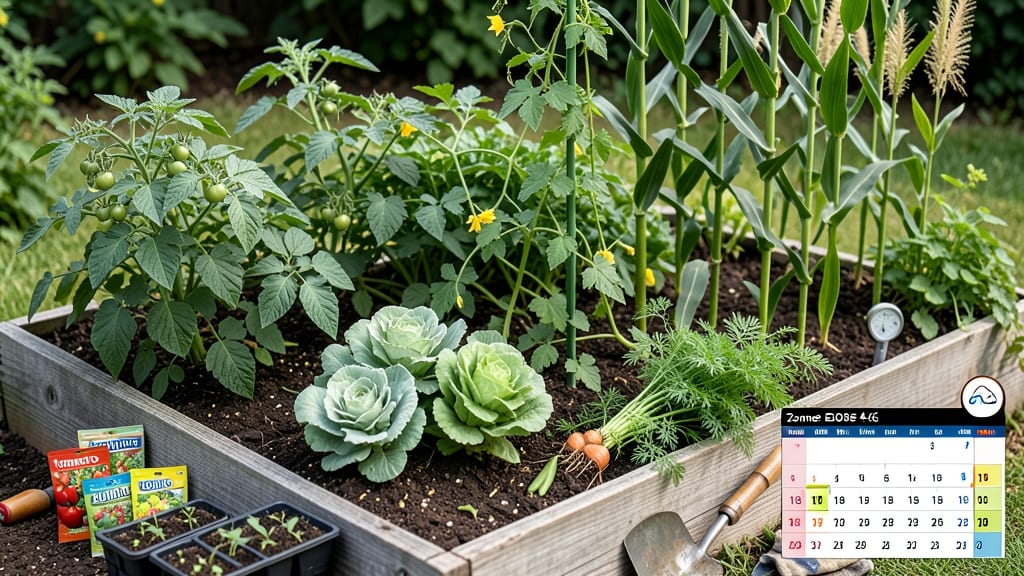
To plant your garden in Illinois, time your sowing around last frost dates: cool-season crops like kale and lettuce thrive in early spring (March–April) or late summer (August–September), while warm-season favorites like cucumbers and basil should wait until after mid-May (Zone 5) or late April (Zone 6). Always verify local frost charts for exact timing.
Timing your garden in Illinois isn't just about dates—it's about understanding your specific USDA hardiness zone (5a/5b or 6a/6b) and microclimates.
Northern Illinois (Zone 5) faces later springs, while southern areas (Zone 6) can start earlier. Soil temperature matters too: cool-season crops like broccoli need 40°F soil, while warm-season tomatoes prefer 60°F or warmer.
I always check my local frost-free date from the Illinois State Water Survey—it's the most reliable guide for avoiding frost damage. 🌱
Pro tip: Use succession planting for continuous harvests. For example, sow lettuce every 2 weeks from March through August. And don't forget about fall planting—many cool-season crops thrive when planted in late summer for harvest before winter sets in.
The key is matching your plants to Illinois' 180-day growing season window.
💡 In This Article
- Illinois Frost Zones and Their Impact on Planting Timing
- Best Planting Calendar for Illinois Gardens by Crop Type
Illinois frost zones and their impact on planting timing
Illinois spans two USDA hardiness zones—5a/5b in the north and 6a/6b in the south—each with distinct frost patterns that dictate planting windows.
Zone 5 areas (like Chicago and northern suburbs) typically experience their last spring frost around mid-May, while Zone 6 regions (such as Springfield and southern Illinois) see frost-free conditions by late April.
These dates create a 3-4 week difference in planting readiness, which is why gardeners in northern Illinois often wait until Memorial Day to plant tomatoes, while southern gardeners might start by Easter. 🌿
The 180-day growing season rule is your best friend for annuals: count backward from your first fall frost (usually mid-October in Zone 5 and early November in Zone 6) to determine when to plant warm-season crops.
For example, if your fall frost is October 15, tomatoes planted on May 15 will have just enough time to mature before cold sets in. Soil temperature thresholds add another layer—cool-season crops like spinach germinate at 40°F, while warm-season peppers need 60°F soil to sprout.
A soil thermometer is worth its weight in gold here!
Microclimates complicate things further. Urban areas like Chicago can be 5°F warmer than rural spots due to heat islands, while south-facing slopes warm up faster than shaded gardens. I’ve seen peas thrive in a sunny corner in early April that would freeze in a nearby shady bed.
To account for this, test your soil temperature daily for 3-5 days before planting warm-season crops—consistent warmth is the real green light, not just calendar dates. 🌡️
Climate shifts are also rewriting the rules. Over the past decade, Illinois’ last spring frost has arrived 7 days earlier on average, thanks to warmer winters. However, this doesn’t mean you should rush—late frosts still sneak in, especially in Zone 5.
Always have frost cloth on hand for heat-sensitive seedlings like basil, which can’t handle temperatures below 50°F. The Illinois State Water Survey’s frost maps are your best resource for real-time adjustments.
Here’s a quick zone comparison to keep handy:
- Zone 5 (Northern IL): Last frost mid-May, first fall frost mid-October
- Zone 6 (Southern IL): Last frost late April, first fall frost early November
Pro tip: If you’re in a transitional zone (like near the border), err on the side of caution—wait until after Mother’s Day to plant warm-season crops in Zone 5. Your plants will thank you! 🌱