
Planting
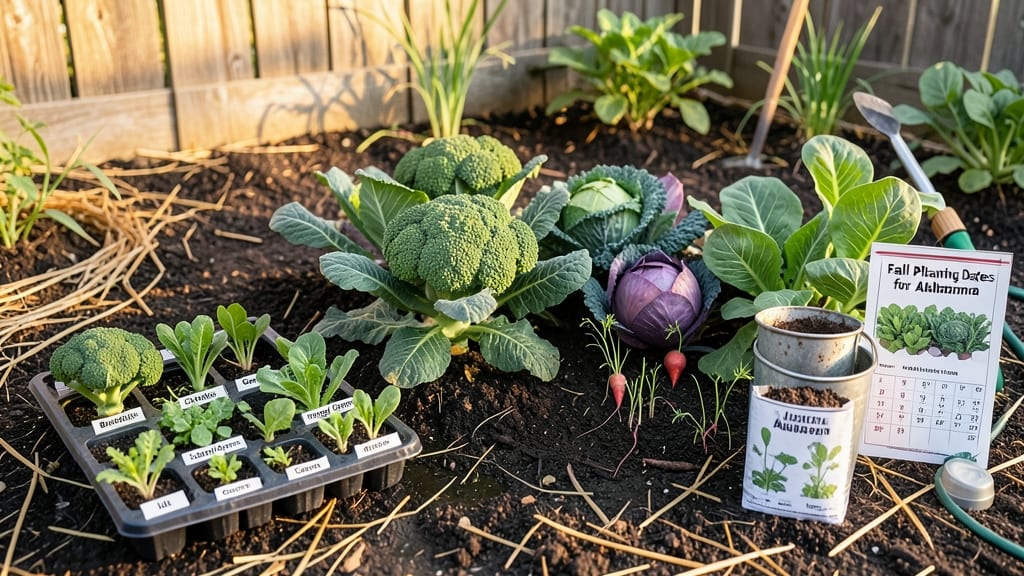
Planting your fall garden in Alabama between late July and early September is the key to beating the heat and harvesting before frost.
Alabama’s long, hot summers can make fall gardening a challenge—but timing your plantings right ensures a bountiful harvest before winter frost. Get the exact frost-date timeline, heat-tolerant crop recommendations, and planting windows tailored to Alabama’s unique climate zones.
If you’ve ever watched your seedlings wilt under summer sun or struggled with late-season harvests, you’re not alone. The 6-8 week rule before your first frost (usually mid-November) is your best friend, but Alabama’s regional differences mean your neighbor’s schedule might not work for you.
Below, I break down the ideal planting windows for Alabama’s 7a-8b zones, top heat-loving crops like collards and sweet potatoes, and how to prep your soil for success—so you can enjoy fresh 🥬 from September straight through November.
Alabama fall planting timeline: frost dates by region & heat-tolerant crop windows
Alabama’s fall gardening season begins when summer’s brutal heat finally wanes, but the exact timing depends on your region. The state spans USDA zones 7a-8b, meaning northern Alabama (like Huntsville) freezes earlier than southern Alabama (like Mobile).
Understanding these frost-date differences helps you plant heat-tolerant crops early enough to mature before winter sets in.
For most Alabama gardeners, the last safe planting window for fall crops runs from late July through early September. This 6-8 week window ensures plants establish roots before the first frost, which typically arrives between mid-November (North) and early December (South).
Miss this window, and you risk stunted growth or crop failure.
Here’s the critical detail: urban areas often experience earlier frosts than rural zones due to the heat island effect. For example, Birmingham’s average first frost is November 15, while nearby rural areas might push back to November 25.
Always check local microclimates—your neighbor’s garden might have a 2-week advantage over yours.
To maximize your fall harvest potential, focus on heat-tolerant varieties like collard greens, sweet potatoes, and okra, which thrive in 85–95°F soil temperatures.
These crops can handle Alabama’s lingering summer heat while still maturing before frost. Pair them with cool-season staples like kale and broccoli for a dual-phase garden.
🌱
Extending your fall growing season is easier than you think. A simple row cover (like floating row fabric) can protect tender crops down to 28°F, while cold frames let you harvest spinach and lettuce well into December.
For urban gardeners, prioritize south-facing beds and black plastic mulch to warm soil faster—critical when your frost date arrives earlier.
Pro tip: Test your soil temperature before planting. Use a soil thermometer to confirm 60–65°F for cool-season crops. If it’s still above 80°F in late August, opt for heat-loving crops like okra or sweet potatoes and delay planting broccoli or cabbage until September.
Don’t forget succession planting—sow fast-maturing crops like radishes every 2 weeks from August through October. This ensures a continuous harvest until frost. Pair them with slow-growing crops like carrots (90 days to maturity) for a balanced fall garden.
🌿
If you’re in northern Alabama, your last call for fall planting is August 15 for most crops. For southern Alabama, you’ve got until September 15—but don’t wait too long!
Even heat-tolerant crops like tomatoes struggle if planted after September 1 in the South. Plan now, and your fall garden will reward you with fresh produce long after summer’s over.
✂️
Top 10 heat-tolerant vegetables & herbs for Alabama fall gardens (with planting depths)
Alabama’s fall gardening thrives when you choose heat-tolerant crops that handle 85–95°F soil while still producing before frost. These 10 varieties are perfect for your state’s USDA Zones 7a–8b, offering flavorful harvests even as temperatures dip.
Whether you’re growing in North Alabama’s cooler hills or South Alabama’s humid lowlands, these plants deliver.
Timing is everything—plant these 6–8 weeks before your first frost (typically mid-October to early November in most regions). For Southern Alabama, you can push planting until late October, while Northern Alabama gardeners should aim for early September to avoid early cold snaps.
Always check your local frost-free date for precision.
🌱 Planting Depths & Spacing vary by crop, but most seeds need ½–1 inch deep in loose, well-amended soil. Transplants should sit slightly deeper than their nursery pots to stabilize them. Use compost-rich soil to retain moisture and improve heat tolerance—critical for Alabama’s clay-heavy soils in many areas.
| Plant | Planting Time | Depth | Spacing | Sun Needs | Companion Plants |
|---|---|---|---|---|---|
| Collard Greens | Late July–Early Sept | ¼ inch | 12–18 inches apart | Full sun–partial shade | Onions, carrots, herbs |
| Sweet Potatoes | Early June–July (slips) | 1–2 inches deep | 12–18 inches apart | Full sun | Beans, corn, okra |
| Okra | Late March–June (fall) | ½ inch | 18–24 inches apart | Full sun | Peppers, tomatoes, cucumbers |
| Basil (Genovese) | Late July–August | ¼ inch | 6–12 inches apart | Full sun–partial shade | Tomatoes, peppers, lettuce |
| Turnips | Late July–September | ½ inch | 2–4 inches apart | Full sun | Beets, lettuce, onions |
| Kale (Winterbor) | Late July–August | ¼ inch | 12–18 inches apart | Full sun–partial shade | Brassicas, herbs |
| Swiss Chard | Late July–September | ½ inch | 10–12 inches apart | Full sun–partial shade | Beets, onions, lettuce |
| Cilantro | Late July–August | ¼ inch | 6–8 inches apart | Partial shade | Lettuce, radishes, beans |
| Peppers (Jalapeño) | Late July–August (transplant) | 1 inch deep | 12–18 inches apart | Full sun | Basil, tomatoes, onions |
| Radishes | Late August–September | ¼ inch | 1–2 inches apart | Full sun |