Planting
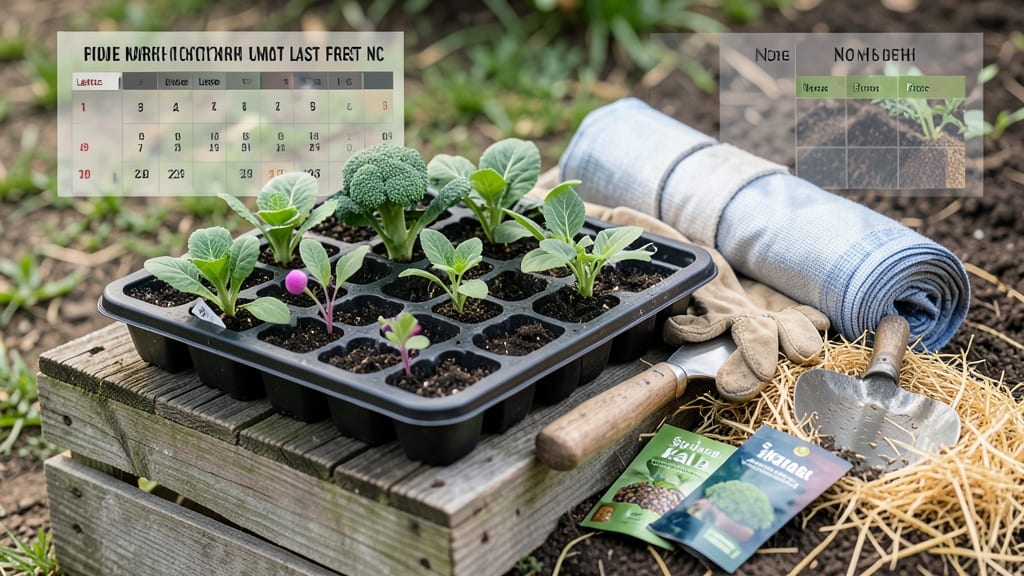
Planting a garden in NC at the right time means the difference between a bountiful harvest and a sad patch of wilted seedlings.
North Carolina’s diverse climate means your garden’s success hinges on planting at the right time—miss the window, and you risk frost damage or stunted growth. Here’s your frost-date guide to planting in NC, broken down by plant type so you can maximize yields and avoid common mistakes.
Cool-season crops like spinach and broccoli thrive when planted in early spring, while tomatoes and peppers need warmer soil to take off. The key is knowing your last frost date, which varies from the coast to the mountains.
In this guide, I’ll walk you through the exact planting windows for NC’s five climate zones, plus tips for extending your growing season with row covers and cold frames.
NC frost dates by region: when to plant cool-season vs warm-season crops
North Carolina’s five distinct climate zones create wildly different planting windows—what works in the Coastal Plain might fail in the Mountains. Understanding your last frost dates and heat tolerance thresholds is the key to avoiding frost damage or wasted effort.
Let’s break down the best times to plant cool-season crops (like spinach and broccoli) versus warm-season crops (tomatoes, peppers) based on your region.
Cool-season crops thrive in cooler temperatures (40°F–75°F), while warm-season crops need consistent warmth (60°F+ soil temp). The difference between NC’s Coastal Plain and Mountain regions can be as much as 4–6 weeks in planting timing.
Use this guide to align your planting schedule with your local frost dates and avoid common mistakes like planting too early or too late.
If you’re in the Coastal Plain, you can start planting cool-season crops like spinach and kale as early as February, while Mountains gardeners should wait until March to avoid frost damage.
For warm-season crops, wait until the soil reaches 60°F+—typically mid-April in the Coastal Plain but late May in the Mountains.
Pro tip: Use NC State Extension’s frost maps for your exact location, as microclimates (like valleys or urban heat islands) can shift frost dates by 1–2 weeks. For example, Asheville’s last frost is often 2 weeks later than Raleigh’s due to elevation differences.
For cool-season crops, aim to plant 4–6 weeks before your last frost date. This gives seedlings time to establish roots before warmer weather arrives. Broccoli and cabbage, for instance, can handle light frosts but will bolt (flower prematurely) if temperatures climb above 75°F.
Succession plant every 2–3 weeks for continuous harvests.
Warm-season crops like tomatoes and peppers need consistent warmth—plant them too early, and they’ll wilt or rot in cold soil. Wait until the soil thermometer reads 60°F+ (use a soil thermometer for accuracy) and nighttime temps stay above 50°F.
In the Mountains, this might not happen until late May.
Extend your growing season with row covers or cold frames to push planting windows earlier or later. For example, spinach can tolerate light frosts, so you might get a fall harvest even after the first frost if you protect it.
Similarly, peppers can be started indoors in March and transplanted after the last frost.
Remember: Frost dates vary yearly, so always check local forecasts. If you’re unsure, opt for heat-tolerant varieties (like ‘Heatmaster’ tomatoes) or use black plastic mulch to warm soil faster. With the right timing, you’ll avoid the #1 gardening mistake—planting too early or too late!
Best planting schedule for NC gardens: month-by-month calendar
North Carolina’s diverse climate zones mean your planting schedule should shift based on whether you’re in the Coastal Plain, Piedmont, or Mountains. While the last frost dates vary by region, this month-by-month guide gives you flexibility for both raised beds and in-ground planting.
Raised beds warm up faster, so you can plant 2-3 weeks earlier than in-ground gardens.
For all regions, soil temperature is your best indicator—wait until it reaches 60°F+ for warm-season crops like tomatoes and peppers. Use a soil thermometer to avoid guessing. Organic fertilizers like compost or worm castings should be worked into the soil 4-6 weeks before planting to give nutrients time to integrate.
- 1
- 2
- 3
- 4
- 5
- 6
- 7
Raised beds offer a 3-4 week advantage for early spring planting because they warm up faster. If you’re in the Mountains, extend your season with row covers—they can push planting dates back by 4-6 weeks.
For in-ground gardens, wait until the soil is workable (not just frost-free) to avoid compacting it.
Organic fertilizers like composted manure or kelp meal should be applied in early spring and late summer to support root growth. Avoid fresh manure—it can burn plant roots and attract pests. For container gardens, use a balanced fertilizer (10-10-10) every 4-6 weeks during the growing season.
Remember, successional planting is key for continuous harvests. For example, sow lettuce every 2 weeks from spring to fall to enjoy fresh greens year-round. Adjust your schedule based on microclimates—south-facing beds stay warmer longer, while shady spots may need cool-season crops even in summer.