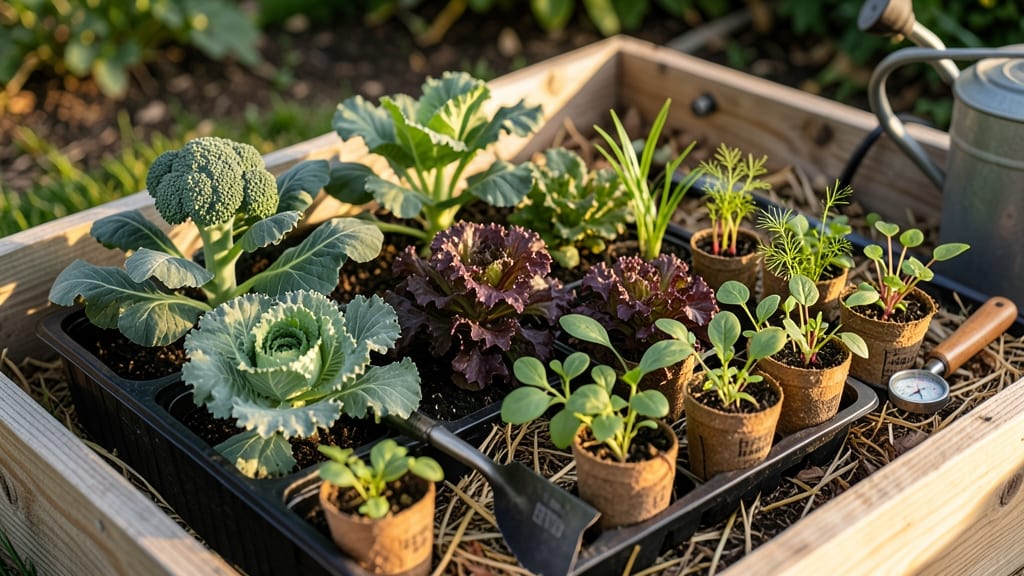
Planting a fall garden in South Texas between mid-August and early October lets you beat the heat and grow a harvest before frost—if you time it right.
You’ve probably tried planting too early and watched your greens bolt in the 100-degree soil, or held off too long and missed the 60-day window before the first frost. The secret? Choosing heat-tolerant crops like okra and sweet potatoes that thrive when most gardens give up.
South Texas’s 9a-10a climate means you can push the limits—think black-eyed peas in September or kale that sweetens after a light frost. But the real trick is knowing when to start seeds indoors (August) versus transplanting hardened-off seedlings (early October).
Below, I break down the exact planting schedule by crop, soil prep hacks for clay-heavy soil, and how to stretch your harvest through December—without losing everything to a surprise cold snap.
🥬
When to Plant Fall Garden Vegetables (General) Garden Vegetables (General)
Jan
❄️
Feb
❄️
Mar
🌱
Apr
🌱
May
🌸
Jun
☀️
Jul
☀️
Aug
🌱
Sep
🥬
Oct
🥬
Nov
🌱
Dec
❄️
South Texas fall planting calendar: exact dates by heat-zone crops
South Texas gardeners know the drill: summer’s scorching heat forces most plants into hiding, but fall brings a second chance to grow. The key? Timing your crops to align with cooling temperatures while avoiding the rare frost.
In USDA Zones 9a/b, your planting window spans mid-August to early October, but not all crops play nice together.
Heat-tolerant crops like okra, sweet potatoes, and black-eyed peas thrive in residual summer heat, while kale, broccoli, and carrots need cooler soil to germinate. The Rio Grande Valley (Zone 9b) can push dates 2-3 weeks later than San Antonio (Zone 9a), thanks to its milder winters.
Here’s your exact planting schedule, adjusted for microclimates.
| Crop Type |
Planting Window (San Antonio) |
Planting Window (Rio Grande Valley) |
Last Chance Before Frost |
Soil Temp Requirement |
| Heat-Tolerant Crops |
Aug 15–Sep 15 |
Aug 25–Sep 25 |
Oct 1 (San Antonio) |
75–95°F |
| Okra |
Aug 1–Sep 10 |
Aug 10–Sep 20 |
Oct 15 |
80–90°F |
| Sweet Potatoes |
Aug 10–Sep 5 |
Aug 20–Sep 15 |
Sep 30 |
85–95°F |
| Black-Eyed Peas |
Aug 15–Sep 10 |
Aug 25–Sep 20 |
Oct 10 |
70–85°F |
| Cooler-Season Crops |
Sep 1–Oct 1 |
Sep 10–Oct 10 |
Oct 15 (San Antonio) |
60–75°F |
| Kale |
Sep 15–Oct 1 |
Sep 25–Oct 10 |
Oct 20 |
55–70°F |
| Broccoli |
Sep 10–Sep 25 |
Sep 20–Oct 5 |
Oct 10 |
60–75°F |
<
Top 5 heat-tolerant fall garden crops for South Texas (and how to extend their season)
South Texas’s fall garden thrives on heat-tolerant crops that handle lingering summer heat while preparing for cooler months. The key is selecting varieties bred to withstand 90°F+ soil temperatures and extending their season with simple techniques.
These five crops consistently outperform others in USDA Zones 9a-10a, thanks to their C4 photosynthesis pathways or deep root systems that access moisture.
Your clay-heavy South Texas soil needs special attention—amend it with 2-3 inches of compost and gypsum (10 lbs per 100 sq ft) to improve drainage. This prevents root rot while helping crops like sweet potatoes and okra thrive.
Test your soil’s pH (ideal range: 6.0-6.8) before planting, as alkaline soils common in this region can lock out nutrients.
🌱 5 Heat-Tolerant Fall Crops + Pro Tips
-
1. Okra – Plant August 15-Sept 1. Thrives in 95°F+ heat; harvest pods at 3-4 inches for tenderness. Yield: 10-15 lbs per plant in 60 days.
-
2. Sweet Potatoes – Start slips July 15-Aug 15. Deep roots tolerate drought stress; mulch heavily to retain moisture. Yield: 5-8 lbs per hill in 90-120 days.
-
3. Black-Eyed Peas – Sow Sept 1-Oct 15. Fixes nitrogen in soil; ideal for poor clay soils. Yield: 2-3 lbs per 10 ft row in 50-60 days.
-
4. Malabar Spinach – Plant Aug 1-Sept 30. Heat-loving vine; edible year-round in frost-free zones. Yield: 1-2 lbs per plant continuously.
-
5. Cowpeas – Direct-sow July 1-Sept 15. Drought-resistant; fixes nitrogen like peas. Yield: 3-5 lbs per 10 ft row in 60-75 days.
💡 Pro Tip: For small spaces, prioritize okra and Malabar spinach (vertical growth). For large acres, cowpeas and black-eyed peas excel in low-input systems.
To extend the season, use row covers (frost blankets) starting October 15—this can delay frost by 2-3 weeks. Water deeply every 3-4 days in fall to prevent transplant shock, and mulch with straw (3-4 inches) to insulate roots.
For extra protection, plant heat-tolerant crops near tall windbreaks (e.g., corn stalks) to create microclimates.
Monitor soil temperature with a probe—keep it above 60°F for germination. If nights dip below 50°F, use black plastic mulch to absorb heat during the day.
These tricks let you harvest okra until November and sweet potatoes until December in most years, beating the average December 15 frost date.
For maximum yields, interplant fast growers (like Malabar spinach) with slow maturers (sweet potatoes). This space-efficient strategy ensures continuous harvests while keeping your South Texas garden productive through the fall transition. Start with these five crops, and you’ll have a bountiful, heat-smart harvest that outlasts the competition. 🌱
★★★★★4.6(2 reviews)