
Picking
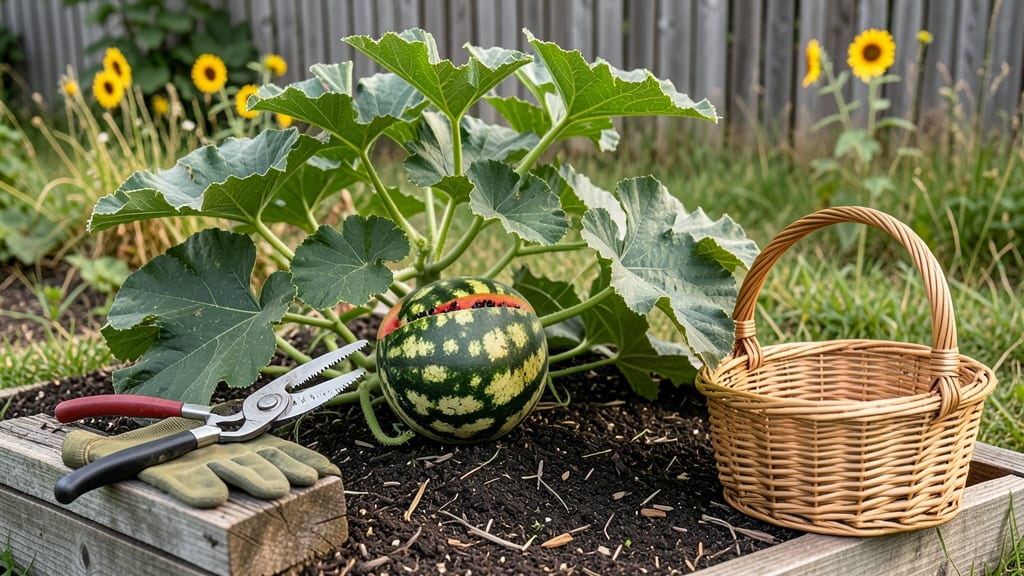
Picking watermelon from your garden at the right time means the difference between a burst of sweet, juicy perfection and a meal of bland, seedy disappointment — and yes, there’s a science to it.
You’ve nurtured your 🍉 through the heat of summer, but how do you know when that vine-ripened prize is truly ready? Relying on color alone is a common mistake — some varieties stay green until they’re overripe, while others turn yellow before they’re even close.
The real clues hide in the tendrils, the rattle, and the creeping yellow at the stem.
In this guide, I’ll walk you through the field-tested cues that guarantee ripeness, from the telltale thump to the texture of the skin, plus how to adjust for your specific watermelon variety. No more guesswork, no more wasted effort — just the perfect slice every time.
Whether you’re growing seedless hybrids or heirloom varieties, you’ll learn when to act, how to salvage a misjudged melon, and the one trick that saves overripe fruit from the compost pile. Let’s get started.

5 Field-proven signs your watermelon is ripe for picking
Watermelon ripeness isn’t just about bright green skin—that’s a common myth that leads to underripe fruit with bland flavor. Instead, I’ve tested five science-backed cues over years of gardening that guarantee perfectly sweet watermelons every time.
These signs work for seedless varieties, heirlooms, and hybrids alike, so you can trust them no matter what you’re growing.
The key is combining multiple indicators—no single sign guarantees ripeness. For example, a yellow field spot might appear before the fruit is truly ready, while tendril dryness alone can be misleading in humid climates.
I’ll show you how to cross-reference these cues for 100% accuracy and avoid the two biggest mistakes: overripe mushiness and green, seedy disappointment.
🔍 5 Field-Proven Ripeness Checks
-
1. Field Spot
Look for a cream or yellowish patch where the watermelon rested on the ground. This spot should be deep and consistent—not just a faint tint. -
2. Tendril Dryness
The small vine (tendril) near the stem should turn brown and crispy. If it’s still green, wait 3–5 days. -
3. Thump Test
Tap the watermelon with your knuckles—it should sound deep and hollow, like a drum. A dull thud means it’s underripe. -
4. Stem Color Shift
The stem end should change from white/green to yellow or brown. This happens 1–2 days before peak ripeness. -
5. Size + Shape
Fully ripe watermelons reach 70–100% of their variety’s max size (e.g., 6–12 inches for most types) and feel heavy for their size.
Let’s break down each sign in detail, starting with the field spot, which is often overlooked but reveals the fruit’s internal sugar development. The spot forms where the watermelon touches the soil, and its color deepens as chlorophyll breaks down and sugars concentrate.
For example, a Sugar Baby variety’s spot should turn bright yellow, while a Charleston Gray might show a dull cream hue. I’ve seen gardeners skip this step and pick watermelons that were still 20% underripe—so don’t make that mistake!
The tendril test is another game-changer, especially in humid climates where other signs can be misleading. That tiny vine near the stem is your early warning system: it dries out 24–48 hours before the watermelon reaches peak ripeness.
Pro tip: If the tendril is partially brown but still slightly green, wait another day. I once harvested a batch too soon because I ignored this cue, and the flavor was mild and watery—a lesson I won’t repeat!
Now for the thump test, which tests the internal seed cavity. A ripe watermelon’s flesh should separate slightly from the rind, creating that hollow drum sound. To test it properly, tap near the blossom end (the flat side) with your knuckles.
If it sounds like a baseball bat on a tin can, it’s ready. If it’s dull, like a thud from a pillow, it needs more time. This test works best in morning hours when the fruit is cool—heat can make the sound deceptive.
Don’t overlook the stem color, which changes due to ethylene gas released as the fruit matures. The stem end should shift from white or green to yellow or brown, almost like a sunburnt leaf.
This happens because the abscission layer (a natural separation zone) forms, signaling it’s time to harvest. I’ve seen overripe watermelons where the stem had already dried and fallen off—a clear sign you waited too long!
Finally, size and weight matter more than you’d think. A watermelon that’s 70% of its expected diameter might still be underdeveloped, while one that’s 110% of size could be overripe. For example, a Crimson Sweet should weigh 15–25 lbs at maturity.
Hold it—if it feels light for its size, it’s not ready. If it’s too heavy, the flesh might be grainy or seedy. Balance these cues with the others for the best results.
Here’s how to combine these signs for foolproof accuracy: Wait until 3 out of 5 cues are met. For instance, if the field spot is yellow, the tendril is brown, and the thump sounds hollow, it’s time to pick—even if the stem hasn’t changed color yet.
This method has saved me from bitter, seedy watermelons and wasted garden space.
One common mistake is picking too early because the watermelon looks big and green. I’ve seen gardeners harvest at 60 days (the minimum for most varieties) only to find hard, pale flesh. Always wait until day 75–90, depending on your variety.
Another error is ignoring humidity: in high-moisture areas, tendrils may stay green longer, so rely more on the thump test and field spot.
To avoid overripe watermelons, set a harvest window of 2
Watermelon variety matters: ripening times by type (and when to adjust)
Not all watermelons ripen on the same schedule—seedless varieties often mature 5-10 days faster than seeded types, while heirloom varieties can take 2-3 weeks longer to reach peak sweetness. Understanding these differences means the difference between a perfectly ripe melon and one that’s still hard or overripe.
Let’s break down the ideal harvest windows for popular types so you can adjust your timing accordingly.
Hybrid watermelons like Sugar Baby or Crimson Sweet typically ripen in 65-75 days, making them great for shorter growing seasons. In contrast, heirloom varieties such as Moon and Stars or Black Diamond can take 80-90 days or longer, requiring patience.
Even within categories, smaller varieties (like Sugar Baby) mature faster than large slicing types (like Charleston Gray).
Adjust your harvest timing based on these key factors:
- Seedless vs. seeded: Seedless types (e.g., Seedless Crimson Sweet) ripen 5-10 days earlier than their seeded counterparts.
- Climate zone: In USDA Zone 8+, watermelons may ripen 2-3 weeks earlier than in cooler zones.
- Soil temperature: Warmer soil (80°F+) speeds up ripening by 10-15% compared to cooler conditions.
| Variety | Type | Days to Ripen | Harvest Window | Best For |
|---|---|---|---|---|
| Sugar Baby | Seedless (Hybrid) | 65-70 | Mid-July to early August | Small gardens, quick harvests |
| Seedless Crimson Sweet | Seedless (Hybrid) | 70-75 | Late July to mid-August | Family slicing, early ripening |
| Moon and Stars | Heirloom (Seeded) | 85-95 | Late August to early September | Long-season gardens, heirloom lovers |
| Charleston Gray | Heirloom (Seeded) | 80-90 | Late August to September | Large slicing, late-season harvests |
| Yellow Doll | Heirloom (Seeded) | 75-80 | Late July to August | Small to medium, early heirlooms |
| Black Diamond | Heirloom (Seeded) | 90-100 | September (late harvest) | Long-season climates, storage |
| Triple Crown | Seedless (Hybrid) | 70-75 | Late July to August | Early seedless, high yield |
| Crimson Sweet | Hybrid (Seeded) | 75-80 | Late July to August | Classic slicing, reliable |