
Picking
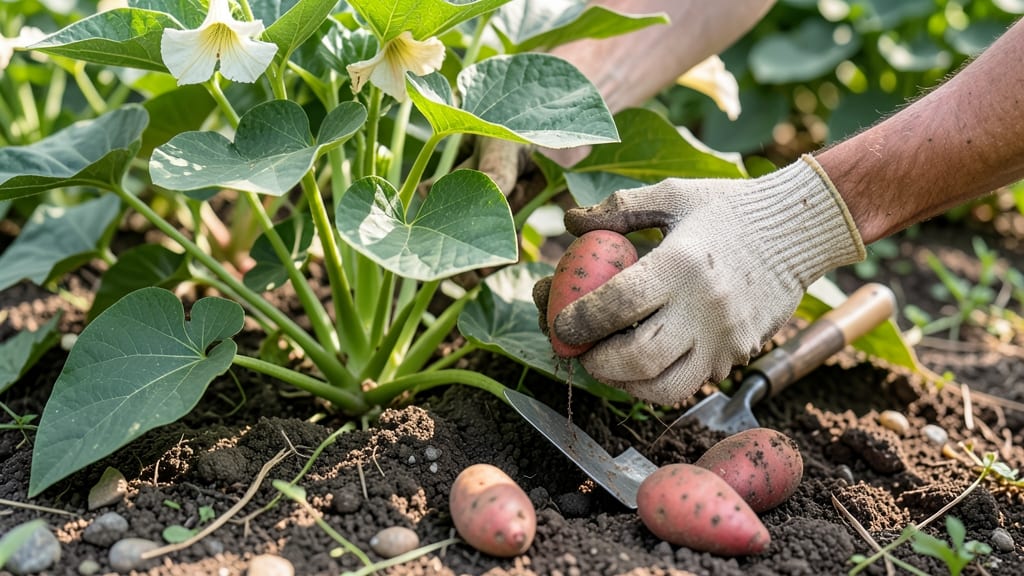
Picking sweet potatoes from the garden at the right time ensures you’ll get those sweet, starchy tubers instead of tough, fibrous ones — and the key is knowing when to dig.
If you’ve ever pulled a sweet potato too early and ended up with a small, watery mess, you’re not alone. The difference between a perfect harvest and a wasted crop often comes down to a few simple cues: leaf color, skin texture, and even the weather.
In USDA Zone 6a, sweet potatoes 🍠 typically reach harvest readiness between 90 and 140 days after planting, usually in late September or October.
But timing isn’t just about days—it’s about watching for the skin slip test, vine dieback, and other visual signals that tell you it’s time to dig.
Below, I’ll walk you through the most reliable methods to determine when your sweet potatoes are ripe, plus tips for storing them properly so they stay fresh long after the harvest.


How to use the skin slip test for sweet potato harvest timing
The skin slip test is the most reliable way to determine when your sweet potatoes are ready for harvest. Unlike guessing by days after planting, this method checks the maturity of the tuber itself.
When done correctly, it ensures you harvest sweet, starchy tubers instead of underdeveloped or fibrous ones. The test works by gently checking how easily the skin separates from the flesh—a key indicator of readiness.
Performing this test at the right time is crucial. Start checking your sweet potatoes about 90 days after planting, but don’t wait too long—harvest before the first frost or the tubers may spoil in the ground.
The skin slip test should be done on a dry, sunny day when the soil is slightly dry, as moist conditions can give false results. This method is especially useful for home gardeners who want to avoid the guesswork of harvesting too early or too late.
What does "slip" actually mean? When the skin of a sweet potato slips easily from the flesh when gently peeled back, it signals that the tuber has reached peak maturity. This happens because the skin thickens and separates naturally as the tuber develops. If the skin resists or tears, the potato isn’t fully mature yet. Think of it like checking a ripe avocado—just enough pressure to reveal readiness without damaging the fruit.
How to Perform the Skin Slip Test
- Select a healthy vine with at least 3-5 leaves that look mature but are starting to yellow.
- Gently dig down about 6 inches deep near the base of the vine to locate a tuber.
- Carefully expose 2-3 inches of the tuber without fully removing it from the soil.
- Use your thumb and forefinger to gently peel back a small section of the skin.
- If the skin slips easily from the flesh (like a tight glove), the potato is ready to harvest.
- If the skin resists or tears, wait 5-7 more days and test again.
Timing your test is just as important as performing it correctly. The best time to check is in the late afternoon when the tubers have warmed slightly from the sun. This makes the skin more pliable and easier to assess.
Avoid testing after heavy rain or irrigation, as excess moisture can make the skin appear slippery when it’s not actually mature. Pro tip: Test 2-3 tubers from different vines to get a representative sample of your crop’s readiness.
One common mistake gardeners make is assuming that a slip means the potato is overripe. In reality, a true slip indicates the tuber is at its peak sweetness and starch content. If you wait too long after the skin slips, the tubers may become tough and less flavorful.
Think of it like harvesting corn—you want to pick it at the exact moment it’s perfect, not a day later when quality declines. This test gives you that precision.
For varieties like Beauregard or Georgia Jet, which are popular among home gardeners, the skin slip test works especially well because these types develop a thick, durable skin when mature.
If you’re growing heirloom varieties with thinner skins, like Bonita, you may need to test slightly earlier, as their skins can slip sooner. Always refer to your specific variety’s days to maturity as a general guideline, but rely on the skin test for the final call.
After confirming your sweet potatoes are ready with the skin slip test, harvest them within the next 2-3 days to avoid overmaturity. Use a fork or hands to gently loosen the soil around the tubers, then lift them carefully to prevent bruising.
Shake off excess dirt and let them cure in a warm, dry place for 5-10 days before storing. This curing process enhances their flavor and extends shelf life, making your harvest even more rewarding.
If you’re new to growing sweet potatoes, start by testing a few tubers every 3-5 days once you reach the 90-day mark. This frequent checking helps you get a feel for how your specific growing conditions—like soil type and weather—affect maturity.
Over time, you’ll develop an intuition for when to harvest, but the skin slip test remains your most reliable tool for consistency.
Remember, the skin slip test isn’t just about timing—it’s about quality. Sweet potatoes harvested at the right moment will have the perfect balance of sweetness and texture, making them ideal for roasting, mashing, or baking.
By mastering this test, you’ll transform your harvest from a gamble into a guaranteed success every season.
Vine dieback and other signs your sweet potatoes are ready to harvest
Sweet potatoes don’t always announce their readiness with dramatic color changes like tomatoes or peppers. Instead, they signal maturity through subtle shifts in their vine health and leaf condition.
Ignoring these cues can lead to tubers that are either too small or—worse—ruined by frost. The key is learning to read your plants like a pro.
One of the most reliable indicators is vine dieback, where the sprawling vines turn from vibrant green to a dull yellow or brown. This isn’t just a sign of stress—it’s your sweet potatoes telling you they’ve redirected their energy from leaves to tuber growth.
But timing matters: harvest too early, and you’ll miss out on flavor and size; too late, and frost or overgrowth can spoil your crop.
🌱 Numbered Highlights: When to Pick Sweet Potatoes
- 1. Vine Yellowing: When 70-80% of vines turn yellow or brown, it’s time to check for readiness. This usually happens 90-110 days after planting, depending on your climate.
- 2. Leaf Crispiness: Leaves should feel dry and papery to the touch, not rubbery or moist. This indicates the plant is shutting down its above-ground growth.
- 3. Skin Firmness: Gently press a fingernail into the skin. If it barely leaves a mark, the sweet potato is ready. If it dents easily, wait 1-2 weeks.
- 4. Tuber Size: Aim for 3-6 inches in diameter. Smaller tubers (under 2 inches) won’t store well and may lack sweetness.
- 5. Climate Check: In hot climates, harvest when vines die back. In cooler regions, harvest 2-3 weeks before frost to avoid tuber damage.
Climate plays a huge role in harvest timing. In warmer southern regions, sweet potatoes often mature earlier—sometimes as early as late August—while northern gardeners may need to wait until October or even November.
Pay attention to your local first frost date; sweet potatoes can’t tolerate freezing temperatures, so plan to harvest at least 2 weeks before frost hits.
Don’t overlook soil conditions either. If your garden has sandy soil, tubers may mature faster due to quicker drying. In contrast, clay-heavy soil can delay maturity slightly.
Always dig a test tuber to confirm readiness—especially if your vines are dying back unevenly. A quick check saves you from harvesting too soon or too late.
One common mistake is waiting until the vines are completely dead. By then, tubers may have split or shriveled from lack of moisture. Instead, harvest when vines are mostly dead but still attached—this ensures you get the perfect balance of size and sweetness.
Remember, sweet potatoes store better when harvested at peak maturity, so don’t rush the process.
Finally, if you’re growing sweet potatoes in containers or raised beds, keep an eye on root growth. Since space is limited, tubers may mature faster. Check for readiness 10-14 days earlier than in-ground plants. With these signs in mind, you’ll never miss the perfect harvest window again! 🍠