
Picking
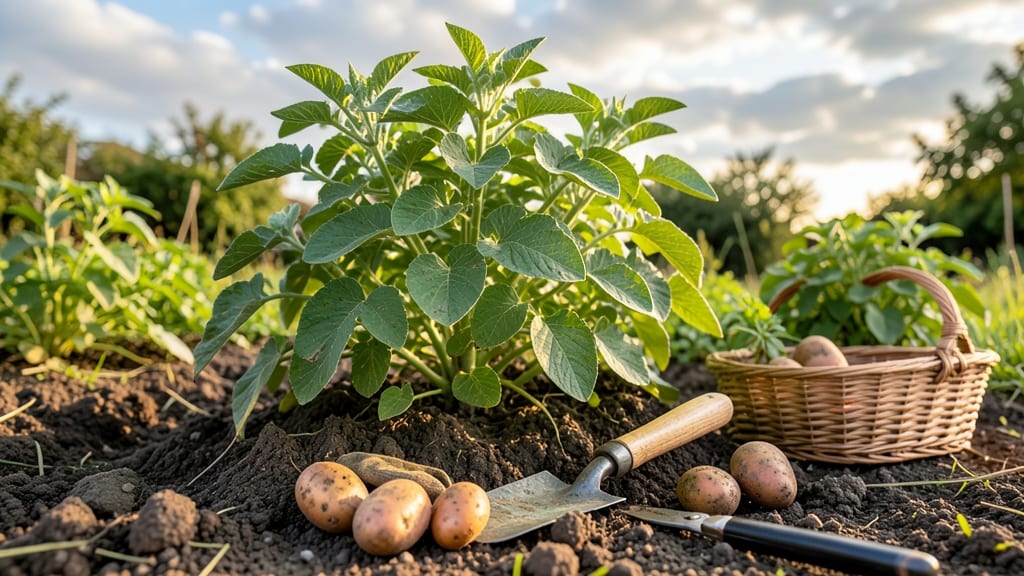
To pick potatoes from your garden at the perfect time means catching them when they’re flavorful and fully mature—but not so late that they rot in the soil.
Harvesting potatoes at the wrong time means either digging up underripe tubers or missing out on the best flavor—here’s how to tell when your 🥔 potatoes are ready to pick for maximum yield and taste.
Most gardeners wait for the foliage to yellow and die back, but the real secret is the skin slip test—a simple trick that tells you exactly when your spuds are ready to harvest.
In this guide, I’ll walk you through the best methods to check your potatoes, including soil conditions, plant signals, and how to handle different varieties for the best results.


How to use the skin slip test for perfect potato harvest timing
The skin slip test is the most foolproof way to determine when your potatoes are ready for harvest. Unlike guessing by days or watching foliage, this simple method checks the skin firmness of tubers to ensure perfect timing for maximum yield and best flavor.
I’ve used this trick for years—it’s saved me from digging up underripe potatoes or missing the peak harvest window.
This test works because potato skins naturally thicken as tubers mature. When they’re ready, the skin will resist gentle pressure, signaling that the starches have fully developed. The test is especially useful for late-season varieties where timing can be tricky due to changing weather patterns.
Here’s the catch: weather plays a huge role. Cool, dry conditions slow skin thickening, while warm, humid weather speeds it up. That’s why I always check multiple tubers from different parts of the plant—consistency is key for accurate results.
How to Perform the Skin Slip Test
- Step 1: Choose a sunny, dry day (morning is best) to avoid misleading moisture in the soil.
- Step 2: Gently dig up 3-5 potatoes from different parts of the plant using your hands or a small trowel.
- Step 3: Hold a potato firmly and try to slide your thumbnail over the skin near the stem end.
- Step 4: If the skin resists pressure and doesn’t slip easily, the potato is ready. If it slips or punctures, wait 7-10 more days.
- Step 5: For new potatoes (small, tender varieties), the skin may still slip slightly—but if they’re golf-ball sized and firm, they’re harvest-ready!
For early-season varieties like ‘Yukon Gold’ or ‘Red Pontiac’, you might start seeing ready potatoes as early as 70 days after planting. But don’t rush—check the skins first! These varieties can still improve in flavor if left a few days longer.
If you’re growing late-season potatoes like ‘Russet’ or ‘Kennebec’, the skin slip test becomes even more critical. These tubers need 100-120 days to mature, and cool fall weather can delay skin thickening. I’ve had years where I had to wait until first frost was imminent before the skins were ready.
One common mistake I see is testing potatoes after a heavy rain. The skins will feel slippery and thin due to moisture, giving a false “not ready” signal. Always wait 24-48 hours after rain before testing to get accurate results.
Once you’ve confirmed readiness with the skin slip test, it’s time to harvest! For storage potatoes, dig carefully to avoid damaging the skins.
For immediate use, you can gently brush off excess soil and enjoy them fresh—just be sure to cure them first (more on that in the next section!).
Remember, the skin slip test isn’t just about timing—it’s about quality. Potatoes harvested at peak skin firmness store better, cook more evenly, and have that unbeatable garden-fresh flavor we all love. Now grab your trowel and get testing!
When to check soil and plant signs for early harvesting
Beyond the skin slip test, your potato plants and soil conditions reveal critical clues about harvest readiness. Early detection prevents underripe tubers while ensuring you don’t miss peak flavor. Let’s explore these often-overlooked indicators that signal it’s time to dig.
Start by examining your soil moisture. Ideal harvest soil should be dry but not bone-dry—think of it as slightly damp like a wrung-out sponge. If the top 2 inches feel dry, your potatoes are likely ready.
Overly wet soil can cause rot, while bone-dry soil means tubers are still growing. Check this in the morning when moisture levels are most accurate.
🚨 callout-warning 🚨
Frost damages potato plants, but it also converts starches to sugars, creating bitter, green-tinged tubers. If frost threatens, harvest 2 weeks beforehand for sweet, flavorful potatoes. Never wait until after frost hits—this ruins both taste and storage potential.
🌱 Pro Tip: Cover plants with straw mulch if frost is forecasted 3-5 days out.
Next, observe your plant foliage. When leaves yellow and die back naturally (not from disease), it’s a clear sign to harvest. This typically happens 2-3 weeks before the plant fully dies.
For early-season varieties, you might see small flowers followed by wilting—this is your cue for a new potato harvest.
Pay attention to soil temperature as well. Potatoes thrive in 60-75°F soil. If temperatures drop below 50°F, growth slows, and tubers stop developing. Early morning is the best time to check—use a soil thermometer for accuracy. Cooler soils signal it’s time to harvest before tubers suffer.
For new potatoes, watch for golf-ball-sized tubers forming. Gently brush away soil near the plant stems to spot these early harvesters. If you find firm, well-formed potatoes with thick skins, they’re ready. Remember: new potatoes should be harvested before the plant flowers fully to prevent tough skins.
Finally, consider your potato variety. Early-season types (like ‘Yukon Gold’) mature in 60-80 days, while late-season varieties (like ‘Russet’) need 100-120 days. Check seed packets for days-to-maturity and adjust your timeline accordingly. Timing is everything for maximizing both yield and flavor!