
Picking
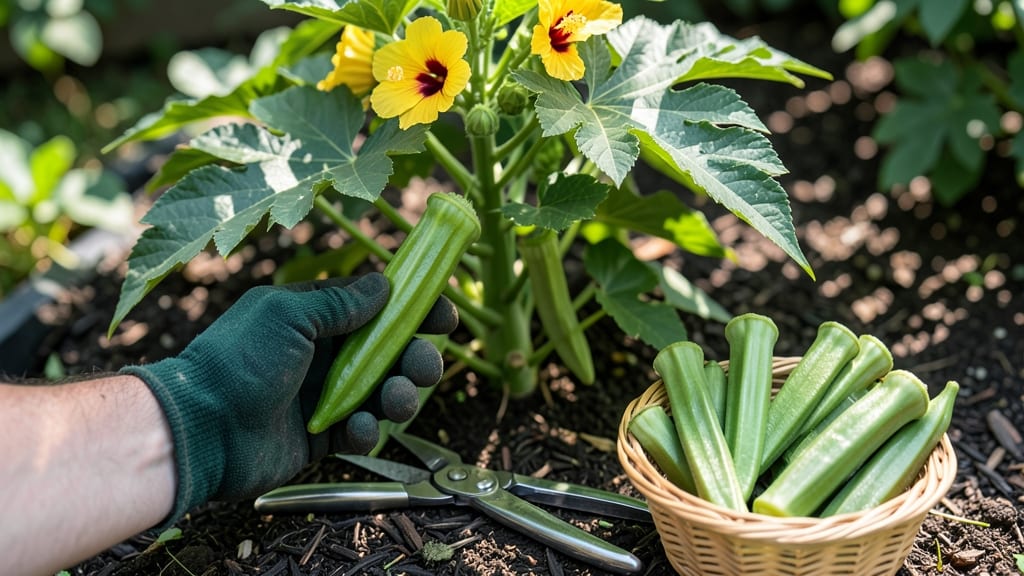
To pick okra from the garden at its peak tender-crisp flavor, aim for pods that are 2–3 inches long and still vibrant green—this is when they’re at their sweetest and most delicious 🌱.
Okra lovers know that timing is everything—pick too early, and you’ll get tough, fibrous pods; wait too long, and they’ll turn woody or develop seeds. Mastering the perfect harvest window ensures tender-crisp okra every time, straight from your garden to the table.
You’ll also want to check the pods for firmness—they should snap easily when bent, not feel rubbery. Harvesting at the right size not only boosts flavor but also encourages your okra plants to produce more, keeping them productive all season long.
In this guide, I’ll break down the exact size, color, and texture cues to look for, plus the best times of day to harvest for maximum freshness. Ready to enjoy the best okra of the season?


How to identify the perfect okra pod size for harvesting
Harvesting okra at the right time transforms your garden into a tender-crisp treasure trove. The 3-inch rule is your golden standard—pods this size strike the perfect balance between tenderness and flavor.
But size isn’t the only clue; color, texture, and even how the pod attaches to the stem play crucial roles in determining peak ripeness.
Start by examining the pod length. A 2-3 inch measurement is ideal for most varieties like 'Clemson Spineless' or 'Emerald'.
Smaller pods (under 2 inches) are still too tender and lack the slight crispness you crave, while pods over 3 inches begin developing fibrous textures and seeds, turning them woody and less palatable.
Next, check the color of the pod. Bright green is the universal sign of readiness, but some heirloom varieties like 'Red Burgundy' may show deep red hues. Avoid pods with dull or yellowing patches—they’re past their prime and will compromise your dish’s quality.
Texture is another game-changer. Run your thumb gently along the pod’s edge. A perfectly ripe okra should feel firm yet slightly yielding, almost like a fresh green bean.
If it feels spongy, it’s underripe; if it’s hard and woody, it’s overripe. This tactile check ensures you’re harvesting at the peak of freshness.
Don’t overlook the stem attachment. The pod should easily snap from the stem with a slight twist—no stubborn tugging required. If it resists, the pod is overmature and likely tough. This quick test saves you from harvesting pods that’ll disappoint in the kitchen.
Timing also matters. Early morning is the best time to harvest because pods are cool and crisp after a night’s rest. Avoid harvesting in the midday heat, as the pods can become flaccid and less flavorful.
Pro tip: Use clean pruning shears or a sharp knife to avoid damaging the plant.
Here’s a quick reference to help you visualize the perfect okra pod at harvest time:
| Pod Size | Color | Texture | Stem Attachment | Harvest Window |
|---|---|---|---|---|
| Under 2 inches | Pale green | Very soft | Tight | Too early |
| 2-3 inches | Bright green | Firm yet tender | Snaps easily | Perfect! |
| Over 3 inches | Dull or yellowing | Woody | Resists removal | Too late |
Variety matters! Some okra types, like 'Arkansas Little Light', mature faster and may be ready at 1.5-2 inches. Always check your seed packet for specific guidelines, but the 3-inch rule is a reliable default.
If you’re unsure, err on the side of smaller pods—they’re easier to eat and less likely to go to waste.
Produce a steady harvest by picking pods every 2-3 days. This encourages your okra plant to produce more pods, extending your harvest season. Think of it like pruning—removing the old (or overripe) pods makes room for new growth.
Plus, frequent harvesting keeps your plants healthy and productive throughout the summer.
One final tip: Store harvested okra in the fridge for up to 5 days to preserve its freshness. Place it in a paper towel-lined container to absorb excess moisture and prevent spoilage. If you’ve harvested more than you can use, consider freezing
Okra harvest frequency and seasonal picking tips for continuous yield
Harvesting okra at the right frequency keeps your plants productive and ensures a steady supply of tender pods. When you pick every 2–3 days, you encourage the plant to produce more flowers and pods instead of letting them mature into tough, fibrous stalks.
This regular harvesting also prevents overgrowth, which can lead to fewer yields and potential disease issues. Think of it like pruning—you’re shaping the plant’s energy toward continuous production.
Timing matters just as much as frequency. The best time to harvest okra is in the early morning, when pods are cool and crisp. This is when their flavor is at its peak, and the pods are less likely to be damaged by pests or weather.
Avoid harvesting in the heat of the day, as this can stress the plant and make the pods more prone to wilting. If you must pick later in the day, do so in the late afternoon to give the plant time to recover before nightfall.
Seasonal adjustments are key to maximizing your okra harvest. In early summer, when plants are just starting to produce, you might need to harvest every 2 days to keep up with the rapid growth.
As temperatures rise in mid-to-late summer, switch to a 3-day harvest schedule to balance production with the plant’s ability to recover. In fall, as days grow shorter and cooler, reduce harvesting to every 4–5 days to allow the plant to store energy for next year’s growth.
- Every 2–3 days: Harvest pods when they reach 2–3 inches to maintain tenderness and encourage new growth.
- Early morning: Pick pods between 6–9 AM for peak flavor and crispness.
- Seasonal adjustments: Increase frequency in early summer (every 2 days) and reduce in fall (every 4–5 days).
- Avoid overgrowth: Remove yellowing leaves or excess pods to redirect energy to healthy growth.
- Use clean tools: Prune with sharp shears to prevent damage and disease spread.
One common mistake is letting pods grow beyond 3 inches, which turns them woody and less palatable. If you miss a harvest window, don’t panic—simply adjust your schedule moving forward.
For example, if your okra plants are producing faster than expected, switch to a daily harvest for a few days to catch up. This might sound intense, but it’s better than losing a crop to overgrowth.
Pay attention to your plants’ signals: drooping leaves or slowed flower production often mean it’s time to cut back on harvesting temporarily.
To keep your okra plants thriving, combine regular harvesting with proper care. After picking, water deeply in the morning to replenish moisture lost during the day. Mulch around the base of the plant to retain soil moisture and regulate temperature, especially in hot climates.
If you notice fewer flowers or slower pod development, consider a light fertilizer application with a balanced NPK ratio to boost productivity. Just remember: over-fertilizing can lead to excessive foliage at the expense of pod production.
With these tips, you’ll enjoy a continuous yield of tender okra all season long. The key is consistency—stay on top of harvesting, adjust for seasonal changes, and give your plants the care they need.
Before you know it, you’ll have a bounty of fresh okra ready for your favorite recipes. Happy harvesting! 🌱