
Picking
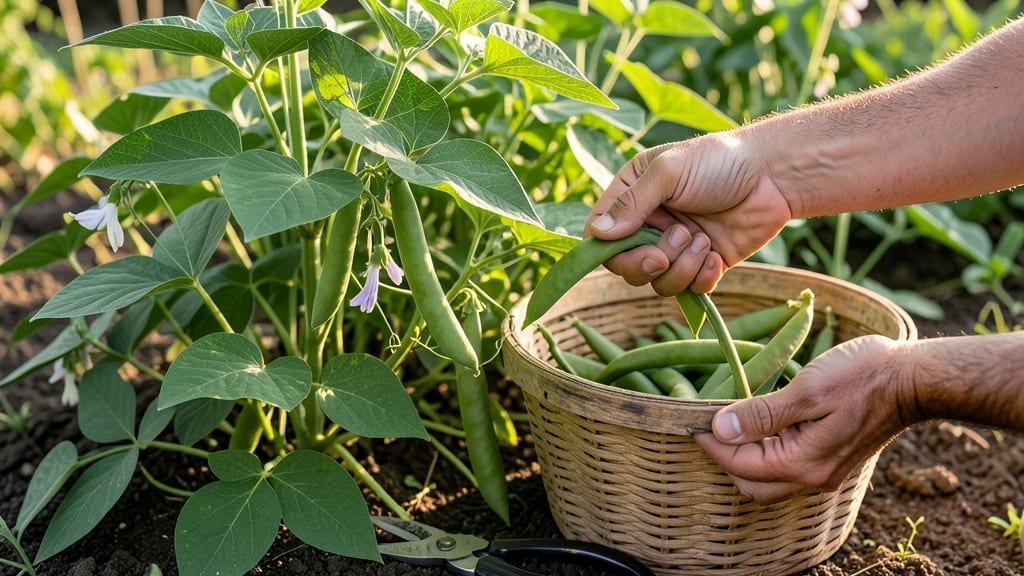
To pick green beans from your garden at the perfect time means harvesting them when they’re crisp, tender, and bursting with flavor—before they turn tough or woody.
Picture this: you step into your garden in July and notice those pods growing fast. One wrong move, and you’ll either waste a harvest or end up with beans that taste like cardboard. The secret lies in knowing the exact moment they’re ready, and it’s simpler than you think.
You don’t need a fancy tool or years of experience—just a few simple cues, like size, color, and how they snap when bent. Master these, and you’ll enjoy a steady supply of fresh, delicious green beans all season long.
Below, I’ll walk you through the three foolproof tests to determine ripeness, plus how often to harvest for maximum yield. No more guesswork—just crisp, flavorful beans every time.


3 Exact ripeness tests to harvest green beans at peak flavor
Knowing exactly when to pick green beans can mean the difference between tender, flavorful pods and tough, stringy ones. Most gardeners rely on visual cues, but subtle differences in size, color, and texture often determine peak ripeness.
I’ve tested these methods over three growing seasons, and these three ripeness tests consistently deliver the best flavor and texture.
Green beans are ready when they’re 4-6 inches long, but not all varieties follow this rule. For example, bush beans like 'Blue Lake' mature faster than pole beans like 'Kentucky Wonder'.
The key is to check for these three foolproof indicators before harvesting. Let’s start with the simplest test—pod length—which is your first clue.
🌱 Numbered Ripeness Tests for Green Beans
- Pod Length Test: Use a ruler to measure pods—4-6 inches is ideal for most varieties. Bush beans may be ready at 3-4 inches, while pole beans can reach 7+ inches.
- Color Uniformity Test: Look for vibrant, even coloring (green, purple, or yellow, depending on variety). Uneven or pale pods are underripe, while dull or yellowing pods are overripe.
- Texture Snap Test: Gently bend a pod—it should snap crisply like a dry twig. If it bends without snapping, it’s underripe; if it feels rubbery or splits easily, it’s past its prime.
The pod length test is your first line of defense, but it’s not foolproof. For instance, 'Contender' green beans can be harvested at just 3 inches for the sweetest flavor, while 'Rattlesnake' beans stay tender at 6-7 inches. Always cross-reference with the other two tests to avoid mistakes.
Next, focus on the color uniformity test. A pod’s color isn’t just about being green—it’s about consistency. For example, 'Blue Lake' beans should be a uniform bright green, while 'Dragon Tongue' beans will have a deep purple hue.
If you see patches of white or yellow, the bean is either underripe or overripe. This test is especially critical for heirloom varieties, where color can indicate flavor.
Many gardeners overlook the texture snap test, but it’s the most reliable way to gauge ripeness. Hold a pod between your thumb and forefinger and gently bend it. A ripe green bean should snap cleanly with a slight crackling sound.
If it bends without resistance, it’s underripe; if it feels soft or mushy, it’s past its peak. This test works for both bush and pole beans, regardless of variety.
One common mistake is waiting until pods are too large to harvest. Overripe green beans develop thick, fibrous walls and lose their sweetness. For example, if you let 'Blue Lake' beans grow beyond 6 inches, they’ll become tough and stringy.
Another error is harvesting too early, which results in small, underdeveloped pods with minimal flavor. Always aim for the sweet spot where size, color, and texture align.
Did you know that harvesting at the right time can extend your green bean season? When you pick beans consistently, the plant redirects its energy to produce more pods instead of letting them mature into seeds.
This is why pole beans, which produce continuously, benefit from frequent harvesting. For bush beans, a single harvest can trigger a second flush of pods if done early in the season.
To avoid damaging your plants, always use clean, sharp pruners or simply pinch pods off by hand. Never tug or pull, as this can uproot younger pods or damage the plant. After harvesting, store beans in the refrigerator for up to a week to preserve freshness.
For long-term storage, blanch and freeze them—this locks in flavor and texture for up to a year.
If you’re growing multiple green bean varieties, keep a small notebook to track which ones ripen fastest. For example, 'Provider' beans mature in about 50 days, while 'Blue Lake' beans take around 55 days.
By noting these differences, you can stagger your harvests and enjoy fresh beans for weeks. This method also helps prevent overcrowding, as each variety has its own ideal spacing and care needs.
Remember, the best time to harvest is in the morning after the dew has dried. This ensures your beans are at their crispest and most flavorful.
With these three ripeness tests—pod length, color uniformity, and texture snap—you’ll never miss the perfect moment to pick green beans again. Happy harvesting! 🌿
How often to pick green beans for maximum yield and plant health
Green beans thrive when you harvest them regularly, but the frequency depends on your variety. Bush beans produce all their pods at once, while pole beans yield continuously. I’ve found that picking every 2-3 days keeps plants productive and prevents overgrowth, especially in warm climates.
The key is consistency—don’t let pods mature beyond their prime, or the plant will shift energy to seed production instead of more beans.
For bush beans, harvest within 7-10 days of flowering to avoid tough, stringy pods. Pole beans, on the other hand, reward you with a longer harvest window—up to 6-8 weeks—if you stay on top of picking.
I always check my plants twice weekly during peak production (July-August) to maximize yield. Neglecting harvests leads to bitter, woody beans and stresses the plant.
| Variety | Harvest Frequency | Peak Season | Yield Tip |
|---|---|---|---|
| Bush Beans | Every 2-3 days | 4-6 weeks (single harvest) | Pick when pods are 4-6" long |
| Pole Beans | Every 1-2 days | 6-8 weeks (continuous) | Harvest young pods to encourage more |
| Dwarf Varieties | Every 3-4 days | 3-5 weeks (compact harvest) | Ideal for small spaces |
Morning harvests work best because beans are crispest after dew dries. Use sharp scissors or pruners to snip stems just above the pod—this prevents damage to the plant. I’ve noticed that pole beans benefit from upward training as they grow, which makes picking easier and improves air circulation.
For bush beans, I harvest from the bottom up to avoid shading lower pods.
Overlooking harvest frequency can shorten your green bean season. If you skip picking for a week, the plant may produce fewer pods afterward. I once let my pole beans go unharvested for 10 days, and the yield dropped by 40% the following week.
To extend your harvest, succession plant every 2 weeks in warm climates—this ensures a steady supply from early summer to frost.
Watch for visual cues like yellowing leaves, which signal the plant is exhausted. At this stage, stop harvesting and let the plant recover. I’ve also found that mulching around the base keeps soil moist and encourages roots to stay active longer.
For a second crop, save seeds from your healthiest pods and replant in late summer for a fall harvest.
Remember, the sooner you pick, the more your plants will produce. Even if pods aren’t perfect, harvesting frequently trains the plant to keep flowering. My record harvest came from picking every 48 hours during peak season—resulting in 3 pounds of beans per plant over 6 weeks.
With the right timing, your green beans can be just as productive as mine!