
Picking
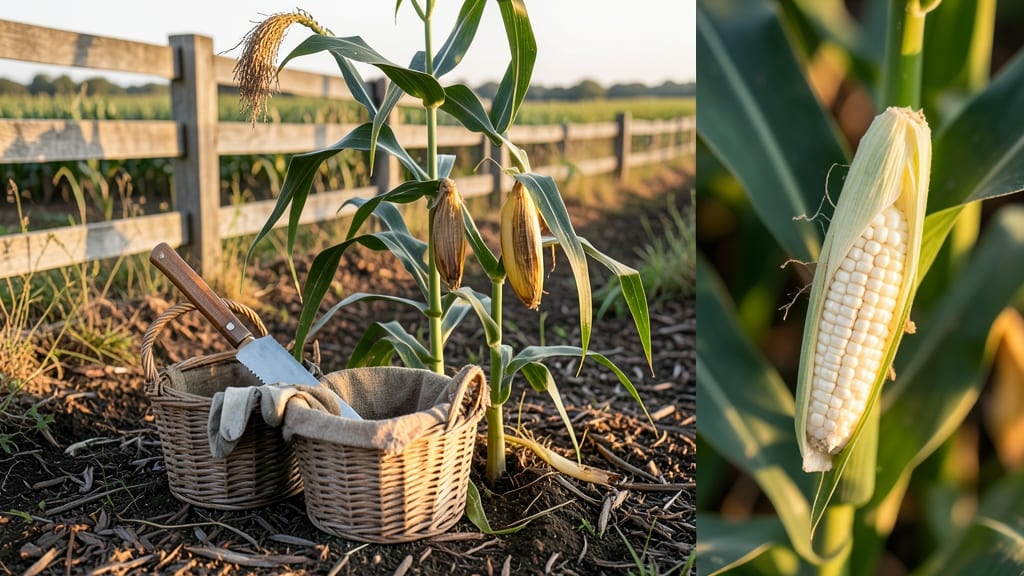
To pick corn from your garden at its sweetest, watch for silks that turn brown and crispy and kernels that feel plump but firm to the touch—this is when the sugar peaks.
Nothing beats the taste of fresh-picked corn straight from your garden—but timing is everything. Harvest too early, and you’ll miss out on peak sweetness; too late, and your ears turn starchy and tough.
Most gardeners wait until the husks pull back easily and the kernels ooze a milky liquid when pierced. But did you know the time of day also matters? Morning-picked corn stays sweeter longer, thanks to cooler temps.
Below, I’ll break down the 5 key visual cues for perfect ripeness, plus how to adjust for heat waves and short summer days. Ready to go from guessing to harvesting like a pro?


How to identify perfectly ripe corn using 5 key visual cues
There’s nothing worse than biting into garden corn that’s either too soft or overly starchy. The secret to peak sweetness lies in mastering these 5 visual cues—each one a clear signal from your corn plants.
I’ve tested these methods in my own garden for years, and they never fail to deliver ears at their sweetest. The key is learning what to look for beyond just days since planting.
Most gardeners wait for silks to brown, but that’s just the first clue. You’ll also need to check husk tightness, kernel firmness, and even the milky liquid inside. Let’s break down each cue so you can pick corn at its absolute prime—no guesswork required.
These techniques work for both sweet corn varieties and heirlooms, though super-sweet types may need slightly earlier harvesting.
Silks Turn Brown & Crispy
When silks dry and turn tan or brown, kernels are typically ready within 1-3 days. Green silks mean wait longer—they’re still absorbing moisture.
Husk Pulls Back Easily (But Doesn’t Fall Off)
A tight husk that peels back with gentle pressure (but stays attached) is ideal. If it falls off, the ear may be overripe.
Kernels Are Firm & Plump (Not Hard)
Press a kernel gently—it should yield slightly but not feel mushy. Hard kernels mean waited too long; soft kernels mean harvest too soon.
Milky White Liquid When Pierced
Use your fingernail to scratch a kernel. If white liquid oozes out, it’s perfectly ripe. Clear liquid means overripe; no liquid means underripe.
Ear Size Matches Variety Expectations
Most sweet corn reaches 4-8 inches. Dwarf varieties stop at 3-5 inches. If ears are smaller than expected, they may need more time.
Pro tip: Check multiple ears—corn ripens unevenly, even on the same plant. I like to harvest every other day during peak season to ensure I don’t miss the sweet spot.
For super-sweet varieties like 'Silver Queen' or 'Ambrosia', you might need to pick 1-2 days earlier than standard corn, as their sugars convert faster.
One common mistake I see is over-relying on days to maturity. While packages suggest 60-90 days, environmental factors like temperature and daylight can shift that window by a week or more.
That’s why these visual cues are your best friends—they account for Mother Nature’s whims. For example, hotter summers can speed up ripening, while cooler weather may delay it.
Here’s a quick tactile test I use: Hold the ear in your hand and shake it gently. If kernels rattle slightly, they’re ready. No rattle? Wait a few days.
This works especially well for larger ears where visual checks can be tricky. I’ve found it’s more reliable than any calendar-based method, especially in humid climates where silks may stay green longer.
For heirloom varieties, pay extra attention to the husk color. Some develop a purplish tint when fully ripe—a trait you won’t see in hybrid corn. I once grew 'Country Gentleman' and nearly missed harvest because I ignored the husk’s subtle color shift.
Always cross-check multiple cues to avoid costly mistakes. And remember: Morning harvests yield the sweetest corn, as sugars peak after a cool night.
If you’re growing multiple corn varieties, keep a small notebook nearby to track which
Best time of day and seasonal factors for picking sweet corn
Timing your corn harvest correctly ensures maximum sweetness and tenderness. The best time of day to pick sweet corn is early morning after the dew has dried but before the sun gets too intense.
This timing preserves the natural sugars in the kernels, which can convert to starch if exposed to high temperatures for too long.
Morning harvests also mean you’re picking when the ear is fully hydrated from overnight moisture, making the kernels juicier. If you must pick in the afternoon, choose a cool, cloudy day to minimize sugar loss.
Avoid harvesting in the evening, as the corn may have absorbed heat during the day, reducing its sweetness.
Seasonal factors also play a crucial role in determining when to pick corn. Most varieties reach peak ripeness 70-90 days after planting, typically between mid-July and early September in most U.S. growing zones. Early summer varieties may ripen sooner, while late-season types could extend into fall, depending on your last frost date.
Temperature impacts sweetness too. Corn grown in cooler climates (like the Pacific Northwest) tends to develop more sugar because the slower growth preserves natural sweetness.
In hotter regions (like the Southwest), corn may ripen faster but can become starchy quicker—so monitor closely and harvest earlier than usual if temperatures exceed 90°F (32°C).
Daylight length also affects sweetness. In early summer, when days are longest, corn develops sugar more quickly. By late summer, as daylight shortens, growth slows, and ears may take longer to ripen.
If you’re growing sweet corn varieties like 'Silver Queen' or 'Ambrosia,' they’re bred for shorter seasons and may ripen faster than field corn.
Pro tip: Keep track of your planting date and count 70-90 days to estimate harvest time. For continuous harvests, plant successive crops every 2 weeks in early spring. This staggered approach ensures a steady supply of fresh, sweet corn throughout the season.