
Picking
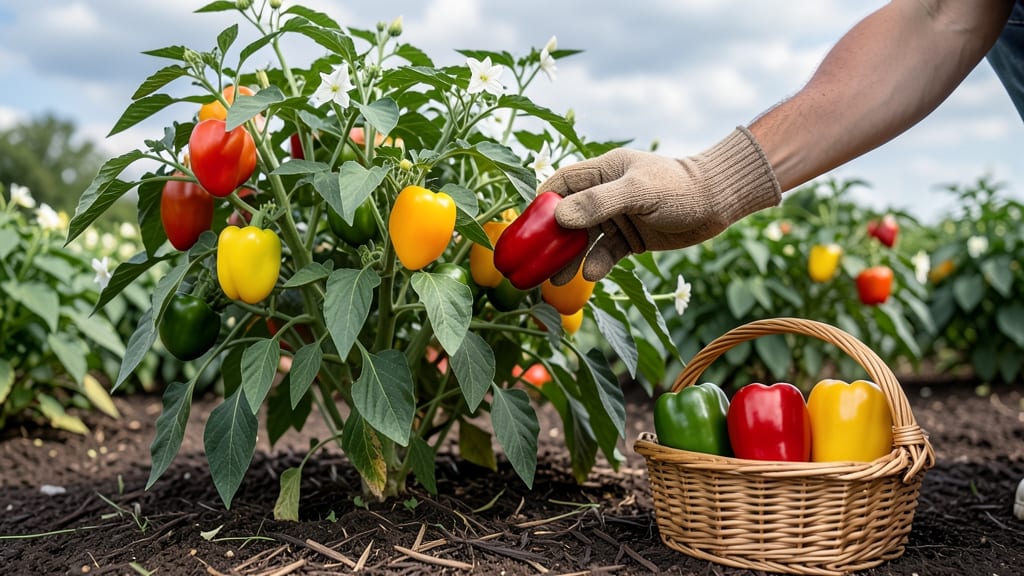
To pick bell peppers from your garden at their peak flavor, timing matters more than you might think—harvest too soon, and you miss out on sweetness; wait too long, and they turn mealy.
Wondering why your 🌶️ bell peppers aren’t tasting as vibrant as store-bought ones? The secret lies in mastering the color-coded ripeness stages. Green peppers are fine for cooking, but fully colored ones—red, yellow, or purple—pack the sweetest, juiciest flavor when picked at just the right moment.
In Zone 6a, most varieties reach harvest readiness around 70–90 days after transplanting, but climate and variety play a role. Below, I’ll break down the exact color cues, firmness tests, and seasonal timing to ensure you never miss the perfect pick.
You’ll also discover how to store your harvest for freshness and salvage underripe or overripe peppers—because even the best gardeners end up with a few that didn’t make the cut. Let’s get started!


Bell pepper ripeness stages by color: when to harvest for maximum flavor
Bell peppers transform from green to vibrant red, yellow, or orange as they ripen, signaling a dramatic shift in flavor and sweetness. Picking at the right color stage ensures your peppers are packed with garden-fresh flavor.
Each color phase offers unique taste profiles—from grassy green to sweet red—and knowing when to harvest prevents rubbery, overripe peppers.
Color isn’t the only clue—firmness, size, and stem separation also play critical roles. For example, a red bell pepper left too long on the vine can become tough and mealy.
Meanwhile, yellow or orange peppers develop a fruity, almost citrusy sweetness when fully ripe. Let’s break down each ripeness stage so you can harvest at peak flavor.
🌱 Did You Know? Bell peppers are technically fruits but treated as vegetables in cooking. Their sugar content increases as they ripen, making red peppers the sweetest option. Purple varieties add a unique earthy depth when fully mature.
Here’s how to identify each ripeness stage by color, along with the best time to pick for optimal flavor and texture.
Green peppers are the most versatile and can be harvested early for a crisp, tangy bite. They’re perfect for stuffing or sautéing but lack the sweetness of fully ripened varieties.
If you’re growing a green pepper variety like ‘Sweet Banana,’ pick them when they reach 3–4 inches and feel firm.
Yellow peppers mark the transition to sweetness and are ideal for salads or roasting. Their citrusy notes develop as they ripen, but they’re still less sweet than red or orange peppers. Harvest them when the color is uniformly yellow and the skin resists gentle pressure.
Orange and red peppers are the sweetest and most flavorful. Red peppers, in particular, have 3x more sugar than green ones, making them perfect for raw snacks or grilling. Wait until the color is deep and consistent—no green patches—and the pepper feels heavy for its size.
Purple peppers, like ‘Black Beauty,’ develop a rich, almost smoky flavor when fully ripe. Their color fades to a muted purple or even blackish-red. These are best for roasting or fermenting due to their complex taste.
Harvest them when the skin is thick and glossy, even if the color isn’t fully deep.
Avoid picking peppers when they’re overripe—their skin will feel wrinkled or leathery, and the flesh may be mealy inside. Overripe peppers also lose their crisp texture and develop a bitter taste.
If you miss the window, you can still use them in cooked dishes, but their flavor won’t be as vibrant.
Pro tip: Harvest in the morning when peppers are cool and crisp. Use a sharp pair of pruning shears or your fingers to twist the pepper gently from the stem. This avoids damaging the plant and encourages more fruit production.
Once harvested, store peppers in a cool, dry place (like a paper bag in the fridge) to extend their shelf life. If you’re unsure about ripeness, test for firmness—a ripe pepper should feel solid and slightly springy under gentle thumb pressure.
How to test bell pepper ripeness beyond color: 3 pro tips for perfect picking
Color isn’t always the best indicator of ripeness—especially when your bell peppers are unevenly ripening or exposed to stressful weather. I’ve learned that firmness, stem separation, and even a simple tap test reveal when peppers are truly ready.
These tricks help me avoid rubbery or underripe peppers that ruin dishes.
Overripe peppers lose their crisp texture and sweetness, while underripe ones stay tough and bland. The key is testing physical traits alongside color. I’ve harvested hundreds of peppers using these methods—let me show you how to do it right the first time.
Uneven ripening happens when peppers face temperature swings or nutrient imbalances. If some peppers on the plant are ripe while others lag, check for shady spots or overcrowding. Move plants to full sun and thin leaves to improve airflow—this often evens out ripening in 1–2 weeks.
For partially ripe peppers, don’t toss them! Place them in a paper bag with a ripe banana or apple to speed up ripening. The ethylene gas from the fruit triggers color change. I’ve revived green-tinged red peppers this way—just check them daily to avoid overripeness.
Pro tip: Harvest in the morning when peppers are cool and crisp. Use clean pruners or scissors to avoid damaging the plant. Store ripe peppers in the fridge for up to 2 weeks, or freeze them whole for later use in soups or stir-fries.
Master these tests, and you’ll never guess again—just know when your bell peppers are perfect. The difference in flavor is night and day! 🌶️