
Picking
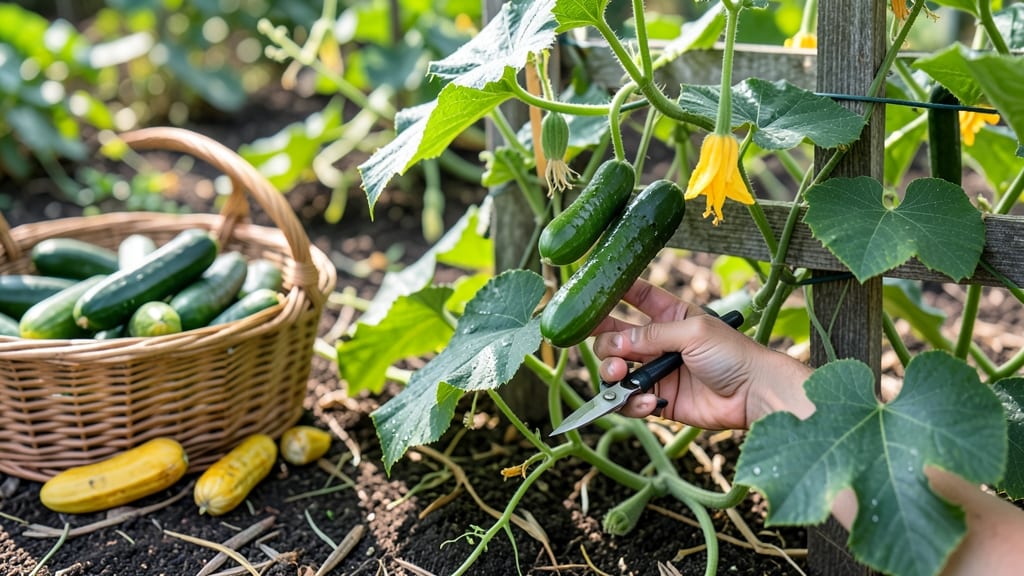
Harvesting cucumbers from your garden at the right moment means the difference between a crisp, flavorful bite and a meal of bitter, seedy disappointment.
I’ve watched my 🥒 plants go from thriving vines to sad, overripe cucumbers because I didn’t act fast enough—so you’ll learn exactly what to look for before it’s too late.
From size and color to the all-important seed check, this guide breaks down the key signals that tell you when your cucumbers are ready to pick. Miss these cues, and you’ll end up with tough, watery fruits that taste more like regret than reward.
Inside, you’ll discover how to spot the perfect harvest window, avoid common mistakes that waste your plants’ energy, and keep your garden producing all summer long.


How to determine cucumber harvest time by size, color, and texture
Timing your cucumber harvest perfectly ensures maximum flavor and texture. Slicing cucumbers like Marketmore should be picked when they're 6-8 inches long with firm skin, while pickling varieties like Boston Pickling are best harvested at 2-3 inches for crispness.
The key is checking three visual cues: size, color, and skin texture—each variety has slightly different ideal measurements.
For most slicing cucumbers, aim for a deep green color with a slight gloss. The skin should yield slightly when pressed with your thumbnail but still feel firm to the touch.
If you press too hard and see indentations, the cucumber is overripe. Pickling cucumbers are ready when they reach their mature size—usually 2-4 inches—and have a bright, even color without any yellowing at the stem end.
Harvesting at the right time isn't just about size—it's also about stem color. A ripe cucumber will have a yellowish-white stem end, while an unripe one remains green. This simple trick helps you avoid bitter, seedy cucumbers that develop when left too long on the vine.
Pro tip: Harvest every 2-3 days during peak production to keep plants productive and prevent overripening.
If you're growing heirloom varieties like Lemon Cucumber or Armenian Cucumber, pay extra attention to their unique shapes. Lemon cucumbers should be harvested when they're 4-6 inches long and still bright yellow-green, while Armenian cucumbers (which are actually a type of melon) are ready when they reach 8-10 inches with a slight softness at the blossom end.
Another trick I use is the gentle twist test. Grasp the cucumber near the stem and give it a slight twist. If it snaps cleanly with minimal resistance, it's ready to pick.
This method works especially well for bush varieties that don't produce long vines. For vining types, always use pruning shears or a sharp knife to avoid damaging the plant.
Regional climate plays a role too. In hotter zones (USDA 9-11), cucumbers mature faster—sometimes in as few as 50 days—so check them daily during peak summer.
In cooler climates (USDA 3-6), they take longer to ripen, so don't rush harvesting. Always adjust your schedule based on your local growing season and weather patterns.
One common mistake is waiting until cucumbers turn yellow or develop soft spots. By then, they've passed their prime and become bitter and seedy. Instead, focus on consistent harvesting every 2-3 days during peak production.
This not only improves flavor but also stimulates more fruit production by encouraging the plant to keep flowering.
For container-grown cucumbers, check them even more frequently since space is limited. These plants often produce smaller yields, so every harvest counts. Use a small hand pruner to clip cucumbers cleanly, leaving a small stem stub to prevent disease entry points.
Always harvest in the morning when cucumbers are coolest and crispest.
Remember, the earlier you harvest, the better the flavor and texture. Cucumbers continue to grow and develop seeds even after picking, so don't wait for them to reach their maximum size.
With these visual cues and a little practice, you'll soon be harvesting cucumbers at their peak—crisp, flavorful, and perfect for your favorite recipes.
The seed check method: why it matters and how to do it right
The seed check method is my top secret for unlocking cucumbers with perfect flavor and texture. When seeds inside your cucumber start developing, they signal the plant to shift energy from growth to seed production—this directly impacts how crisp and sweet your harvest will be.
Ignoring this cue often leads to overripe, seedy, and bitter cucumbers that ruin salads and pickles.
Harvesting at the right seed stage ensures your cucumbers stay crisp, tender, and packed with flavor**. A well-timed harvest also encourages your plants to produce more fruits instead of wasting energy on over-mature seeds.
For varieties like slicing cucumbers, this method is especially critical since they’re best eaten young and tender.
Here’s how to master the seed check method with confidence:
- 1 Cut open a cucumber lengthwise and check the seeds. At the perfect harvest time, seeds will be tiny, white, and soft—about the size of a pinhead.
- 2 Yellow or brown seeds mean your cucumber is past prime. These seeds indicate the plant has shifted to seed maturation mode, making the cucumber bitter and fibrous.
- 3 Harvest when seeds are white for slicing varieties. For pickling cucumbers, wait until seeds are slightly larger but still white—about the size of a sesame seed—for that classic crunch.
- 4 Overripe cucumbers develop large, dark seeds and a tough skin. If you spot these, it’s too late for fresh eating—save them for fermenting or composting to avoid disappointing harvests.
Pro tip: Combine the seed check with the stem color test. A yellowish-white stem end paired with white seeds guarantees peak ripeness. This two-step verification eliminates guesswork and ensures consistent quality.
For heirloom or specialty varieties, like Lemon cucumbers, the seed check is even more critical since these types can vary widely in maturity rates. Always harvest a few cucumbers for testing—this small effort pays off with a bounty of garden-fresh perfection.
Once you master this method, you’ll never again sacrifice flavor for convenience. Your plants will reward you with continuous production of crisp, sweet cucumbers all season long—no bitter surprises in sight! 🥒