
Picking
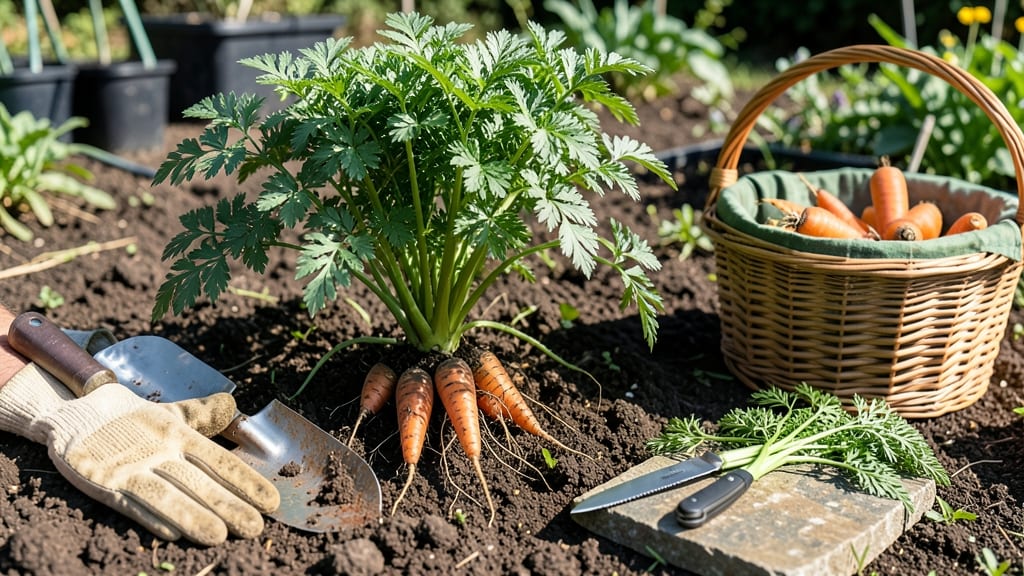
Harvesting carrots from your garden at the right time means the difference between sweet, crisp roots and tough, bitter ones.
Picking carrots at the wrong time can turn your crisp, sweet harvest into tough, woody roots—so knowing exactly when to pull them is the secret to garden success.
Most gardeners wait for the leaves to reach 6-8 inches tall, but that’s just the start. The real clues are hidden below the soil, like the color depth and the way the root feels when you press it.
In this guide, I’ll walk you through the 3 key signs your carrots are ready, how to adjust for your climate, and even when to leave them in the ground a little longer for extra sweetness.


3 Key signs your carrots are ready for harvest (and when to wait)
There’s nothing worse than pulling a carrot only to discover it’s still hard and underdeveloped—or worse, splitting apart like a stubborn cork. The secret to crisp, sweet carrots lies in knowing the exact moment to harvest, which depends on three key visual and physical cues.
These signs guarantee you’ll pull your roots at their peak flavor and texture, avoiding the common mistakes of harvesting too early or too late.
First, let’s address the most common question: Can you harvest carrots too soon? Absolutely. Premature carrots are often small, fibrous, and lack the sweetness we crave. On the flip side, waiting too long can lead to woody, tough roots that even the best cooking can’t salvage.
Mastering these three signs will help you strike the perfect balance every time you reach for your gardening gloves.
Here’s the game-changer: Carrot maturity isn’t just about size—it’s about a combination of leaf development, root firmness, and color depth. Ignore one of these factors, and you risk missing the window.
For example, a carrot might look big but still taste bland if its leaves aren’t fully developed. Let’s break down each clue so you can confidently judge when your carrots are ready.
🌱 3 Telltale Signs Your Carrots Are Ready
- 📏 Leaf Size: Top greens reach 6-8 inches tall with a yellow shoulder at the soil line. This indicates the root has fully developed below ground.
- 🥕 Root Diameter: 1-2 inches in width (measure with your thumb). Smaller than 1 inch? Wait a week. Larger than 2 inches? You’ve missed the sweet spot.
- 👆 Skin Firmness: Gently press the carrot—it should yield slightly (like a ripe avocado) but not feel mushy. If it resists your thumbnail, it’s still hardening.
Pro Tip: Harvest in the morning after watering for the easiest extraction and freshest flavor.
Let’s dive deeper into the first sign: leaf size and color. The tops of your carrots are like little maturity meters. When the foliage reaches 6-8 inches tall and the stem at the soil line turns from green to yellow or orange, that’s your cue.
This color change signals the root has stopped growing upward and is now focusing on thickening. I’ve seen gardeners overlook this clue and end up with carrots that are all root but no flavor.
Next up: root diameter. This is where many gardeners go wrong—they assume bigger is always better. While some heirloom varieties can grow larger, most market-ready carrots peak at 1-2 inches in diameter.
Use your thumb as a quick gauge: if the carrot fits snugly between your thumb and forefinger, it’s likely ready. Pro tip: Measure a few roots—carrots in the same patch can mature at slightly different rates due to soil conditions.
Don’t skip the firmness test, either. A carrot that’s too firm is underripe, while one that’s too soft may have split or rotted. The ideal carrot should feel firm but slightly yielding, almost like a ripe peach.
To test, gently squeeze the shoulder (the part just below the greens). If it gives just a little, you’ve hit the sweet spot. This test is especially critical for baby carrots, which should be harvested when they’re ½ inch in diameter and still tender.
Here’s a common mistake I see in home gardens: harvesting based solely on days after planting. While most carrots take 70 days to maturity, factors like soil temperature, water availability, and variety can shift this timeline by weeks.
For example, Danvers carrots mature faster in cool weather, while Nantes varieties need warmer soil to reach their full potential. Always cross-reference days with these visual cues for accuracy.
Seasonal timing also plays a role. In spring plantings, aim to harvest before the first signs of bolting (when the plant sends up a flower stalk). Bolting happens when days get longer and hotter, and it makes carrots bitter and stringy.
In fall plantings, harvest before the first frost—carrots can tolerate light frosts, but freezing soil makes them tough and inedible. I’ve learned this the hard way after leaving a patch too long into October!
One final pro tip: Harvest gradually for continuous production. Carrots don’t all mature at once, so check your patch every 3-5 days starting when the tops hit 4 inches. This staggered approach ensures you’re always enjoying fresh, sweet carrots instead of dealing with a sudden glut of overripe roots.
Plus, it reduces the risk of carrot rust fly infestations, which thrive in crowded, mature patches.
Remember, the best carrots come from consistent care. Give your plants full sun, well-draining soil, and regular watering (about 1 inch per week), and these signs will become second nature.
Soon, you’ll be pulling carrots at their peak—crisp, sweet, and perfectly sized—every time you step into your garden.
Harvest timing by carrot type: when to pull baby vs. full-sized roots
Not all carrots follow the same harvest schedule—some varieties thrive as baby carrots while others need time to develop their signature sweet, full-bodied flavor. The Danvers variety, for example, matures slower than Paris Market but rewards patience with deeper flavor.
Understanding these differences helps you time your harvest perfectly for crisp, tender roots every time.
Your climate zone also plays a critical role. In cooler regions (USDA Zones 1-5), carrots grow slower and may need an extra 2-3 weeks to mature compared to warmer zones (Zones 6-10). Meanwhile, sandy soil speeds up growth, while clay-heavy soil can delay it—so adjust your expectations accordingly.
| Variety | Days to Maturity | Ideal Harvest Size | Baby Harvest Window | Full Harvest Window |
|---|---|---|---|---|
| Danvers | 70-80 days | 2-3 inches diameter | 45-50 days (1-inch roots) | 70-80 days (full-sized) |
| Nantes | 60-70 days | 1.5-2.5 inches diameter | 40-45 days (sweet baby roots) | 60-70 days (long, tapered shape) |
| Paris Market | 50-60 days | 1-1.5 inches diameter | 35-40 days (perfect for salads) | 50-60 days (round, uniform shape) |
Adjust by 1-2 weeks for cooler climates or heavy soil
For baby carrots, aim to harvest when roots reach 1-1.5 inches in diameter—this is especially true for Paris Market varieties, which are bred for early harvests.
Use a serrated knife to slice them cleanly just below the soil line, leaving the tops intact for regrowth if you're extending the season.
Full-sized carrots, like Danvers, should be harvested when they reach 2-3 inches in diameter and the shoulder (top of the root) turns yellow. If left too long, they’ll become woody and tough, losing their signature sweetness.
In Zone 6a, this typically falls between late May and early June for spring plantings.
Pro tip: Thin seedlings early (when they’re 2-3 inches tall) to give remaining plants 3-4 inches of space. This prevents overcrowding, which can stunt root growth and make harvest timing unpredictable. Always check soil moisture before harvesting—dry soil can cause roots to split when pulled.
If you’re growing in containers or raised beds, harvest slightly earlier than in-ground carrots since roots have less space to expand. And remember: cooler temperatures (like early fall) actually enhance carrot sweetness, so don’t rush to pull them before the first frost in Zones 1-5.