
Picking
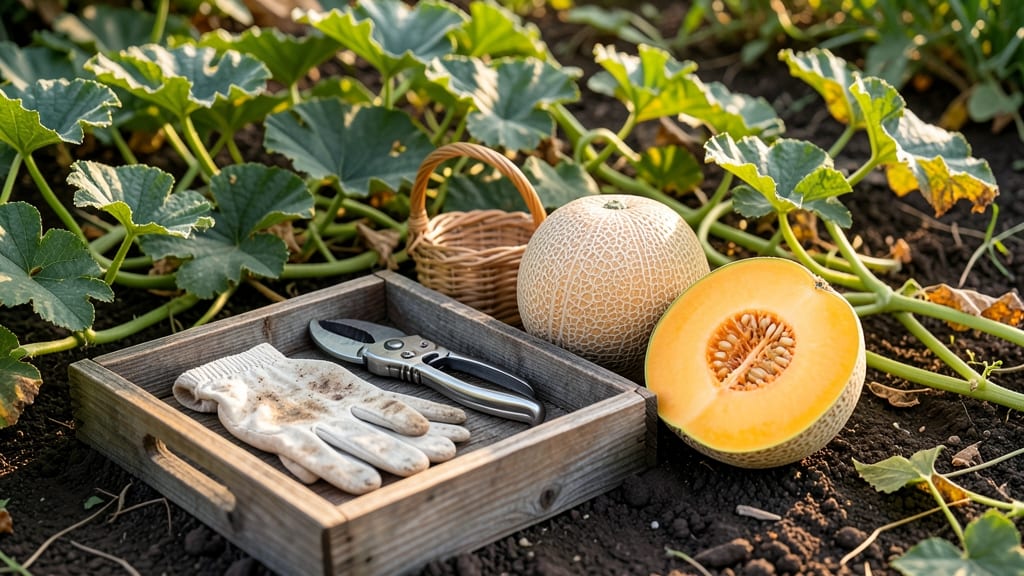
To harvest cantaloupe from your garden at the perfect moment, watch for when the fruit slips easily from the vine and the stem end turns a warm, creamy yellow 🍈 — these are the two most reliable signs of ripeness.
Picking cantaloupe too early means bitter, underripe fruit, while waiting too long risks overripe mush. But how do you know when these slippery vines finally yield the perfect melon? The answer lies in three foolproof field cues that every gardener should master.
Beyond just color, you’ll need to check for a sweet aroma near the stem and a satisfying thump when tapped. These simple tricks save you from wasted labor and ensure your cantaloupe shines at its best on the table.
In this guide, I’ll break down the exact visual and physical cues to harvest cantaloupe at peak ripeness, plus how to avoid common mistakes that lead to premature picking or spoiled fruit.


3 Key visual and physical cues to harvest cantaloupe at peak ripeness
There’s nothing worse than slicing into a cantaloupe that’s either underripe and bland or overripe and mushy. Mastering these three visual and physical cues will help you pick cantaloupes at their sweetest, most flavorful peak.
The secret lies in observing color changes, scent development, and texture shifts—all signs your melon is ready for harvest.
First, pay attention to the stem end, where the fruit meets the vine. This is your most reliable indicator of ripeness. When the stem end turns from white or green to a creamy yellow or tan, it’s a clear signal that the cantaloupe is nearing perfection.
This change happens because the fruit’s sugars develop fully, and the skin near the stem softens naturally. Ignoring this cue often leads to picking too early.
Next, give the cantaloupe a gentle sniff near the stem end. A ripe cantaloupe emits a sweet, musky aroma—almost like a mix of honey and fresh-cut grass. If you detect no scent or only a faint, vegetable-like smell, the melon needs more time on the vine.
Trust your nose: this is nature’s built-in ripeness alarm system that never fails.
Finally, perform the famous thump test. Hold the cantaloupe in one hand and tap it firmly with your other knuckles. A ripe cantaloupe will produce a deep, hollow thud, like knocking on a wooden door.
If it sounds dull or flat, it’s underripe. Overripe melons, on the other hand, may feel soft and squishy when squeezed gently—so don’t wait too long!
| Ripeness Indicator | Ripe Cantaloupe | Unripe Cantaloupe |
|---|---|---|
| Stem End Color | Creamy yellow/tan 🟡 | White or green 🟢 |
| Scent Near Stem | Sweet, musky aroma 👃 | No scent or bland 👃 |
| Thump Test Sound | Deep, hollow thud 🔊 | Dull or flat 🔊 |
| Fruit Weight | Feels heavy for size | Light for size |
| Vine Condition | Dries slightly at stem | Green and firm |
Avoid the common mistake of harvesting cantaloupes based on size alone. Some varieties, like 'Hale’s Best', can grow large but remain underripe inside if picked too early.
Always combine color, scent, and texture for accuracy. Pro tip: Check melons every 2-3 days once they’ve reached 70% of their expected size—this is when ripening accelerates.
If you’re growing cantaloupes in hot climates, they may ripen faster, so monitor them closely. In cooler regions, extend the growing season with row covers to ensure full ripeness.
The key is patience: a cantaloupe won’t sweeten further after picking, so wait until all three cues align before harvesting.
Once you’ve confirmed ripeness, twist gently to separate the melon from the vine. It should come off easily without resistance. If the stem breaks off cleanly but the fruit still feels firm, it’s not quite ready—leave it on the vine for another day or two.
Store ripe cantaloupes at room temperature until fully ripe, then refrigerate to extend freshness.
Mastering these cues transforms guesswork into garden confidence. Next time you’re staring at a cantaloupe wondering, "Is it ready?", just follow the color, scent, and thump test. Your taste buds—and your dinner table—will thank you for the perfectly ripe harvest. 🍈
How to test cantaloupe ripeness: the thumb, stem, and vine tricks gardeners swear by
Cantaloupes don’t always announce their ripeness with obvious color changes, so I’ve learned to rely on three hands-on tests that never fail me. The thumb test, stem twist, and vine drying are my go-to methods for avoiding that dreaded "too early" or "too late" harvest.
These tricks work because they measure internal maturity, not just external appearance.
Start with the thumb test, which is the simplest way to check if the fruit has developed proper sugar content. Press your thumb firmly against the melon’s blossom end (the side that sat on the vine).
A ripe cantaloupe will feel slightly soft but firm, almost like pressing a ripe peach. If it feels too hard, it’s not ready—if it’s mushy, you’ve missed your window.
Next, examine the stem attachment. When cantaloupes are ripe, the stem near the fruit will dry out and turn brown. Gently twist the stem—if it snaps off cleanly with minimal resistance, that’s your cue to harvest.
This happens because the vascular connection weakens as the fruit matures, making separation effortless.
- 👆 Thumb Test: Press the blossom end—ripe melons yield slightly to pressure.
- 👂 Sound Test: Tap the melon—deep thump means sweet flesh; hollow sound = underripe.
- 🌿 Stem Twist: Gently twist the stem—clean break at the base = ready to pick.
- 🌱 Vine Check: Look for drying vines near the fruit—signals maturity.
- 👃 Scent Test: Sniff the stem end—strong sweet aroma = peak ripeness.
The vine drying trick is often overlooked but incredibly reliable. As cantaloupes mature, the vine near the fruit will start to wilt and dry out. This happens because the plant is redirecting nutrients to the fruit.
If the vine looks brown and crispy within a 2-inch radius of the melon, it’s time to harvest within 24-48 hours—or you risk overripeness.
Don’t skip the scent test, either. Ripe cantaloupes release a powerful sweet fragrance near the stem end. If you can smell it from a few feet away, that’s your final confirmation. Pro tip: Morning harvests often yield the sweetest melons because the aroma is strongest after a cool night.
Remember, cantaloupes won’t ripen further once picked, so timing is everything. Use these tricks together for foolproof results, and you’ll never waste another melon again. Happy harvesting! 🌱