
Tools
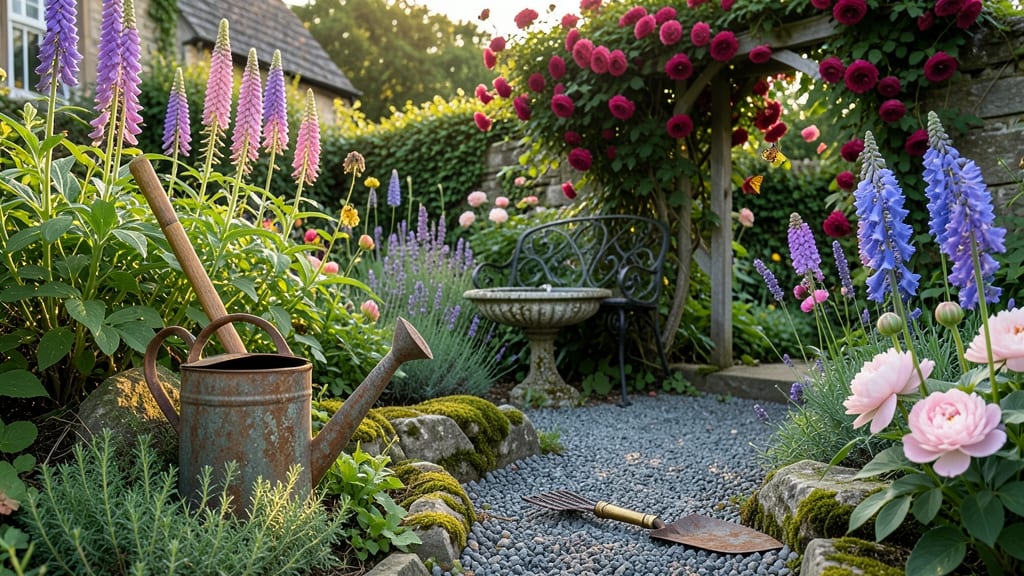
An English garden is a lush, romantic landscape that embraces organic shapes, winding pathways, and abundant planting to create a natural, overflowing look. Unlike structured gardens, it blends wildflowers, climbing plants, and seasonal blooms in soft, layered arrangements, often enhanced with rustic features like pergolas and water elements.
English gardens thrive on their unstructured beauty, inspired by 18th-century landscape movements that rejected rigid formal designs. 🌿 The key lies in their mixed borders, where perennials, shrubs, and grasses grow together without strict alignment, creating a sense of effortless abundance.
Think of it as a living tapestry—every plant contributes to the overall mood, with roses, lavender, and foxgloves often taking center stage. Many designers also incorporate water features or stone seating to enhance the garden's inviting, timeless charm.
What sets this style apart is its seasonal adaptability. A well-planned English garden remains vibrant year-round, with evergreens providing structure while spring bulbs, summer perennials, and autumn foliage keep color flowing. The layered planting technique ensures no bare spots, making it perfect for climates with distinct seasons.
I've seen these gardens transform dramatically from snow-dusted winter to lush summer blooms—it's truly magical to witness.
💡 In This Article
- Core Design Principles of Traditional English Gardens
- Plant Selection and Layout Tips for an Authentic English Garden
Core design principles of traditional English gardens
The foundation of an English garden lies in its asymmetrical balance, a deliberate rejection of the rigid symmetry seen in French formal gardens. This principle was popularized in the 18th century by landscape designers like Lancelot "Capability" Brown, who believed nature should appear "natural" rather than manicured.
Brown's signature "picturesque" landscapes used sweeping curves, hidden viewpoints, and carefully placed trees to create dramatic vistas that mimicked wild landscapes. 🌳 What makes this approach unique is how it prioritizes the experience of movement—winding paths encourage exploration, making each corner feel like a new discovery.
Another defining feature is the mixed border, where plants of varying heights and bloom times are planted closely together.
Unlike the neat rows of cottage gardens, English borders thrive on controlled chaos, with perennials like delphiniums (3-5 feet tall) towering over lavender bushes (1-2 feet) and foxgloves (3-4 feet) spilling over edges.
This technique creates a soft, undulating effect that moves with the wind, unlike the static lines of geometric designs. The layering principle ensures no plant is left exposed—tall shrubs form the backbone, mid-height perennials fill gaps, and ground covers like ajuga or creeping thyme prevent soil erosion while adding texture.
The wild garden ethos emerged in the Victorian era as a reaction to overly structured designs, championed by figures like William Robinson in his 1870 book "The Wild Garden."
Robinson argued that nature should dictate plant placement, leading to the popularization of naturalized plantings where bulbs, perennials, and grasses grow as they would in meadows. This approach explains why English gardens often feature wildflower meadows—seeds are scattered rather than planted in rows, creating a spontaneous, organic look.
The result? A garden that feels alive and evolving, with each season revealing new surprises.
Rustic elements like stone seats, wooden arbors, and iron gates serve both functional and aesthetic purposes. These features create focal points that draw the eye while providing practical spaces for relaxation.
Water elements—whether a small pond, bubbling fountain, or simple birdbath—add another layer of sensory appeal, with the sound of water masking urban noise while attracting wildlife.
The textural contrast between rough stone, smooth wood, and delicate petals is what gives English gardens their tactile richness. 💧 Unlike minimalist modern gardens, every surface and plant is chosen to contribute to the overall romantic, immersive experience.
Contrasting with formal French gardens (which use strict geometry and clipped hedges) or Dutch gardens (known for their precise flower arrangements), English gardens embrace imperfection as beauty. The color palette typically includes soft pastels—pinks, lavenders, and creams—alongside bold accents like deep purple clematis or golden rod for autumn interest.
Even the pathways are designed to feel organic, often using gravel, stepping stones, or moss-covered tracks rather than straight concrete paths. This philosophy extends to seasonal planning: while spring might feature tulips and daffodils, summer brings roses and hydrangeas, and autumn showcases smoke bushes and topiary.
What most people don't realize is how light and shadow play a crucial role in shaping the garden's mood. English gardens often incorporate partial shade plants like hostas or ferns to balance sun-loving roses, creating dappled light patterns on the ground.
This layering isn't just about aesthetics—it's a practical solution for microclimates within the garden. The scent factor is equally important: fragrant roses, jasmine, and honeysuckle are strategically placed near seating areas to enhance the sensory experience. 🌸 The goal? To make every visit feel like stepping into a living painting.