
Tools
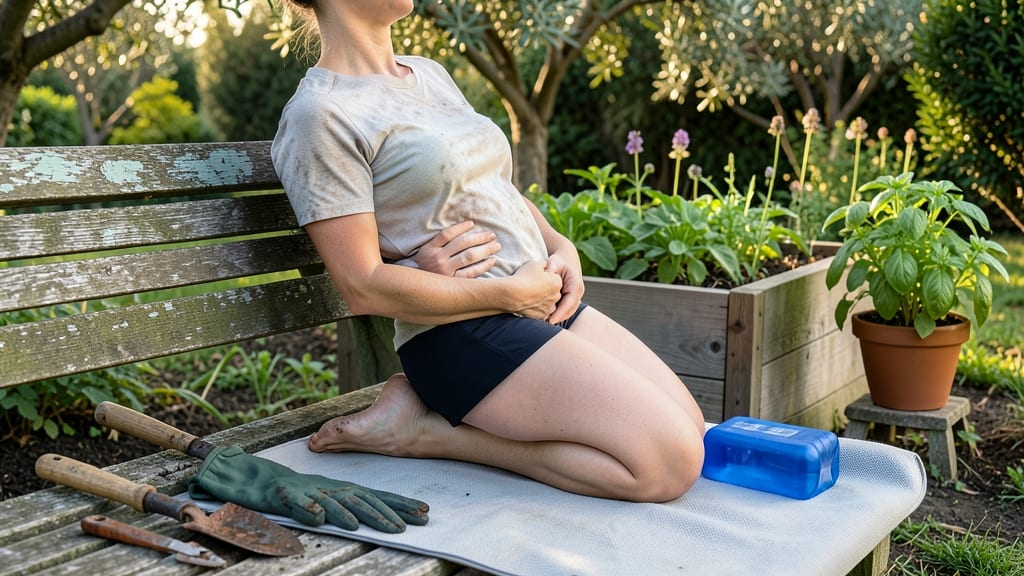
Treating lower back pain after gardening requires starting with gentle mobility exercises like the cat-cow stretch or child’s pose, then applying cold therapy for sharp discomfort or heat for muscle tightness. Nonsteroidal anti-inflammatories and maintaining proper form while working can also minimize flare-ups.
Gardening’s repetitive bending, twisting, and lifting—especially with heavy tools or soil—puts immense stress on your lumbar spine. 🌿 The good news? Most discomfort responds well to targeted stretches that release tension in the erector spinae muscles and hip flexors.
I’ve found that combining movement with smart recovery (like alternating ice and heat) speeds up relief significantly. For prevention, focus on squatting with knees wide and keeping your core engaged rather than rounding your back.
Beyond stretches, posture matters just as much during gardening itself. Many gardeners unknowingly lock their knees or hunch over, which compresses spinal discs over time. 💫 Try using ergonomic tools with longer handles or a kneeling pad to reduce strain.
And if you’re tackling bigger projects, break tasks into shorter sessions with movement breaks every 20-30 minutes.
💡 In This Article
- How Gardening Triggers Lower Back Pain
- Best Recovery Stretches for Gardeners
How gardening triggers lower back pain
Gardening creates a perfect storm for lower back strain because it combines three biomechanical risks: repetitive bending, awkward twisting, and prolonged static postures. When you bend forward to dig or reach for tools, your lumbar spine bears 40-60% more pressure than when standing upright.
This happens because the intervertebral discs in your lower back compress under gravity, especially when your hips stay extended beyond 90 degrees for more than 15 seconds at a time.
The twisting motions common in gardening—like turning to grab a trowel or rotating to plant seeds—add another layer of stress. Each twist can generate up to 3,300 newtons of force on your spine, equivalent to lifting a 335-pound weight suddenly.
Your body compensates by shifting weight unevenly, overloading the erector spinae muscles (the long muscles along your spine) and the multifidus muscles in your lower back. Over time, this creates micro-tears and inflammation in the muscle fibers, leading to that dull ache or sharp pain after gardening.
Static positions worsen the problem because they reduce blood flow to your muscles. When you hold a bent-over posture for more than 2 minutes—like weeding or pruning—your hip flexors tighten and pull on your lower spine.
This creates a forward tilt in your pelvis, flattening the natural lumbar curve and increasing disc pressure. The result? Your body responds with muscle spasms or nerve irritation, often mimicking sciatica symptoms even if your sciatic nerve isn’t directly compressed.
Ergonomic tools and improper technique play a huge role too. Using a shovel with a short handle forces you to bend deeper, while heavy bags of soil or mulch require you to lift with your back instead of your legs.
Studies show that lifting objects weighing more than 25 pounds significantly increases lower back injury risk, especially when combined with twisting. Even something as simple as kneeling on hard ground can compress your sciatic nerve if you’re not using a padded kneeler, leading to radiating pain down your legs.
What most people don’t realize is how fatigue accelerates these issues. After 30-45 minutes of gardening, your core muscles fatigue first, reducing their ability to stabilize your spine. Without this support, your lower back bears even more load.
This is why many gardeners experience pain hours after finishing a project—the cumulative effect of poor mechanics finally catches up with your body.
To visualize the strain, imagine your spine as a stack of jelly donuts (the discs) with muscles acting as the wrapper. When you bend forward, those donuts get squished between the plates of your vertebrae.
Add twisting, and you’re twisting that stack while it’s already compressed—no wonder your back protests! 🌱