
Planting
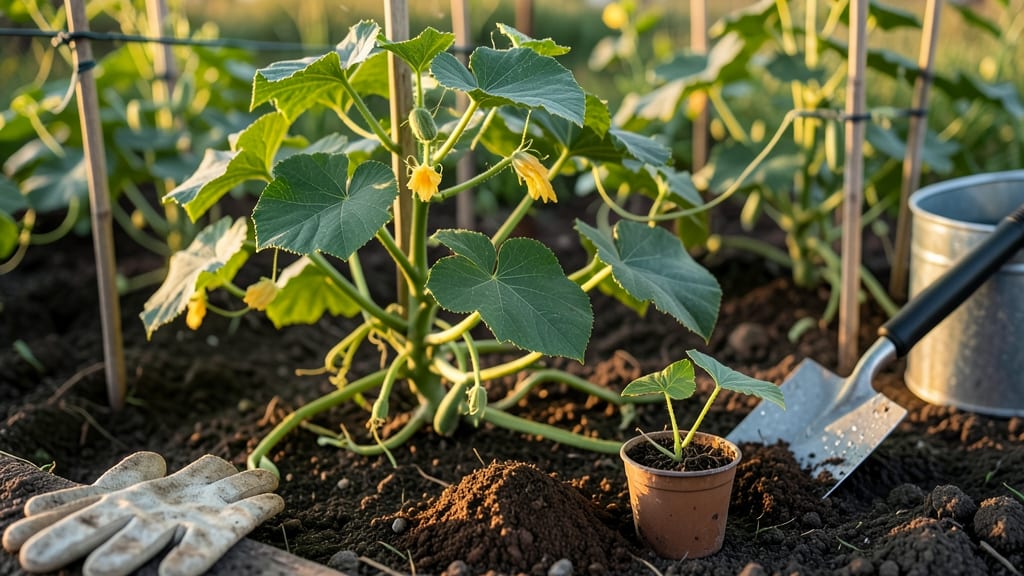
To plant cucumbers in a garden 🥒, start by choosing a sunny spot with well-draining soil—these vines thrive when they have room to stretch and plenty of warmth.
Picture this: you’re eyeing your garden plot in early spring, dreaming of crisp, homegrown cucumbers, but you’re not sure where to begin. The key lies in spacing, soil prep, and a little extra support to keep those vines off the ground.
Cucumbers are one of the most rewarding vegetables to grow, but they demand the right conditions. Too much shade? Your plants will stretch thin and produce bitter fruit. Too little space? You’ll end up with crowded vines and a tangled mess.
In this guide, I’ll walk you through every step—from picking the perfect variety and prepping the soil to trellising, watering, and avoiding common mistakes. By the end, you’ll know exactly how to set your cucumbers up for a bountiful harvest from June through September.

Step-by-step guide to planting cucumber seeds or seedlings for maximum yield
Cucumbers thrive when planted correctly, and the difference between a few sad fruits and a bountiful harvest often comes down to proper technique. Whether you're starting with seeds or seedlings, timing, soil temperature, and spacing play critical roles.
I’ve planted hundreds of cucumber plants, and I can tell you—skipping these steps leads to weak vines and bitter fruit. Let’s get your cucumbers off to the best possible start!
Before you begin, check your last frost date (typically mid-April in USDA Zone 6a) and wait until soil temperatures reach at least 60°F. Cucumbers are warm-season plants that won’t germinate or grow well in cold soil.
If you’re transplanting seedlings, they need to be hardened off for 7–10 days before going outdoors to avoid shock.
How to Plant Cucumbers in a Garden (Step-by-Step)
- 1. Choose Your Variety and Location Pick between bush varieties (compact, 1–2 ft tall) or vining types (6–10 ft tall). Plant in a spot with full sun (6+ hours/day) and well-draining soil. Avoid low spots where water pools.
- 2. Prepare the Soil Loosen soil to 12 inches deep and mix in 2–3 inches of compost or aged manure. Cucumbers prefer a pH of 6.0–6.8. Add a balanced fertilizer (10-10-10) at planting time for a nutrient boost.
-
3. Plant Seeds or Seedlings
- Seeds: Sow 1 inch deep, 2–3 seeds per hill, spaced 3–4 feet apart for vining types or 1–2 feet apart for bush varieties. Thin to the strongest seedling per hill after germination.
- Seedlings: Transplant carefully, keeping roots intact. Dig a hole twice as wide as the root ball and place the seedling at the same depth it was in its pot.
- 4. Add Trellis or Support Install trellises, stakes, or cages immediately after planting to encourage vertical growth. Vining cucumbers need support to prevent disease and improve air circulation. Use garden twine or netting to guide vines upward.
- 5. Water Deeply and Mulch Water 1–2 inches per week, keeping soil consistently moist but not soggy. Apply 2–3 inches of mulch (straw or shredded leaves) to retain moisture and suppress weeds. Avoid wetting leaves to prevent fungal diseases.
- 6. Monitor and Maintain Check for pests like cucumber beetles or aphids weekly. Prune suckers (small shoots) to direct energy to fruit production. Harvest frequently (every 2–3 days) to encourage more cucumbers and prevent bitterness.
🌱 Pro Tip: Plant cucumbers near radishes, beans, or dill to deter pests naturally.
If you’re planting seedlings, give them extra care during the first week. They’re more vulnerable to transplant shock, so water gently in the morning to let foliage dry before evening.
For seeds, germination can take 5–10 days in warm soil. If seeds don’t sprout within 2 weeks, they may have rotted—try replanting.
One common mistake I see is overcrowding. Even bush varieties need space to thrive. If you’re short on room, opt for compact varieties like 'Bush Champion' or train vining types vertically. This not only saves space but also reduces disease risk by improving airflow.
After planting, keep an eye on soil moisture. Cucumbers are thirsty plants, but their roots need oxygen too—soaker hoses or drip irrigation work best to deliver water directly to the roots without wetting leaves.
If you notice yellowing leaves, it could be a sign of overwatering or nutrient deficiency.
Finally, remember that consistency is key. Cucumbers grow fastest when conditions are stable—so maintain even watering, protect them from extreme heat with shade cloth if needed, and harvest regularly. With these steps, you’ll be enjoying crisp, sweet cucumbers in just 60–75 days!
🥒 Ready to plant? Grab your gloves, mark your calendar for the last frost, and let’s grow those cucumbers!
Best soil conditions, Trellis types, and spacing for healthy cucumber vines
Cucumbers thrive when planted in rich, well-draining soil with a pH between 6.0 and 6.8. Sandy loam or loamy soil works best, but amending heavy clay or overly sandy soil with compost improves structure and nutrient retention.
I always test my soil before planting—it’s the difference between floppy vines and vigorous growth.
Add 2-3 inches of compost or well-rotted manure to the planting area 2-3 weeks before sowing. This boosts organic matter, which cucumbers love for their rapid growth.
Avoid fresh manure, as it can burn tender roots. A handful of balanced fertilizer (10-10-10) at planting time also gives seedlings a nutrient kickstart.
| Soil Condition | Ideal Specification | How to Achieve |
|---|---|---|
| pH Level | 6.0–6.8 | Test soil; amend with lime (raise pH) or sulfur (lower pH) |
| Organic Matter | 3–5% | Mix in compost or aged manure before planting |
| Drainage | Well-draining | Avoid low spots; raise beds if needed |
| Nutrient Level | Moderate | Side-dress with compost every 3–4 weeks |
For trellising, choose a system based on your cucumber variety. Bush types (like 'Bush Champion') need minimal support, while vining varieties (like 'Straight Eight') thrive on 6-foot trellises or A-frames.
I swear by galvanized wire trellises—they’re sturdy and last years. Install supports at planting to avoid disturbing roots later.
Spacing is critical: bush cucumbers need 2–3 feet apart, while vining types require 4–6 feet between plants. Rows should be 5–6 feet apart for airflow and easy harvesting. Crowding leads to disease and poor fruit quality, so don’t skimp on space—your future salads will thank you.
Mulch heavily with straw or grass clippings to retain moisture and suppress weeds. Cucumbers are thirsty plants, and mulch helps maintain even soil moisture, reducing the risk of cracked fruit.
I also add a layer of black plastic mulch in hot climates to warm the soil and deter pests.
Finally, rotate your cucumber patch yearly to prevent soil-borne diseases like fusarium wilt. Avoid planting cucumbers (or other cucurbits like squash) in the same spot for at least 3 years. This simple step keeps your vines healthy and productive for seasons to come.