
Watering
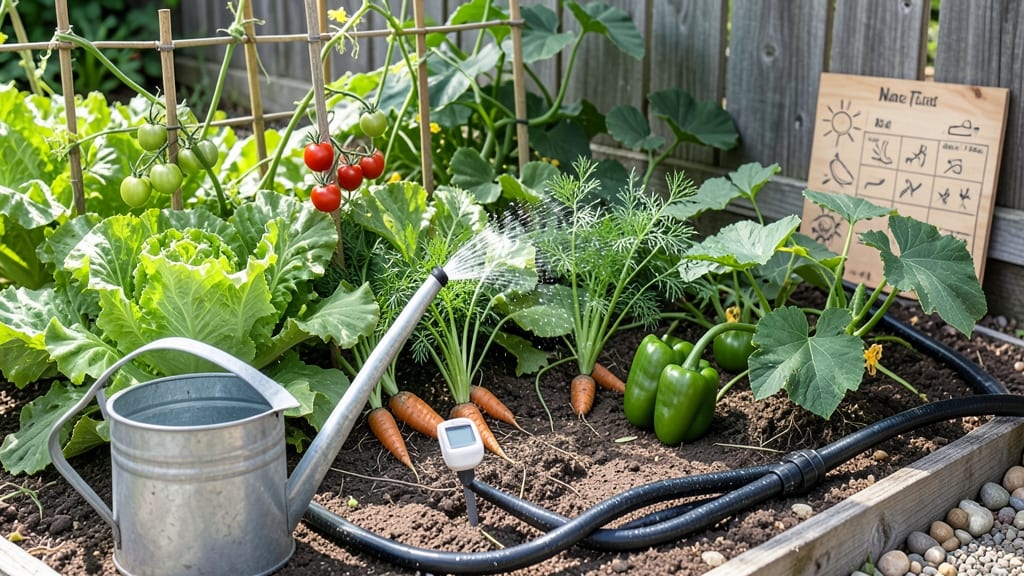
Watering your vegetable garden the right way—how often and how much—is the secret to lush 🥬 plants and a bountiful harvest.
Most gardeners either drown their plants or let them thirst, both of which lead to wasted effort and sad, wilted leaves. The truth? A simple schedule based on plant type and weather can save you time, water, and stress.
From thirsty tomatoes to moisture-sensitive lettuce, each vegetable has its own rhythm. I’ll break down the ideal watering frequency for your top crops, plus how to tweak it for rain, heat, or drought.
By the end, you’ll know exactly when to reach for the hose—or skip it entirely—and keep your garden thriving without the guesswork.
Watering frequency by vegetable type: expert schedule for common veggies
Every vegetable has unique hydration needs—some thrive with daily watering while others prefer deep but infrequent soaking. Mastering this balance ensures lush foliage and bountiful harvests.
I’ve grown tomatoes that wilted from inconsistent watering and carrots that split from overzealous hoses. The key? Understanding each plant’s root depth and growth stage.
Leafy greens like lettuce and spinach need frequent, shallow watering to keep their tender leaves crisp, while root vegetables such as carrots and potatoes require deep watering to prevent cracking. Fruiting plants like peppers and tomatoes demand consistent moisture during flowering and fruiting to avoid blossom-end rot or stunted growth.
Below is my expert watering schedule for the most popular veggies, including deep vs. shallow watering techniques. Use this as your guide to adjust based on your local climate and soil type.
| Vegetable | Watering Frequency | Watering Depth | Best Time to Water | Special Notes |
|---|---|---|---|---|
| Tomatoes | Every 1-2 days (deep) | 1-2 inches (6-10 cm) | Morning (6-9 AM) | Avoid wetting leaves; mulch heavily |
| Peppers | Every 2-3 days (deep) | 1-1.5 inches (4-6 cm) | Morning (6-9 AM) | Consistent moisture prevents blossom-end rot |
| Leafy Greens (Lettuce, Spinach) | Every 1-2 days (shallow) | 0.5-1 inch (2-4 cm) | Evening (if no rain) | Keep soil evenly moist; avoid soggy roots |
| Root Crops (Carrots, Potatoes) | Every 3-4 days (deep) | 1.5-2 inches (6-10 cm) | Morning (6-9 AM) | Deep watering prevents cracking; mulch to retain moisture |
| Cucumbers | Every 1-2 days (deep) | 1-2 inches (6-10 cm) | Morning (6-9 AM) | Water at base; avoid wetting foliage to prevent mildew |
| Onions & Garlic | Every 2-3 days (moderate) | 0.75-1 inch (3-5 cm) | Morning (6-9 AM) | Reduce watering as bulbs mature to improve flavor |
For tomatoes and peppers, deep watering—meaning watering until moisture reaches 12-18 inches deep—encourages strong root systems and prevents blossom-end rot. I use a soaker hose buried 2 inches deep to deliver water directly to roots without wetting leaves, which reduces disease risk.
Leafy greens like lettuce and spinach prefer shallow but frequent watering. Their roots are shallow, so they rely on consistent moisture at the soil surface. A light misting in the evening (if no rain is forecasted) keeps them crisp.
Overwatering, however, can cause rot, so always check the top inch of soil before watering.
Root vegetables like carrots and potatoes need deep but less frequent watering. Uneven moisture causes them to split or become woody. I water these crops every 3-4 days during dry spells, ensuring the soil stays evenly moist but
Adjusting your watering schedule for weather conditions: heat, rain, and humidity
Weather plays a huge role in how often you should water your veggie garden. A 90°F heatwave demands more water than a cool, cloudy day, while heavy rain can drown your plants if you overcompensate.
Understanding these shifts helps you avoid stressed plants or wasted water. Let’s break down how to adapt your schedule for extreme heat, rainfall, and high humidity.
During peak summer heat, most vegetables need deep watering every 1-2 days—especially tomatoes, peppers, and cucumbers, which wilt fast in dry soil.
But if your area gets 1 inch of rain, skip watering for a day or two to let the soil absorb moisture naturally. Leafy greens like lettuce and spinach are more drought-tolerant, so they can handle 3-4 days between waterings even in heat.
⚠️ callout-warning
⚠️ Watering Mistakes to Avoid
Overwatering in humid climates leads to root rot and fungal diseases. Signs of overwatering: Yellowing leaves, mushy stems, or soil that smells sour. Underwatering signs: Crispy leaf edges, wilting despite moist soil, or blossom-end rot in tomatoes.
✅ Pro Tip: Stick your finger 1 inch into soil. If it’s dry, water; if damp, wait. Morning watering reduces evaporation and disease risk.
High humidity slows evaporation, so your soil stays moist longer.
In these conditions, reduce watering by 20-30% to prevent fungal infections like powdery mildew. Root vegetables like carrots and potatoes thrive with less frequent but deeper watering, while shallow-rooted herbs (basil, cilantro) need light, daily misting to stay hydrated without drowning.
After heavy rainfall, check the soil before watering. If the top 2-3 inches are soggy, hold off for 2-3 days to avoid waterlogged roots. Sandier soils drain faster, so they may need a light top-up sooner than clay-heavy soil.
Always water at the base of plants, not the leaves, to prevent disease spread.
Use a rain gauge or tuna can to track rainfall—aim for 1-1.5 inches of water per week total (rain + irrigation).
In drought conditions, group plants with similar needs (e.g., tomatoes + peppers) and water deeply 2-3 times per week instead of daily shallow sessions. Mulch with straw to lock in moisture and keep roots cool.
Pay attention to your plants’ visual cues: Drooping leaves that perk up after watering mean underwatering, while yellowing leaves that stay limp signal overwatering.
Adjust your schedule weekly based on weather forecasts and soil checks. With practice, you’ll find the perfect balance for your garden’s unique conditions. 🌱