
How To
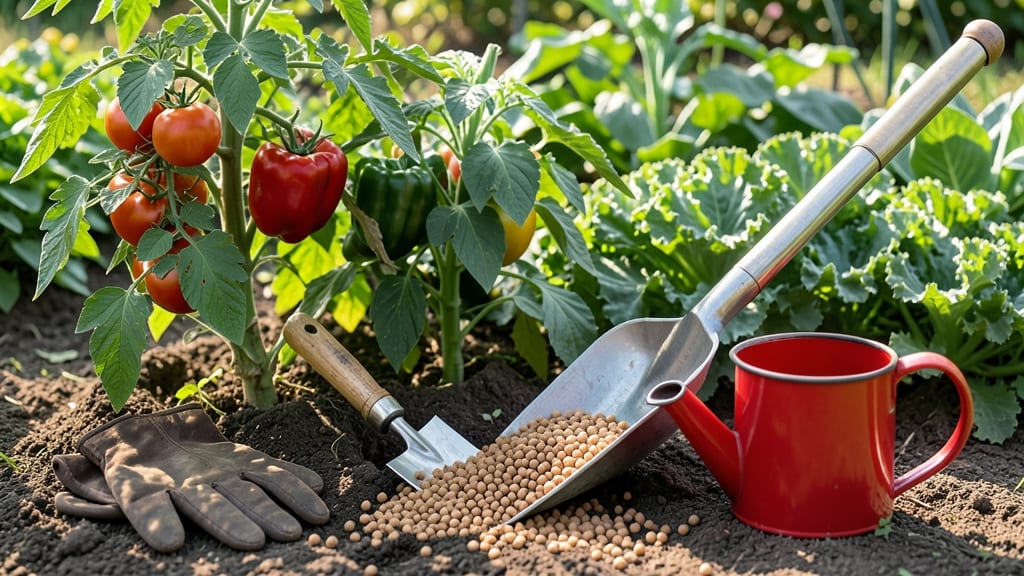
To fertilize a vegetable garden properly, follow a schedule that matches your plants' growth phases—spring feedings kickstart vigor, while summer maintenance keeps yields strong.
Wondering why your 🥬 garden isn’t producing like it should? The answer might lie in your fertilization schedule—too much or too little can stifle growth, while the right timing unlocks explosive yields.
Most vegetables thrive with balanced feedings every 4-6 weeks during the growing season, but leafy greens and fruiting plants have different needs. Over-fertilizing burns roots, while skipping feedings leaves plants starved.
Below, I break down the best timing for each plant type, how to read your soil’s signals, and the top 5 mistakes that sabotage even the best gardens.

Seasonal fertilization schedule for vegetable gardens by plant type
Fertilizing your vegetable garden isn’t a one-size-fits-all task—it’s a seasonal science that depends on plant types and nutrient needs. Leafy greens, fruiting plants, and root vegetables all thrive on different feeding schedules. Timing matters: too early or too late can leave your plants hungry or burned.
Let’s break down the best times to fertilize based on what you’re growing and when.
Most gardeners focus on spring and summer fertilization, but fall has its own role—especially for crops maturing before frost. Organic fertilizers like compost or fish emulsion release nutrients slowly, while synthetic fertilizers provide quick fixes.
For example, tomatoes and peppers need high-phosphorus feeds at flowering, but lettuce and spinach prefer nitrogen-rich soil for leafy growth.
🌱
For spring planting, fertilize at planting and again 4–6 weeks later to kickstart growth. Summer crops like tomatoes and peppers benefit from a light feeding every 3–4 weeks, especially when flowers appear. Switch to low-nitrogen fertilizers in late summer to prep roots for storage.
In fall gardens, reduce fertilization 4–6 weeks before frost to let plants harden off. Organic options like compost tea or worm castings work well in cooler months. Synthetic fertilizers should be avoided late in the season—they encourage tender new growth that won’t survive frost.
🌿
Soil tests are your best friend! If your soil is already nutrient-rich, you can skip spring feeds. Sandy soils drain quickly and may need more frequent fertilizing, while clay soils hold nutrients longer. Always water after fertilizing to prevent root burn—especially with synthetic products.
Pro tip: Side-dressing (adding fertilizer to soil around plants) is a game-changer for heavy feeders like corn and squash. Use a broadfork to loosen soil and mix in compost or granules. For container gardens, fertilize every 2–3 weeks with a diluted liquid feed to match the faster nutrient depletion.
🪴
Signs your vegetable garden needs fertilizer (and when to stop)
Your vegetable garden speaks volumes through its leaves, stems, and growth patterns—paying attention to these visual cues helps you determine whether your plants are thirsty for nutrients or overfed and stressed.
Common signs of nutrient deficiency include yellowing leaves, stunted growth, or weak stems, while excessive foliage with few fruits or burnt leaf edges signal over-fertilization. Understanding these signs ensures you adjust your fertilization schedule just right for peak harvests.
First, observe the color and texture of your plants' leaves. For example, pale or yellow leaves often indicate a nitrogen deficiency, while purple stems or undersides may signal a lack of phosphorus.
On the other hand, dark green leaves with crispy edges could mean you’ve overdone it with synthetic fertilizers. Each plant type has unique needs, so tailor your approach based on what you’re growing.
How Often to Fertilize Your Vegetable Garden
✅ Pros of Regular Fertilizing
- ✔️ Boosts growth for lush foliage and bigger yields
- ✔️ Replenishes nutrients depleted by frequent harvesting
- ✔️ Supports flowering/fruiting in crops like tomatoes and peppers
- ✔️ Improves soil health over time with organic fertilizers
❌ Cons of Over-Fertilizing
- ✖️ Burns roots and causes leaf scorch
- ✖️ Encourages excessive foliage at the expense of fruit
- ✖️ Salinizes soil, making it harder for plants to absorb water
- ✖️ Attracts pests like aphids and whiteflies
Best Practice: Fertilize every 4-6 weeks during the growing season (spring to early fall), adjusting based on plant response.
If your plants show signs of nutrient deficiency, like yellowing between leaf veins (a classic sign of iron deficiency), it’s time to feed them.
For leafy greens like spinach or kale, a nitrogen-rich fertilizer can work wonders, while fruiting plants like tomatoes or peppers benefit from a balanced NPK ratio (e.g., 10-10-10). Always water thoroughly after applying fertilizer to prevent root burn and ensure nutrients reach the soil.
On the flip side, if your plants are overly lush with few fruits or show crispy brown leaf edges, it’s time to pause fertilization. Cut back to half the recommended dose or switch to a slow-release organic fertilizer like compost or worm castings.
Over-fertilizing is just as harmful as under-fertilizing, so always monitor plant response and adjust accordingly.
For root vegetables like carrots or potatoes, less is often more—too much nitrogen can lead to forked or misshapen roots. Instead, focus on well-draining soil and moderate feeding to encourage healthy root development.
Always test your soil every few years to ensure it meets the nutrient needs of your crops.
Remember, the key to a thriving vegetable garden lies in observation and balance. Pay attention to your plants’ growth patterns, leaf color, and fruit production, and adjust your fertilization schedule accordingly. With the right approach, you’ll enjoy a bountiful harvest without the guesswork. 🌱