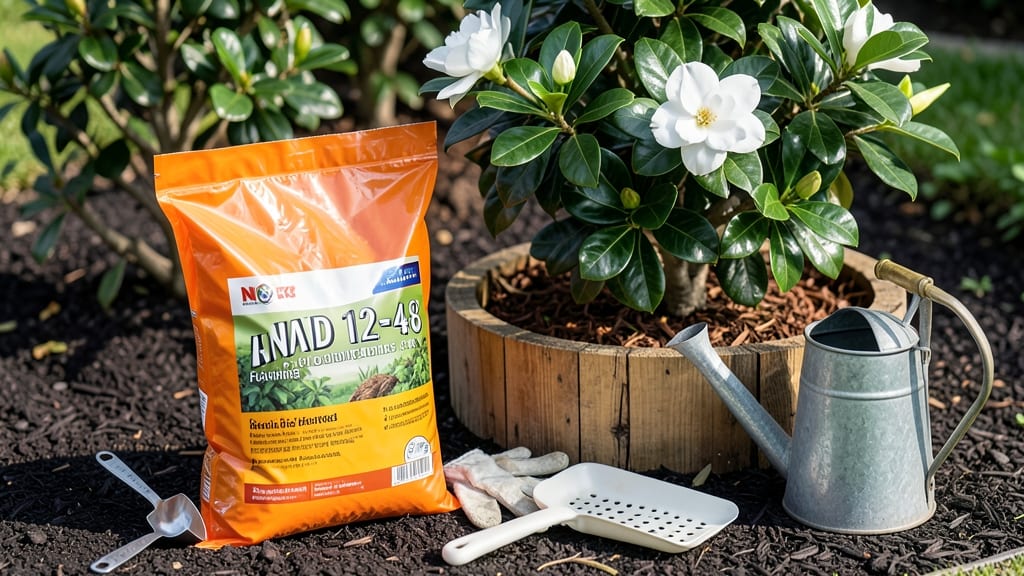
To fertilize gardenias properly, feed them every 4-6 weeks during their active growing season — but timing and type matter just as much as frequency.
Picture this: you’ve spent months nurturing your 🌸 gardenias, only for their buds to drop before blooming. That’s often a sign of over- or under-fertilizing, not just neglect. The secret lies in matching your feeding schedule to the plant’s natural cycle, not the calendar.
Gardenias thrive in USDA Zone 6a and beyond, but their needs shift with the seasons. Spring is prime time for a nutrient boost to kickstart blooms, while summer demands lighter, more frequent feedings to sustain those fragrant flowers. Fall and winter? That’s when you dial it back entirely.
In this guide, I’ll break down the exact month-by-month schedule, the best organic and synthetic fertilizers, and how to spot (and fix) the telltale signs of overdoing it. No more guesswork — just lush, blooming gardenias year after year.
💚
💚
💚

🌸
Gardenia Feeding Guide
Frequency
Every 4-6 weeks during growing season (Spring-Summer)
Amount
1 tbsp per plant (or per 1 sqft)
Optimal gardenia fertilization frequency by season: a month-by-month guide
Gardenias thrive when fed with precision—too little, and their blooms stay sparse; too much, and you risk burning roots or stunting growth. The key lies in seasonal timing, fertilizer type, and application rates tailored to your plant’s natural cycles.
Whether you’re using organic compost or synthetic granules, this month-by-month guide ensures your gardenias get just the right nutrients to burst into fragrant, glossy perfection.
Gardenias are heavy feeders during their active growing months but need a break in winter. Most gardeners overlook the fall taper-off and winter dormancy period, leading to weak new growth in spring.
By aligning fertilization with your gardenia’s bloom cycle (typically spring to early fall), you’ll maximize fragrance and foliage without stressing the plant.
| Month |
Fertilizer Type |
Frequency |
Application Rate |
Signs of Over-Fertilization |
| January |
None |
Dormant |
— |
Yellowing leaves |
| February |
None |
Dormant |
— |
Brown leaf tips |
| March |
Light organic (compost tea) |
Every 4 weeks |
½ tbsp per plant |
Leaf scorch |
| April |
Balanced (6-6-6) |
Every 4 weeks |
1 tbsp per plant |
Stunted growth |
| May |
Bloom booster (8-3-9) |
Every 6 weeks |
1 tbsp per plant |
White crust on soil |
| June |
Light organic (fish emulsion) |
Every 6 weeks |
½ tbsp per plant |
Root burn |
| July |
Balanced (6-6-6) |
Every 4 weeks |
1 tbsp per plant |
Leaf drop |
| August |
Bloom booster (8-3-9) |
Every 6 weeks |
1 tbsp per plant |
Wilting |
| September |
Light organic (compost) |
Every 8 weeks |
½ cup per plant |
Blackened roots |
| October |
Best fertilizers for gardenias: organic vs. synthetic options compared
Choosing the right fertilizer for gardenias can transform your plant from a struggling shrub to a fragrant, blooming beauty. Gardenias thrive on acid-loving nutrients, so not all fertilizers are created equal.
Organic options like fish emulsion and compost tea feed soil life, while synthetic blends deliver quick results. Let’s break down the best choices to maximize those iconic white blooms.
Your gardenia’s soil pH (ideally 5.0–6.5) and nutrient needs shift with seasons. Organic fertilizers gently adjust pH over time, while synthetic formulas provide instant phosphorus and iron—critical for blooms. Both have pros and cons, but the right pick depends on your gardening goals and timeline.
🌿
How Often to Fertilize Gardenias
Spring & Summer (Growing Season)
Frequency: Every 4–6 weeks
Why: Supports new growth and bloom production
Best Time: Early morning (avoids burn risk)
Fall & Winter (Dormant Season)
Frequency: Skip or light feed (every 8–10 weeks)
Why: Prevents over-fertilization and root stress
Best Time: Late fall (if needed)
⚠️ Warning: Over-fertilizing in fall/winter causes leaf burn and bloom failure next season.
For organic fertilizers, fish emulsion (6-2-4 NPK) is a top pick—it’s rich in nitrogen for foliage and easy to apply.
Mix 1 tablespoon per gallon of water monthly during spring/summer. Compost tea (brewed from worm castings or aged compost) boosts microbes that improve soil structure, but it requires weekly brewing for consistent results.
Synthetic options like Miracle-Gro Azalea/Camellia (8-3-9 NPK) deliver fast phosphorus for blooms, but they lack organic matter. Use half the recommended dose to avoid salt buildup in soil. Slow-release granules (e.g., Osmocote) are ideal for container gardenias—they feed steadily for 3–4 months with minimal effort.
Cost-wise, organic fertilizers like cottonseed meal ($10–$15 per 5 lb bag) are budget-friendly and long-lasting, while synthetic blends (e.g., Jobe’s Acid-Loving Plants) cost $8–$12 per 4 lb box but require frequent reapplication.
Test your soil’s pH before choosing—gardenias hate alkaline soil, so sulfur amendments may be needed.
Pro tip: Pair fertilization with mulching (use pine bark) to retain moisture and lower soil pH naturally. Avoid fertilizing after pruning—wait 4–6 weeks to let wounds heal. With the right feed, your gardenias will reward you with glossy leaves and fragrant blooms all season long. 🌸
★★★★★4.6(7 reviews)