
Pests
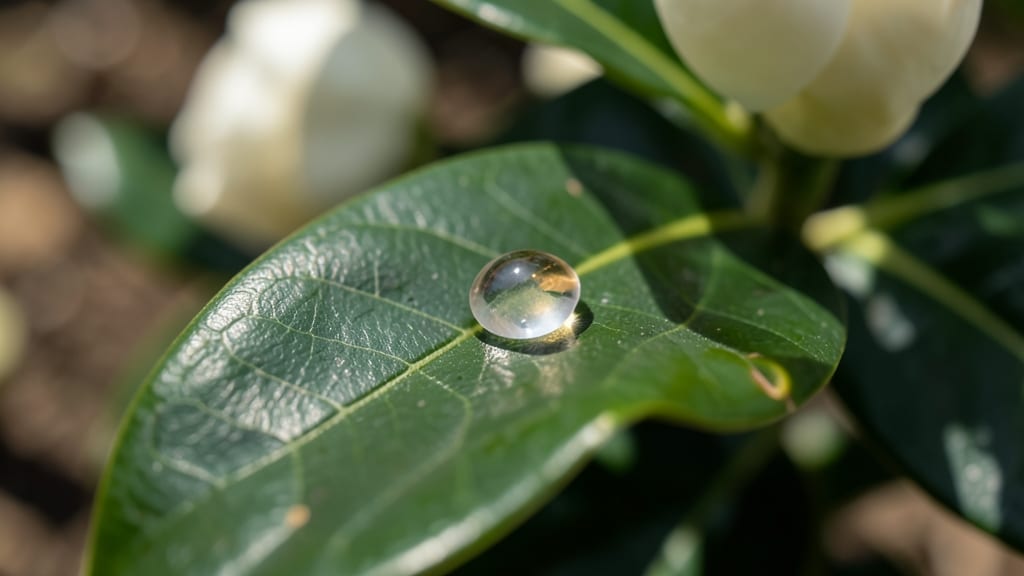
Gardenias' mosquito repellent properties come from their fragrant oils containing geraniol and linalool, which naturally deter mosquitoes—but they're less potent than citronella and work best when you use fresh foliage or concentrated extracts directly.
These tropical blooms release volatile compounds that mosquitoes find unpleasant, disrupting their ability to locate hosts. 🌸 Unlike citronella, which relies on citronellal for strong repellency, gardenias offer a milder, more subtle protection that works best in small, contained outdoor spaces.
For maximum effectiveness, I recommend crushing fresh leaves or using gardenia-infused oils in diffusers near seating areas—just be aware that their scent fades faster than commercial repellents.
What sets gardenias apart is their dual function: they repel pests while adding beauty to your garden. The key is direct exposure—mosquitoes need to encounter the plant's aroma at close range, which is why strategically placing gardenias around patios or near windows makes a noticeable difference during evening gatherings.
💡 In This Article
- Science Behind Gardenias’ Mosquito-Repelling Compounds
- Best Ways to Use Gardenias for Mosquito Control
Science behind gardenias’ mosquito-repelling compounds
Gardenias produce a complex bouquet of aromatic compounds that disrupt mosquitoes' ability to locate hosts. The two most critical components are geraniol (a monoterpene alcohol) and linalool (a cyclic ether), both of which are present in concentrations of 0.5-1.2% in fresh gardenia flowers.
These compounds work by masking human scent cues—specifically lactic acid and carbon dioxide—that mosquitoes use for navigation. Geraniol, in particular, mimics the scent of certain predator insects, triggering avoidance responses in mosquitoes.
The effectiveness hinges on volatility—gardenias release these compounds at 22-28°C (72-82°F), with peak dispersion occurring in early evening when mosquito activity peaks. 🌿 Citronella, by comparison, relies on citronellal (found in 30-50% concentration in citronella oil), which has a stronger repellent action but dissipates faster in sunlight.
Gardenias' multi-compound approach creates a broader sensory disruption, though their lower concentration means they work best in enclosed or semi-enclosed spaces where scent can concentrate.
Mosquitoes have highly sensitive olfactory receptors that detect these compounds at concentrations as low as 0.01 parts per million. The key difference from synthetic repellents is that gardenias don't contain DEET or picaridin—both of which provide 4-8 hours of protection—but instead rely on continuous scent release from living plants.
This creates a "zone of protection" typically within 3-5 feet of the foliage, making them ideal for patios or garden seating areas rather than large open spaces.
What most people overlook is how humidity affects dispersion. In 60-70% humidity, gardenia compounds linger 20-30% longer in the air compared to dry conditions (40% humidity), where they evaporate more quickly.
This explains why gardenias work better in tropical or subtropical climates where both temperature and moisture levels remain consistently high. 🌸 The trade-off? Their scent profile—rich with jasmine-like notes—is far more pleasant than citronella's sharp, lemony aroma, making them a superior choice for aesthetic outdoor spaces.
For those wondering about longevity, gardenia leaves contain 1.5-2.5 times more geraniol than the flowers, meaning crushed foliage can provide 12-24 hours of repellent action when placed in strategic locations. The downside?
These compounds degrade when exposed to direct sunlight for more than 4 hours, losing up to 40% of their effectiveness. This is why gardenia-based repellents often require reapplication or placement in shaded areas.
Consider this comparison: A single gardenia plant releases enough geraniol to create a 10-foot radius of mild repellency, while a citronella candle might cover 15-20 feet but with stronger (though shorter-lasting) protection. The choice depends on whether you prioritize scent pleasantness or maximum mosquito deterrence. 💫