
Fertilization
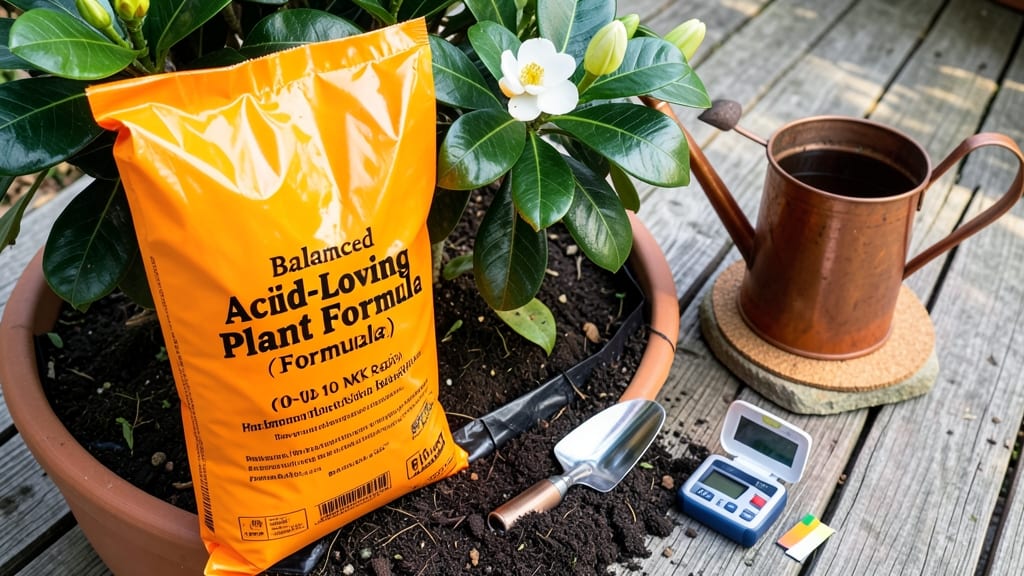
For a gardenia 🌸 to bloom with that signature intoxicating fragrance, the fertilizer ratio must be exactly right—too much nitrogen and you’ll get lush leaves but no flowers.
Struggling to get your gardenia to produce those prized blooms? The secret lies in the precise balance of nitrogen, phosphorus, and potassium (NPK). A 6-6-6 or 8-3-9 ratio is ideal, but timing and soil acidity play just as big a role.
In this guide, I’ll break down the exact NPK mix your gardenia needs, how often to feed it, and the organic alternatives that work best for fragrant blooms without burning the roots.
You’ll also learn how to spot over- or under-fertilizing, adjust for seasonal changes, and keep your soil acidic—because even the best ratio won’t work if the pH is off.
Optimal gardenia fertilizer ratio: N-P-K breakdown for peak blooms
If your gardenia is throwing lush leaves but refuses to bloom, the fertilizer ratio is likely the culprit. Gardenias thrive on a low-nitrogen, balanced approach—unlike many plants that prioritize leafy growth.
The ideal N-P-K ratio for gardenias is 6-6-6 or 8-3-9, with a focus on phosphorus and potassium to fuel those fragrant blooms. Too much nitrogen (like a 10-10-10 mix) will send your plant into overdrive producing foliage instead of flowers.
Understanding the N-P-K breakdown is key: nitrogen (N) promotes leaves, phosphorus (P) encourages roots and blooms, and potassium (K) boosts disease resistance. For gardenias, the goal is a 1:1:1 or 2.5:1:1 ratio, depending on the season.
Organic options like cottonseed meal (1-0-0) or fish emulsion (5-1-1) can complement synthetic blends, but timing matters—too much at the wrong time can stress your plant.
| Fertilizer Type | N-P-K Ratio | Best For | Season | Application Rate |
|---|---|---|---|---|
| Synthetic (e.g., Miracle-Gro) | 6-6-6 | Balanced growth & blooms | Spring/Fall | 1 tbsp per plant |
| Synthetic (e.g., Osmocote) | 8-3-9 | Bloom-heavy periods | Summer | ½ tbsp per plant |
| Organic (Cottonseed Meal) | 1-0-0 | Root development | Early Spring | 2 tbsp per plant |
| Organic (Fish Emulsion) | 5-1-1 | Foliar health | Summer | 1 tsp per gallon |
| Slow-Release (Osmocote) | 14-14-14 | Year-round maintenance | All seasons | 2 tbsp per plant (spring) |
Seasonal adjustments are critical. In spring, when your gardenia is waking up from dormancy, a 6-6-6 ratio helps kickstart growth without overwhelming the plant. By summer, switch to an 8-3-9 blend to prioritize blooms over foliage.
Avoid fertilizing in winter—gardenias in USDA Zone 9b are semi-dormant and don’t need nutrients during cooler months. Over-fertilizing in winter can lead to salt buildup and root damage.
Organic fertilizers like peat moss or composted pine bark are excellent for gardenias because they naturally acidify the soil, which these plants crave (pH 5.0-6.5).
Mix 2-3 inches of organic matter into the soil annually to maintain fertility without synthetic chemicals. For potted gardenias, use a slow-release fertilizer like Osmocote (14-14-1
Step-by-step guide: how to apply gardenia fertilizer for maximum fragrance
To unlock your gardenia’s signature fragrance, timing and technique matter just as much as the fertilizer ratio. Gardenias thrive on a balanced but nitrogen-light feeding schedule, with adjustments based on their bloom cycle.
The key is feeding lightly in spring to encourage buds, then shifting to a phosphorus-rich approach as flowers form—this prevents leafy growth at the expense of blooms.
Before you begin, test your soil’s pH level—gardenias demand acidic soil (pH 5.0–6.5). If your soil is too alkaline, roots can’t absorb nutrients, no matter how perfect your fertilizer ratio.
Use a vinegar-based test kit or send a sample to your local extension office for precise results. Once you’ve confirmed the pH, you’re ready to fertilize with confidence.
- Step 1: Prep Soil – Mix 1 tbsp cottonseed meal (organic acid fertilizer) into the top 2 inches of soil around the root zone. This adjusts pH and adds slow-release nutrients.
- Step 2: Dilute Fertilizer – For synthetic fertilizers, use a 6-6-6 or 8-3-9 NPK ratio. Dilute to half-strength (e.g., 1 tsp per gallon of water) to avoid burning roots.
- Step 3: Feed Seasonally –
- Spring (Mar–May): Apply every 4 weeks to promote buds.
- Summer (Jun–Aug): Switch to low-nitrogen (3-4-6) every 6 weeks to sustain blooms.
- Fall (Sep–Nov): Use slow-release fertilizer (e.g., peat moss) to strengthen roots.
- Step 4: Water Deeply – After fertilizing, water the soil to 12 inches deep to activate nutrient absorption. Avoid wetting leaves to prevent fungal issues.
- Step 5: Monitor & Adjust – Yellow leaves? Reduce nitrogen. No blooms? Increase phosphorus. Trim spent flowers to encourage new growth.
Timing your feedings aligns with your gardenia’s natural cycle. In spring (March–May), focus on root and bud development by applying fertilizer every 4 weeks. This is when your plant shifts from dormancy to active growth—think of it as its pre-bloom power phase.
Use a balanced 6-6-6 ratio to avoid overstimulating foliage.
As summer arrives, switch to a low-nitrogen formula (8-3-9) to support existing blooms without encouraging new leafy growth. This post-bloom strategy ensures your gardenia doesn’t waste energy on leaves when it should be focusing on fragrance. Always fertilize in the early morning to reduce leaf burn from afternoon heat.
In fall (September–November), gardenias need a root-strengthening boost to prepare for winter. Opt for slow-release fertilizers like composted manure or peat moss, which feed roots gradually. This prevents nutrient spikes that can stress the plant before dormancy.
Skip fertilizing entirely in winter (December–February)—your gardenia is resting, and feeding now can harm its delicate system.
Watch for signs of over-fertilization, like brown leaf tips or stunted growth, and adjust your ratio immediately. If your soil stays too alkaline, amend it with sulfur or pine needles to keep the pH in the ideal range.
With this precise approach, your gardenia will reward you with abundant, fragrant blooms year after year. 🌸