
Tools
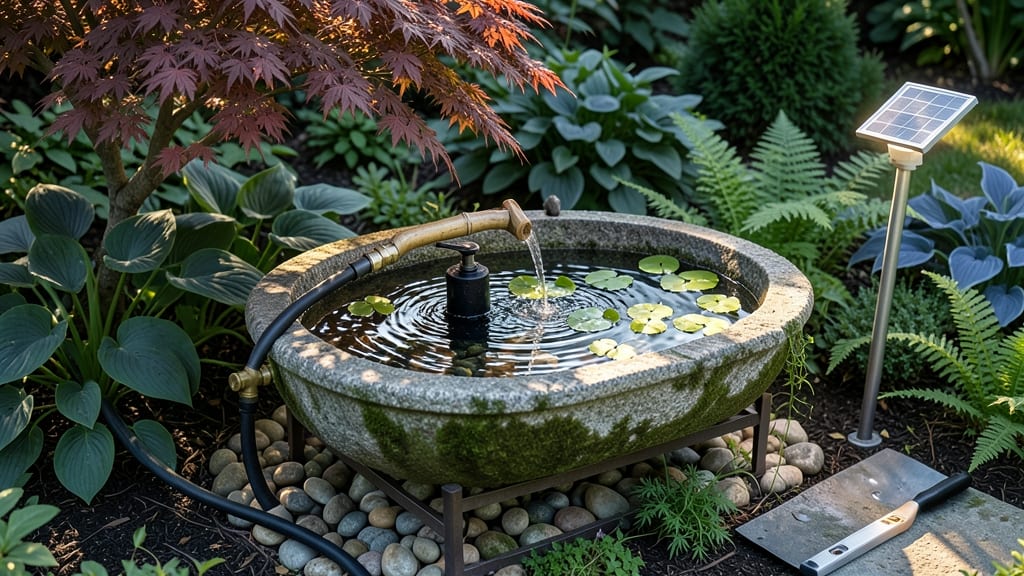
Creating a DIY garden fountain transforms your outdoor space with a serene water feature while keeping costs low. Use PVC pipes, a submersible pump, and decorative rocks to build a functional, attractive centerpiece that requires minimal maintenance.
A DIY garden fountain brings both visual appeal and soothing sounds to your backyard without the hefty price tag of store-bought models. 🌿 The key to success lies in selecting the right materials—like a durable submersible pump and weather-resistant PVC pipes—that balance affordability with longevity.
I always recommend starting with a stable base, whether that's a preformed liner or a simple gravel bed, to prevent leaks and ensure your fountain stays in place during rain or wind.
What sets a homemade fountain apart is the customization—you can adjust the size, shape, and decorative elements to match your garden's style. For instance, adding smooth river rocks or mosaic tiles around the base creates a natural, cohesive look that blends seamlessly with plants and other landscaping features.
Plus, the process itself is surprisingly straightforward once you understand the basic principles of water circulation and sealing connections.
💡 In This Article
- Essential Materials and Tools for a Budget-Friendly DIY Fountain
- Step-by-Step Assembly Guide for Beginners
Essential materials and tools for a budget-friendly DIY fountain
The foundation of any successful DIY garden fountain starts with the right materials, where cost savings meet functionality.
At its core, you'll need PVC pipes (typically 4-inch diameter for a standard 12-18 inch tall fountain) to create the water column—these pipes are lightweight yet sturdy enough to handle water pressure while being affordable compared to specialty fountain tubes.
A submersible pump (rated for 1,000-2,000 gallons per hour) is the heart of your fountain, circulating water to create that soothing flow. These pumps typically cost between $30-$80, depending on flow rate and durability.
For the base, you have two primary options: a preformed pond liner (starting at $20 for a 3x4 foot size) or a gravel bed (using 1-2 inches of coarse gravel layered with landscape fabric). The gravel option is more cost-effective but requires precise leveling to prevent leaks.
Decorative elements like smooth river rocks or mosaic tiles add visual appeal while serving practical purposes—rocks help diffuse water flow and reduce splashing, while tiles create a polished finish. Don't overlook waterproof silicone sealant ($5-$10 per tube) for securing connections between pipes and the liner.
Sourcing materials affordably is key to keeping costs down. Check local hardware stores for clearance sections on PVC pipes or ask about bulk discounts on gravel. Online marketplaces often have submersible pumps listed at 30-50% off retail prices during seasonal sales.
Safety is another critical factor—always use UV-resistant liner material to prevent degradation from sunlight, and opt for pumps with automatic shutoff features to avoid overheating. I've found that combining a 12V pump with a solar panel ($20-$40) eliminates electricity costs entirely while adding an eco-friendly touch.
Each material plays a specific role in your fountain's performance. The PVC pipes determine the water's trajectory and height, while the pump's flow rate dictates the fountain's volume and sound.
The base's stability affects how well the fountain resists wind or rain, and decorative elements influence both aesthetics and water distribution.
For example, a 3-inch layer of pea gravel beneath the liner prevents punctures from sharp rocks, while a slight upward slope in the liner directs water toward the pump intake.
These details might seem minor, but they're what separates a functional fountain from one that leaks or fails after a few weeks.
Consider these key factors when choosing materials:
- Pump capacity: Match the flow rate to your fountain's height—1,500 GPH works well for a 24-inch tall fountain, while 2,000 GPH handles taller designs up to 36 inches
- Liner thickness: 20 mil liners are standard for small fountains, while 30 mil offers better durability in high-traffic areas
- Decorative weight: Heavy rocks or tiles require a wider base to prevent tipping—aim for a base that's 2-3 times wider than the fountain's diameter
One common mistake is underestimating the importance of the pump's head pressure—this measures how high the pump can push water against gravity. A pump with insufficient head pressure will struggle with taller fountains, causing weak flow or even failure.
Always check the manufacturer's specifications for both flow rate and head pressure before purchasing. For a 30-inch tall fountain, you'll need at least 8 feet of head pressure to maintain proper circulation.