
Plants
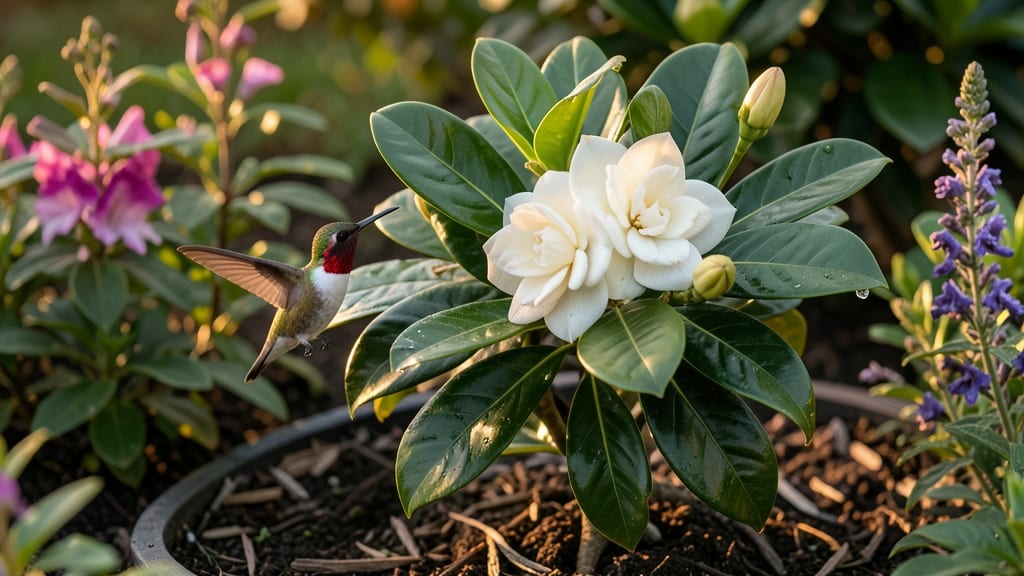
Hummingbirds don't like gardenias because their heavy, sweet fragrance draws bees and butterflies instead, and their nectar sits too deep in the blooms for hummingbirds' long beaks to reach efficiently. For better results, choose tubular flowers like salvias or fuchsias that hummingbirds adore.
Gardenias may look stunning in your garden, but their scent and flower structure aren't designed for hummingbird visitors. 🌸 These blooms evolved to attract insects and butterflies, which are drawn to their strong perfume and shallow nectar pools.
Hummingbirds prefer flowers with long, narrow tubes that match their beak length—like trumpet vines or bee balm—where they can access nectar easily while hovering. The key difference lies in the flower's evolutionary purpose: gardenias prioritize insect pollination, while hummingbird favorites cater to their feeding habits.
If you want to create a hummingbird haven, focus on plants that offer both visual appeal and functional nectar access. Many gardenias also bloom later in the season when hummingbirds have already migrated, making them an even less optimal choice. 💫 The good news?
There are plenty of equally beautiful alternatives that will have hummingbirds flitting through your garden all season long.
💡 In This Article
- Why Gardenias Aren’t Ideal for Hummingbird Gardens
- Top Hummingbird-Friendly Alternatives to Gardenias
Why gardenias aren’t ideal for hummingbird gardens
Gardenias produce nectar that sits in deep, bowl-shaped blossoms—typically 1.5 to 2 inches across—making it difficult for hummingbirds to reach.
Their long, slender beaks (up to 2.5 inches in some species) are perfectly adapted for flowers with tubular shapes like 1.5 to 3 inches in length, where nectar pools at the base.
Gardenias' shallow nectar pools also mean hummingbirds would expend more energy trying to access them than they'd gain in calories. 🔥
The fragrance chemistry of gardenias plays another key role. Their scent contains high levels of benzyl acetate and linalool, compounds that attract insects like bees and butterflies. Hummingbirds rely more on visual cues (bright colors) and the shape of flowers to locate food sources.
Gardenias' white blooms may look elegant, but their scent profile is a red flag for hummingbirds, signaling that bees—not birds—are the intended pollinators. 💫
Ecologically, gardenias bloom primarily in late spring to early summer, when many hummingbird species are still migrating through regions. By the time they establish their territories, gardenias may have already finished blooming.
Flowers like salvias or fuchsias offer nectar throughout the entire growing season, providing consistent fuel for hummingbirds during their 4,000-mile annual migrations. This timing mismatch makes gardenias a poor choice for supporting hummingbird populations.
Consider the corolla tube length—the part of the flower where nectar accumulates. Gardenias typically have 0.5 to 1 inch tubes, while hummingbird favorites like columbine (with 1.5-inch tubes) or trumpet vine (up to 3 inches) are far more efficient.
The deeper the tube, the more nectar hummingbirds can access in a single visit, reducing their need to visit multiple flowers. 🌟
Another factor is the nectar sugar concentration. Gardenias produce nectar with about 15-20% sugar content, while hummingbird favorites often exceed 25% sugar. This higher concentration gives hummingbirds more energy per sip, making flowers like bee balm or cardinal flower far more attractive.
The combination of tube depth, sugar content, and bloom timing creates a perfect storm against gardenias in hummingbird gardens.
For comparison, a ruby-throated hummingbird (the most common species in North America) visits about 1,500 flowers per day. If those flowers aren't optimized for their feeding habits, they'll simply move on to gardens with better resources.
This is why even beautiful gardenias often end up being overlooked in favor of plants that meet hummingbirds' specific ecological needs. ✨