
Planting
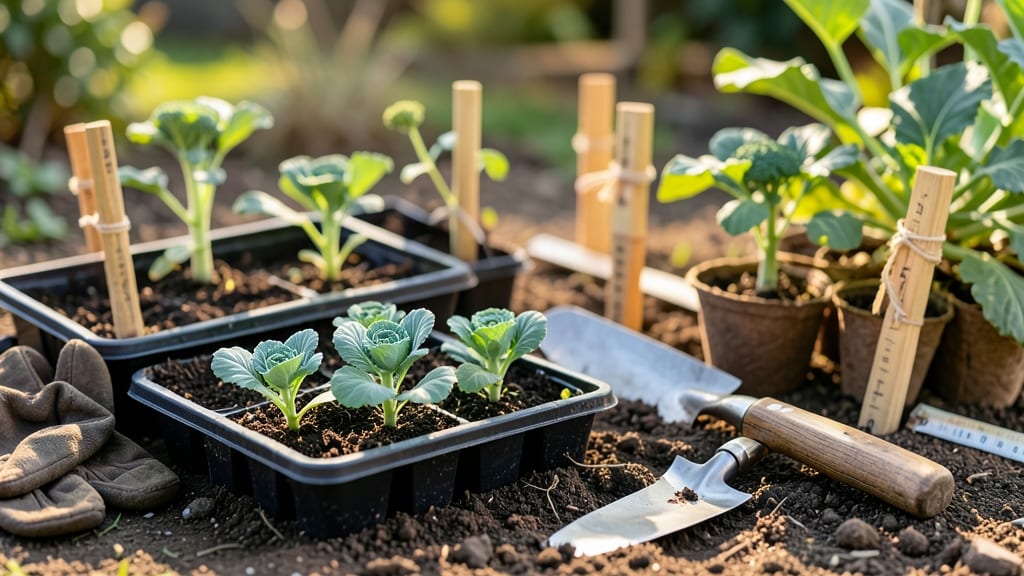
Spacing broccoli 🥦 properly in your garden is the difference between bountiful harvests and stunted, bitter heads—yet most gardeners guess instead of measuring.
Struggling with stunted broccoli heads? The secret to harvesting dense, flavorful crowns lies in proper spacing—yet many gardeners overlook this critical factor.
Too close, and your plants fight for nutrients, leaving you with small, tough heads. Too far apart, and you waste space that could grow more. The right distance depends on your broccoli variety, soil type, and even your climate.
Below, I’ll break down the exact spacing you need for each type, how to adjust for heavy soil or humidity, and the 3 spacing mistakes that shrink harvests by half.
Optimal broccoli spacing by variety: crowded vs. sprawling plants
Not all broccoli varieties grow the same way, and their spacing needs vary dramatically. Calabrese broccoli, the classic blue-green variety, thrives with room to spread, while Romanesco grows in compact heads that tolerate closer spacing.
Even sprouting broccoli varieties like Purple Sprouting demand different layouts. Getting this wrong can mean smaller heads, poor airflow, and more pests—so let's break it down by type.
Proper spacing isn't just about fitting more plants in; it's about giving each plant the airflow and nutrient access it needs to develop those dense, flavorful heads you crave. Crowding plants might seem efficient, but it often backfires with stunted growth and disease pressure.
Meanwhile, over-spacing wastes garden space and reduces your total yield. The key is finding that sweet spot for each variety.
Visualizing spacing before planting saves headaches later. Imagine your garden as a grid: rows run north-south for even sunlight, and plants are spaced based on their mature size. For Calabrese, that might mean 18 inches between plants and 30 inches between rows. But for Romanesco, you can squeeze them in 12 inches apart. Let's compare the specifics in this layout guide.
For Calabrese broccoli, the 18-24 inch spacing between plants is non-negotiable if you want those hefty, flavorful heads. This variety grows bushy with multiple side shoots, so cramming them too close leads to competition for nutrients and pale, underdeveloped heads.
I once planted Calabrese 12 inches apart in a raised bed, and while I got more plants, the heads were half the size—and twice as bitter.
On the other hand, Romanesco broccoli is a space-saver. Its compact growth habit and tight heads let you plant them 12-18 inches apart without sacrificing yield.
This variety is perfect for small gardens or interplanting with faster-maturing crops like lettuce. Just be mindful of the 30-inch row spacing to avoid shading issues.
Sprouting broccoli varieties like Purple Sprouting are the tall drink of water in the broccoli world. They can reach 3-4 feet tall, so giving them 12 inches between plants and 24 inches between rows prevents them from toppling over. These plants produce multiple harvests over several months, so proper spacing ensures you don't lose access to the lower stems.
If you're growing broccolini (also called Italian broccoli rabe), you can get creative with spacing. Its slender stems and quick growth make it ideal for 6-8 inch spacing between plants.
This variety is perfect for succession planting or filling gaps in your garden layout. Just remember to harvest the thinner stalks first to encourage new growth.
Visualizing your broccoli layout before planting pays off. Sketch a simple grid on paper or use a garden planning app to map out your rows and spacing.
For example, in a 4-foot-wide raised bed, you could fit two rows of Calabrese with 18-inch spacing, leaving enough room for side shoots to develop without overcrowding. In a 3-foot-wide bed, Romanesco would be your best bet.
One trick I swear by is using string lines to mark your rows before planting. Stretch them between stakes at the correct spacing, then plant seeds or seedlings along the line.
This ensures uniformity and makes it easier to spot gaps or overcrowding early. For Calabrese, I also like to plant in a staggered pattern—like
How to adjust broccoli spacing for soil conditions and climate
Your broccoli plants thrive when their spacing matches your local soil type and climate conditions. Heavy clay soils, sandy loam, or humid climates all demand different approaches to prevent disease and maximize head size.
The standard 18-24-inch spacing works for average gardens, but these adjustments will help you fine-tune your layout for optimal results.
In heavy clay soils, roots struggle to breathe, so increase spacing to 24-30 inches between plants. This gives roots room to expand and reduces competition for nutrients. Add organic matter like compost to improve drainage while maintaining wider gaps.
For sandy loam, which drains too quickly, reduce spacing to 12-18 inches to help retain moisture and support smaller, more compact plants.
High-humidity regions demand extra attention to airflow to prevent fungal diseases like downy mildew. Space plants 24-36 inches apart and consider staggered rows to improve circulation. In arid climates, tighter spacing (12-18 inches) helps conserve soil moisture by reducing evaporation from exposed ground.
Quick Adjustments for Your Broccoli Spacing
Increase spacing to 24-30" and amend soil with compost.
Reduce spacing to 12-18" to retain moisture.
Space 24-36" apart for airflow and disease prevention.
Tighten spacing to 12-18" to conserve water.
Pro Tip: Always mulch around plants to stabilize soil moisture and temperature, regardless of your spacing adjustments.
Proper spacing also influences head size. Overcrowded plants produce smaller, less flavorful heads because they compete for sunlight and nutrients. In low-light conditions, reduce spacing slightly (12-18 inches) to help plants reach upward, but avoid shading neighbors.
For full-sun gardens, stick to 18-24 inches to ensure each plant gets ample light for large, dense heads.
When adjusting spacing, consider your broccoli variety too. Compact varieties like Calabrese can handle closer spacing (12-18 inches), while larger types like Romanesco need 24-30 inches. Always leave extra room between rows (30-36 inches) to accommodate wider plants and easier harvesting.
Finally, monitor your plants for signs of stress. Yellowing leaves or stunted growth may signal overcrowding, while overly large gaps between plants could mean wasted space. Adjust as needed throughout the growing season to balance yield, health, and harvest quality. 🌱